By Gabriel Manyati
It was somewhere in the humming, electric haze of 2004 or 2005. Living and working in Mutare as a reporter with The Manica Post, I found myself covering a milestone event for prominent transport businessman Isau Mupfumi as he celebrated a major fleet expansion, having just acquired four brand-new long-distance buses. Mupfumi, who shared deep, familiar roots with Tongai Moyo from their home areas, had pulled out all the stops, hosting a celebratory gathering that spilled into the evening.
By 8pm, the mood among the invited guests and revelers was beginning to fray. Whispers circulated through the venue that Utakataka Express was not coming. Word had reached the grounds that Tongai Moyo’s tour bus or transport had suffered a brutal mechanical breakdown somewhere along the grueling highway from Kwekwe.
People started looking at their watches, drifting away from the edges of the dance floor, assuming the night’s headline act had been swallowed by the highway. As a local journalist, I had seen it all: artists failing to show up, broken promises, and deflated crowds. I sat back, nursing a Coke along with my late friend McDonald Panganayi, nearly resigning myself to the fact that the night would pass without the magic we had all anticipated.
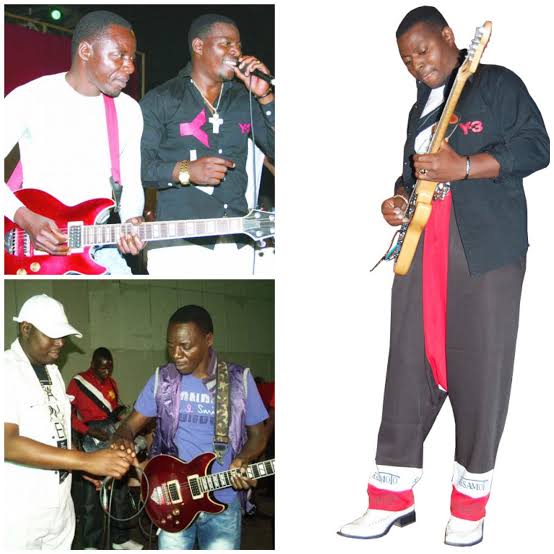
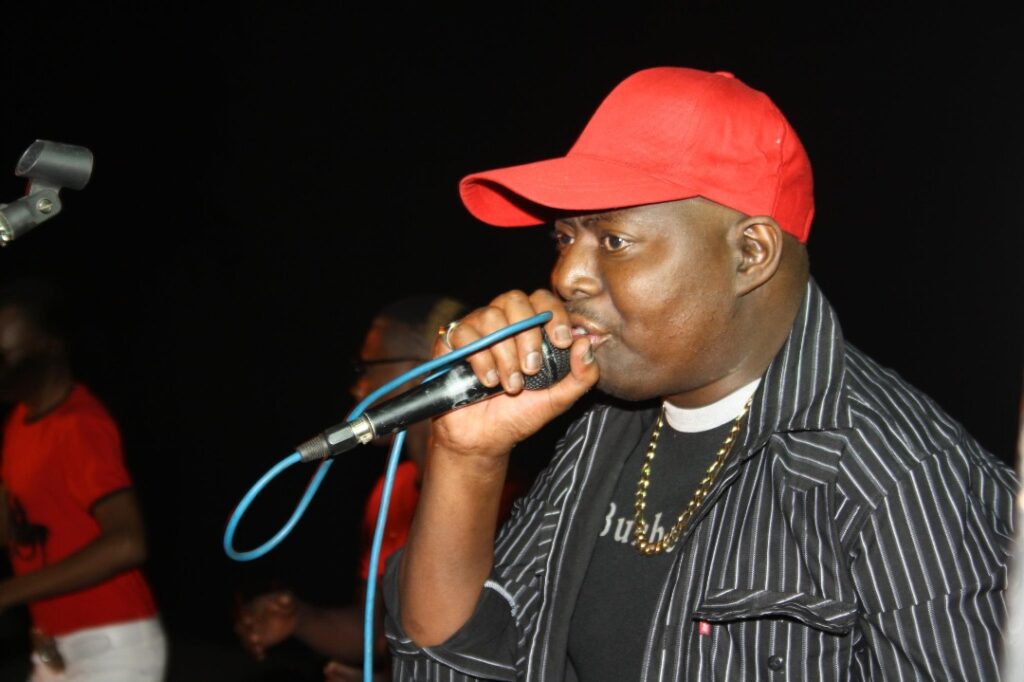
Then, a sudden roar erupted from the gates. Out of the darkness stepped the man himself, flanked by his band. Despite the exhausting, grueling hours stranded on the asphalt with a broken-down vehicle, Tongai Moyo looked immaculate. He wore that trademark, disarming smile that could melt an arena of sceptics. Without wasting a single breath on excuses or apologies, he strapped on his guitar, nodded to his rhythm section, and plunged straight into the infectious, driving grooves of Ndinde Makorokoza.
In an instant, the exhaustion evaporated. The crowd surged forward like iron filings to a magnet. The tentative murmurs of a failed party vanished, replaced by the ecstatic, synchronised stampede of hundreds of fans shouting “Dhewa, Igwe!” Standing there with my notepad in hand, I was utterly captivated. In that exact moment, all my fleeting journalistic cynicism melted away, and I was thunderstruck all over again by a visceral realisation: I had almost forgotten just how transcendent, how undeniably great, Tongai Moyo truly was.
To understand the phenomenon that was Tongai Moyo, one must trace his journey back to his origins. Born on March 12, 1968, in Kwekwe, Moyo’s early life was framed by the industrial rhythm and gritty realities of the Midlands province and his rural home in Zhombe. Long before he was Igwe or Muchina Muhombe, he was a young man navigating the complex socio-economic realities of Zimbabwe with a burning ambition embedded in his soul. Moyo did not stumble into music overnight. His apprenticeship was forged in the trenches of the late 1980s. He paid his dues playing in various small groupings before finding a crucial stepping stone with the Shirichena Jazz Band.
Operating as a session musician and rhythm guitarist alongside artists like Shepherd Musekiwa and Ronnie Mudhindo, Moyo helped shape the sound that would eventually birth his own distinct identity. Their localised underground hits, such as the popular 1991 release Ndoita Zvangu Ndega, offered a glimpse of a budding star. By the mid-1990s, Moyo made the bold, definitive leap to form his own outfit, Utakataka Express.
In 1996, he dropped his debut solo album, Vimbo. In an era where the sungura genre was heavily dominated by established heavyweights like Nicholas Zakaria and a rising Alick Macheso, Vimbo served as Moyo’s declaration of intent. It carved out a fresh sonic lane, characterised by crisp, interlocking guitar lines, a pulsating bass throb, and Moyo’s distinct, high-tenor, emotionally piercing vocals.
What made Utakataka Express unique was its hypnotic guitar chemistry. While other sungura groups relied on a frantic, breakneck pace, Moyo and his band mastered the art of the slow-burn groove, a sophisticated, multi-layered canvas where the rhythm guitars locked into a hypnotic dialogue with the lead and bass.
Album after album, Moyo cemented his legacy with a string of timeless masterpieces. He released Mudzimu Weshiri in 2001, followed in 2002 by Samanyemba, an anthem of perseverance and destiny that became an instant national prayer. This phenomenal run continued with Chingwa in 2003, Pakanaka Dhewa in 2004, and Naye in 2006, which housed the monumental chart-topper Nemumvura Mese and swept multiple Zimbabwe Music Awards.
Moyo was a consummate showman. On stage, he was a vision of sartorial elegance, often stepping out in immaculate designer suits, matching shoes, and his signature posture. He understood that sungura was not merely music; it was theatre, communal therapy, and a celebration of working-class survival. Behind the scenes, however, Moyo was famously a perfectionist, disciplined, intensely proud of his craft, and commanding absolute respect from his band members.
No retrospective on Tongai Moyo can be complete without examining his complex, symbiotic relationship with Alick Macheso. Extrabasso and Igwe were the twin pillars of Zimbabwean sungura during its absolute golden age. Their relationship was defined by a rare paradox: they were close personal friends who shared deep mutual respect, yet they were fierce, unrelenting competitors.
Every single festive season, the nation ground to a halt to see whose album would claim the number-one spot on Radio Zimbabwe charts. Promoters made small fortunes pitting them against each other on shared bills, transforming stadiums across Harare, Bulawayo, Mutare, and Kwekwe into arenas of mass cultural celebration. This rivalry pushed both artists to unprecedented heights of creativity. When Macheso introduced breathless bass-guitaring wizardry and social commentary, Moyo responded with poetic lyricism, sharp social observations, and unmatched vocal cadence.
Of course, the intense rivalry was not without its human friction, with tabloids and fans frequently stoking flames over rumoured clashes and reading competitive subtext into every new release. Yet, beneath the media sensationalism lay a profound brotherhood. They understood that each needed the other to validate their own greatness. When the chips were down, they recognised that they were the dual guardians of a sacred musical tradition.
In 2008, the ground beneath Tongai Moyo’s feet shifted dramatically. He was diagnosed with Non-Hodgkin lymphoma, a form of blood cancer. Suddenly, the flamboyant Muchina Muhombe, the man who commanded stadiums and sang of invincibility, found himself locked in the fight of his life. As rumours swirled in the press and public domain regarding his rapidly deteriorating health, with some malicious quarters even spreading false speculations about his HIV status, Moyo chose radical transparency. In a courageous move, he took journalists along to undergo public medical tests to lay the rumours to rest, while openly confronting his battle with cancer.
True to his indomitable spirit, Moyo refused to let the hospital bed silence him. He continued to tour, record, and face his audiences even when his physical frame was visibly weakened. In late 2010, he released his fourteenth album, aptly titled Toita Basa. Within that project lay the deeply moving track Ndinobvuma, a poignant, heart-wrenching meditation on his illness, mortality, and his spiritual surrender to God. Listening to that song was, and still is, an emotional exercise; it was a dying king looking his subjects in the eye and baring his soul.
On October 15, 2011, at St Anne’s Hospital in Harare, Tongai Moyo drew his final breath at the age of 43. The nation plunged into mourning. Over 15000 mourners packed into Mbizo Stadium in Kwekwe, while thousands more converged on his rural home in Zhombe to bid farewell to the Igwe. Musicians like Alick Macheso, Somandla Ndebele, and Leonard Zhakata stood shoulder-to-shoulder at his graveside, performing tearful renditions of Zvinoita Murudo. It was a devastating loss for Zimbabwean arts, a moment when many felt the pulsing heart of sungura music skipped a permanent beat.
Today, as we mark his death anniversary, we look back not just with sorrow, but with profound awe. Tongai Moyo left behind a legacy written in gold strings, sweat, and unforgettable lyrics. He proved that a boy from Kwekwe could capture the imagination of a whole nation and turn ordinary weekends into sacred festivals of sound.
Whenever I hear the opening notes of Samanyemba or think back to that magical night in Mutare when Isau Mupfumi’s bus celebration was saved by a late-arriving hero with a guitar and a brilliant smile, I am reminded that legends never truly die. They simply live on in the timeless grooves of the music they left behind.
Pakanaka Dhewa. Zorora hako, Igwe.