By Bongani Matshelela
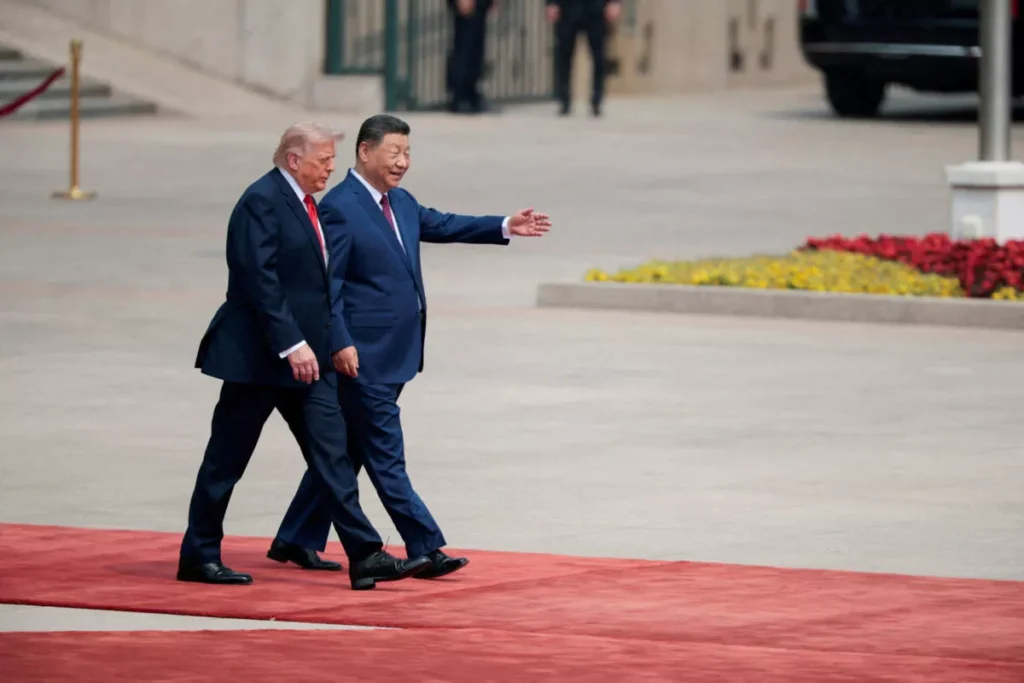
President Emmerson Mnangagwa went to New York for UNGA where he also took the opportunity to sell Zimbabwe to American investors. Beneath the diplomatic language, the investment pitches and the familiar promises of a more open business environment and that Zimbabwe is friend to all and an enemy to none, however, was a much bigger question: who will control the minerals that are becoming central to the new contest between Washington and Beijing?
And Zimbabwe is sitting in an unusually powerful, yet precarious, position. A country that once looked East because relations with the West had deteriorated now finds Washington increasingly interested in the same strategic minerals that helped deepen Zimbabwe’s relationship with Beijing.
More recently, the White House has stated that critical minerals are essential to defence, advanced manufacturing, telecommunications and technologies such as artificial intelligence, and has directed the government to secure reliable supplies from both domestic and foreign sources.
This makes Zimbabwe’s lithium, platinum-group metals, nickel, chrome and other strategic minerals potentially significant to U.S. efforts to diversify critical-mineral supply chains, particularly as Washington seeks to reduce vulnerabilities associated with concentrated global supply and China’s dominance.
A recent report points to signs of a possible reset, following Mnangagwa’s meetings with American officials and business leaders in New York and reports that a US congressional and business delegation could visit Harare.
That is significant.
For more than two decades, Zimbabwe’s “Look East” policy was shaped partly by its confrontation with Western governments following the land reform programme, governance disputes and human-rights concerns. ZIDERA became embedded in the political memory of the ruling establishment as a symbol of Washington’s hostility.
China, meanwhile, stayed.
It brought capital when much of the West was keeping its distance. It built relationships. Chinese companies moved aggressively into mining, particularly lithium, and became deeply embedded in Zimbabwe’s emerging mineral economy.
Now America is coming back.
And it is coming back at precisely the moment when critical minerals have become a strategic issue for the United States. That changes the equation. Zimbabwe, sitting on lithium, platinum, chrome, gold and other strategic resources, suddenly matters in a much bigger geopolitical game.
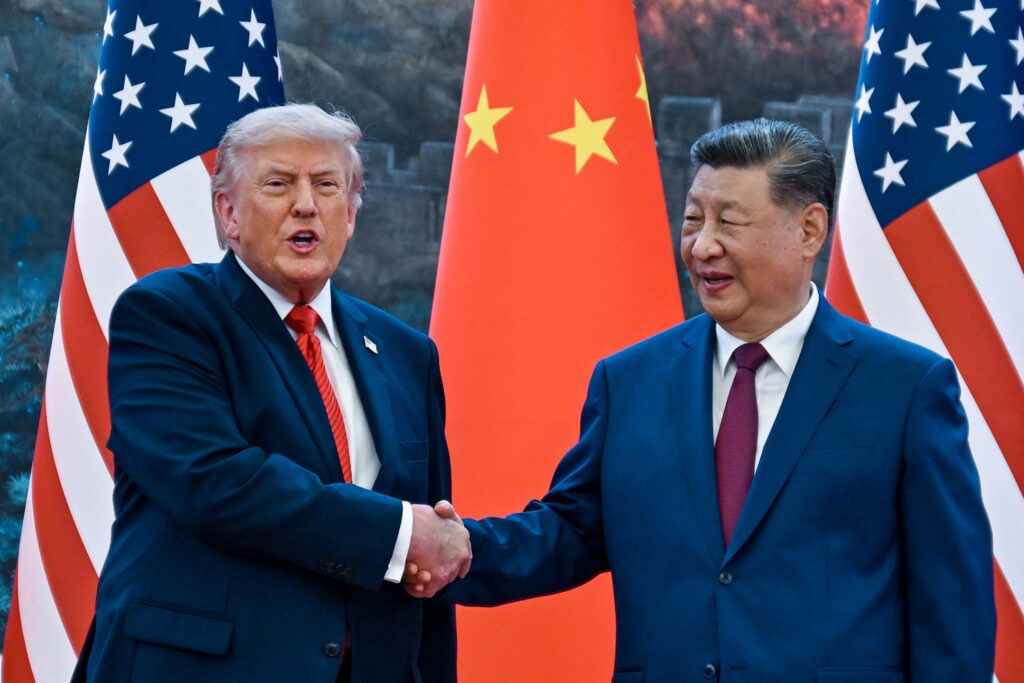
Zimbabwe should welcome the competition. But it should not confuse attention with power. The great-power contest is Zimbabwe’s opportunity — if Harare can negotiate. The temptation will be to ask: Should Zimbabwe choose China or America? That is the wrong question. The better question is: How can Zimbabwe make China and America compete on Zimbabwean terms?
China has capital, established relationships and companies already operating inside the country. America can potentially bring capital, technology, markets and alternative sources of finance and investment. Zimbabwe has something neither can manufacture: the minerals. But possessing minerals underground is not the same as controlling their value.
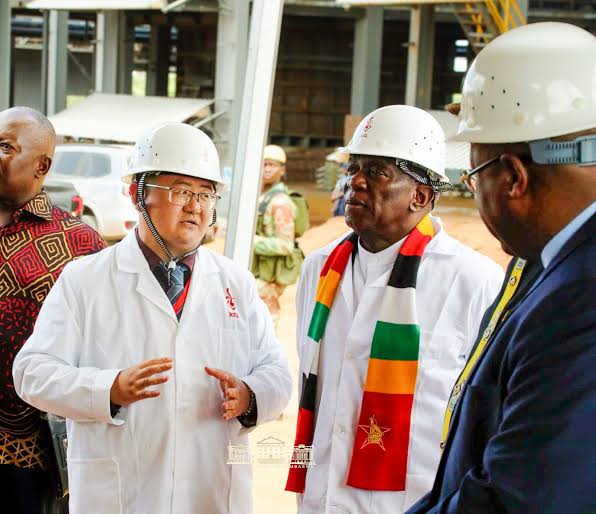
Consider lithium. It reported in July that Zimbabwe’s only operational lithium sulphate plant, operated by Zhejiang Huayou Cobalt’s Prospect Lithium Zimbabwe, said it did not have capacity to process material from third-party producers. That creates an uncomfortable contradiction: Zimbabwe wants miners to process more minerals domestically, yet the country does not yet have enough processing capacity to accommodate all producers.
This is the heart of Zimbabwe’s problem.
The country can ban exports of raw minerals. It can demand beneficiation. It can announce new industrial policies. But unless it develops processing capacity, reliable electricity, railways, technology, finance and competitive downstream industries, it risks controlling the gate without controlling what happens beyond it.

Zimbabwe therefore needs to move beyond asking, “Who is investing?” It needs to ask: Who processes the mineral? Who finances the mine? Who owns the technology? Who transports it? Who buys the finished product? And where does the largest share of the profit ultimately end up? That is where economic sovereignty is really decided.
There is another actor largely absent from the diplomatic photographs in New York, Beijing and Harare: the Zimbabwean citizen. Zimbabwe does not lack resources. Yet it is becoming increasingly difficult to tell a population living with unemployment, weak public services and economic insecurity that the country is extraordinarily rich while asking them to continue living as though it is extraordinarily poor.
There are countries that demonstrate that natural wealth does not have to remain a curse. Singapore had virtually no natural resources to fall back on, yet it transformed itself through human capital, infrastructure, education, trade, disciplined institutions and long-term economic planning. Norway took a different route. It used its enormous oil wealth to build a sovereign wealth fund designed to preserve and invest petroleum revenues for both current and future generations.
The lesson for Zimbabwe is not that it should copy either country wholesale. It is that mineral wealth can be converted into something much more enduring than export earnings: better schools, reliable electricity, modern hospitals, roads and railways, stronger industries, skilled jobs, savings for future generations and an economy that does not collapse when a commodity price falls.
There is an uncomfortable question beneath every new mining investment: What does it mean for the person living beside the mine? What happens to the river? What happens to the farmland? What happens to the worker? What happens to the community when the mineral is exhausted? And how much of the wealth remains in Zimbabwe? These questions cannot simply be dismissed as anti-investment sentiment.
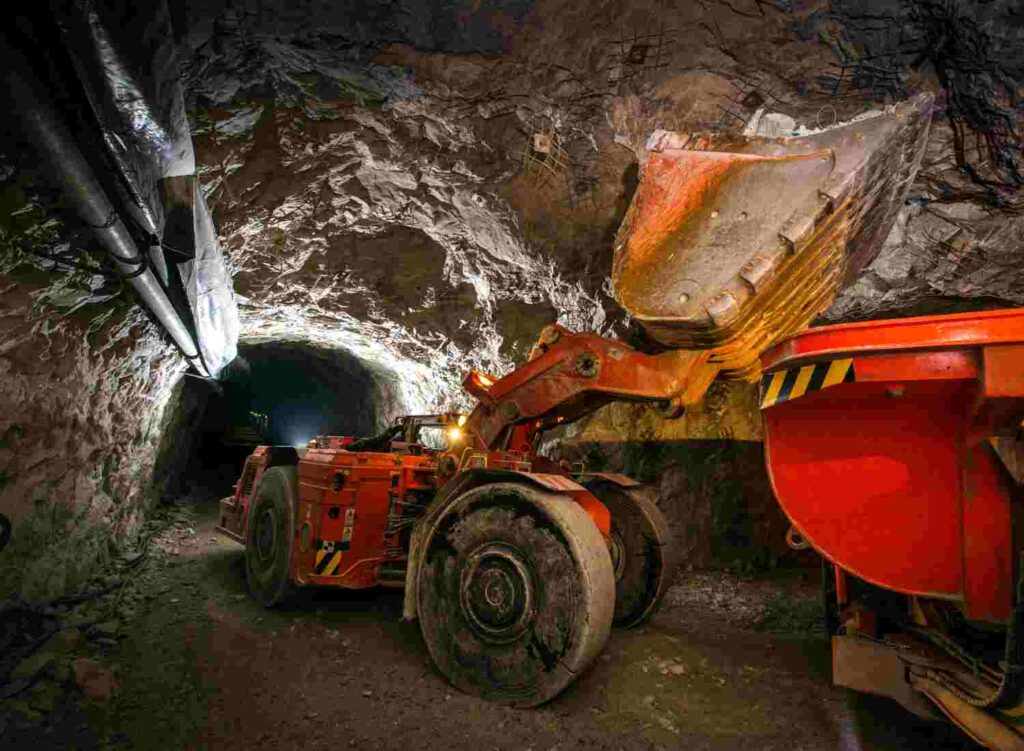
The Centre for Natural Resource Governance’s reporting has documented concerns around pollution, land dispossession, unsafe labour practices and human-rights violations associated with mining expansion in several parts of Zimbabwe. Its assessment of Chinese investment in the extractive sector specifically questions whether some projects are delivering the expected socioeconomic benefits to host communities.
Recent debate over environmental accountability makes the same broader point: the conversation about foreign investment cannot stop at the size of the cheque. It must include environmental responsibility and the rights of communities affected by extraction.
The issue is not whether Chinese companies are uniquely responsible for every problem in Zimbabwe’s mining sector. That would be intellectually lazy. The issue is whether Zimbabwe has strong enough institutions to make every investor — Chinese, American, British, South African or otherwise — pay the full economic and social cost of doing business.
If a company makes millions while a community absorbs polluted water, damaged farmland or unsafe working conditions, the cost has not disappeared. It has simply moved from the company’s balance sheet onto the citizen’s life.
This is where the political narrative becomes particularly interesting. It would be wrong to claim that Zimbabweans simply “hate Beijing”. The evidence is more complicated.
In Afrobarometer’s 2021 Zimbabwe survey, 28.7% of respondents selected the United States as the country whose development model Zimbabwe should follow, compared with only 8.5% for China. South Africa was the most popular choice at 38.7%.
That does not mean Zimbabweans want Washington to replace Beijing. It does, however, demonstrate that government-to-government friendship does not automatically translate into public admiration for a foreign development model.
And that distinction matters.
Zimbabwe’s official rhetoric describes China as an “all-weather friend”. They are reports of Beijing’s pledge to deepen investment in Zimbabwe’s industrial and energy sectors. But friendship between governments and satisfaction among citizens are two different things.
The same principle applies to America. Zimbabwe should not welcome American investment simply because it is American. Washington should have to meet the same test: Does the investment create jobs, transfer technology, expand local industry, strengthen Zimbabwe’s productive capacity and leave a fair share of the value here?
This is why Mnangagwa’s recent engagement with Washington matters. Zimbabwe’s relationship with the United States is no longer frozen in the political landscape of the ZIDERA era. The US and Zimbabwe recorded an estimated $510.6 million in two-way goods and services trade in 2025, according to the US Trade Representative.
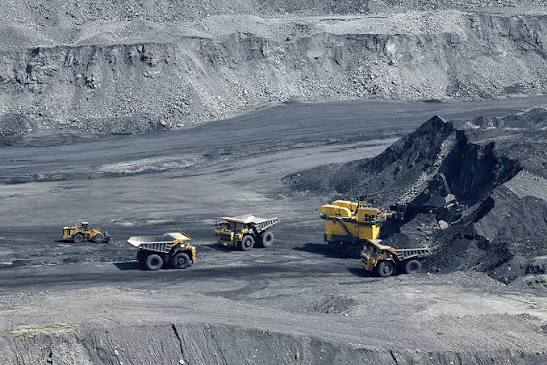
At the same time, China remains deeply embedded in Zimbabwe’s mineral economy. That creates an opportunity. Zimbabwe can potentially use American interest to negotiate better terms with Chinese investors — and use Chinese investment to create competition for American capital.
But there is a condition. Competition only benefits the country that has the institutions, information and negotiating capacity to exploit it. Otherwise, the superpowers will negotiate among themselves while Zimbabwe negotiates from weakness.
And this is where the real danger lies. The biggest loser in the emerging US-China mineral contest may not ultimately be Zimbabwe as a state. It may be the ordinary Zimbabwean.
The biggest winners could be the foreign powers securing strategic supplies and the local elites who benefit from the deals, while communities continue to carry the costs of poverty, environmental degradation, displacement and weak accountability.
Zimbabwe therefore faces a historic test. It has something Washington wants. It has something Beijing wants. But what does Zimbabwe want? Not merely another investment announcement. Not another mine. Not another export figure.
Zimbabwe needs value — processing, technology, jobs, infrastructure, skills, local ownership, stronger communities and industries capable of transforming minerals into products rather than simply shipping wealth out of the country.
The question is no longer whether China or America is Zimbabwe’s better friend. The question is whether Zimbabwe is capable of making either power become a better partner. Because the real contest is not over who gets access to Zimbabwe’s minerals. It is over whether Zimbabweans will finally capture enough of the value those minerals create.