
By Tichaona Katsvamutima
The widening language gap between doctors and ordinary people is placing greater responsibility on journalists to translate complex medical information without sacrificing accuracy, Zimbabwe Union of Journalists (ZUJ) Secretary-General Perfect Hlongwane has said.
But as reporters seek to make science understandable, Hlongwane warned that simplification must never drift into sensationalism or distortion — particularly in an era where artificial intelligence and social media are amplifying misinformation and disinformation.
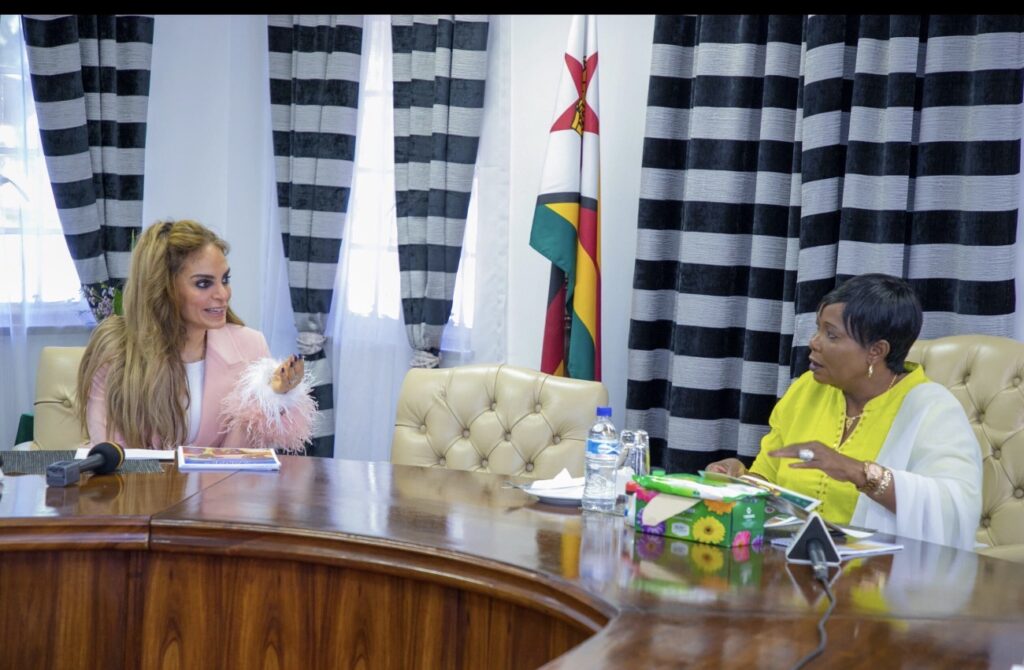
Speaking during a Merck Foundation Health Media Training webinar held in partnership with First Lady Dr Auxillia Mnangagwa,Hlongwane said journalists should build strong professional relationships with doctors and other health experts who can help them unpack medical terminology for the general public.
Hlongwane’s intervention brought into focus an often-overlooked challenge in health journalism: doctors and journalists may be discussing the same issue but communicating in vastly different languages.
For Hlongwane, the journalist’s job is to bridge that divide — not by guessing what complicated medical terms mean, but by going back to specialists and asking them to explain the science in language an ordinary reader, listener or viewer can understand.
That challenge was evident during discussions on infertility, where journalists encountered terms such as endometriosis, anovulation, hyperprolactinaemia, premature ovarian failure, tubal occlusion and peritubal adhesions — terminology that can easily lose an audience when reproduced without explanation.
Hlongwane, however, cautioned that making medical information accessible should not become a licence to embellish stories in pursuit of audiences.
“The moment that media becomes creative, that’s where you have challenges, especially now with artificial intelligence, social media and all,” he said.
“You now have a lot of challenges around misinformation and disinformation because media is trying to be creative. I think that media should just tell stories as they are, bringing out facts.”
He identified verification, protection of privacy, informed consent, avoidance of stigma, accurate communication of risk and putting public interest ahead of sensationalism among the principles that should guide health reporting.
The stakes are particularly high in health journalism, where accurate reporting can save lives, reduce stigma and improve public understanding, while careless reporting can expose private information, spread fear and deepen discrimination.
The webinar used infertility as one area where responsible journalism can make a difference, particularly in communities where women continue to shoulder much of the blame when couples struggle to conceive.
Medical experts told participants that infertility is not exclusively a female problem.
Male factors account for about 40 percent of infertility cases and female factors another 40 percent, while approximately 15 percent involve both partners and around five percent remain unexplained, according to information presented during the training.
Experts also identified reproductive tract infections, including sexually transmitted infections and infections following childbirth or abortion, among factors contributing to infertility, particularly in developing countries.
Access to fertility care remains another challenge in low- and middle-income countries, where services are often not prioritised despite the social and psychological consequences associated with infertility.
The training also highlighted the wider role of journalists in educating communities, challenging stigma, directing people towards available health services, advocating for improved access to care and contributing to informed debate around health policy.
Hlongwane’s message ultimately placed journalists between two worlds — the technical language of the consulting room and the everyday language of the communities they serve.
Their responsibility is to make one understandable to the other without losing the facts along the way.



