By Gabriel Manyati
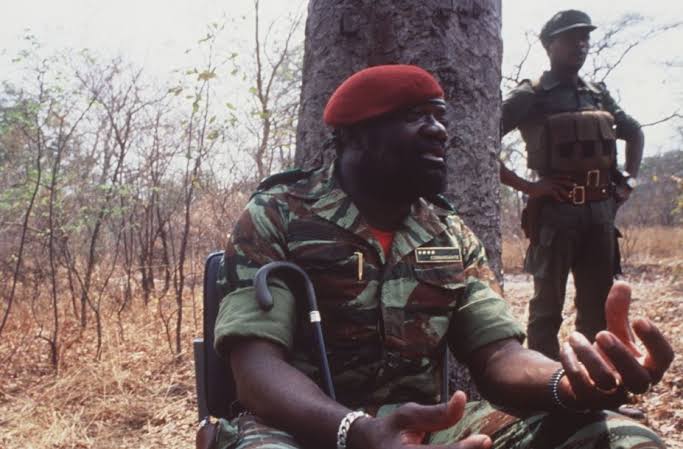
The dust of Moxico province had barely settled on the morning of 22 February 2002 when Angolan government troops located the body they had chased for decades. Jonas Malheiro Savimbi lay dead in the red earth, riddled with bullets after a final, desperate firefight by the banks of the Luecazes River. Around him were his remaining bodyguard, a cache of satellite telephones, and battered volumes of political philosophy.
For over 30 years, this charismatic insurgent had haunted the Angolan consciousness like a phantom. He had survived assassination attempts, aerial bombardments, and the shifting tides of superpower proxy wars. Yet, as the cameras flashed over his bloodied corpse, the man who had styled himself the Black Cockerel was finally silenced.
Who was Jonas Savimbi really? To understand how an intellectual son of a railway worker became one of the twentieth century’s most formidable guerrilla commanders, and how it all ended in the dust of the Angolan bush, requires looking past the political mythology to the fascinating, contradictory man beneath.
Long before he commanded an army in the savannah, Savimbi was shaped by the intersections of faith, colonialism, and elite education. Born in 1934 in Munhango, deep in the Angolan interior, he grew up immersed in the culture of the Ovimbundu people. His father, a stationmaster for the Benguela Railway and a Protestant pastor, instilled in him a strict discipline and a profound sense of grievance against Portuguese colonial rule.
Savimbi proved to be a brilliant scholar. His academic journey took him from Protestant mission schools to Lisbon, and eventually to Switzerland, where he studied political science at the Universities of Fribourg and Lausanne. Here, the young African intellectual was exposed to Western political theory, international diplomacy, and anti-colonial radicalism.
He was not merely a battlefield tactician; Savimbi was a deeply well-read man who could converse fluently in several European languages, quote historical treatises from memory, and debate philosophy with visiting foreign dignitaries. He understood early on that modern revolutions required more than guns; they required rhetoric, ideology, and a compelling personal myth.
The Revolutionary and the Guerrilla King
Savimbi’s path to armed struggle began through uncomfortable alliances. Initially aligned with Holden Roberto and the Front for the Liberation of Angola, Savimbi quickly grew frustrated with what he perceived as ethnic narrowness and ideological drift. He broke away, travelling across Africa and seeking revolutionary inspiration abroad.
In a twist of Cold War irony, the man who would later become Washington’s favourite anti-communist crusader travelled to Beijing in the mid-1960s to receive guerrilla training from the Chinese Communist Party. He studied Mao Zedong’s doctrines of protracted people’s war, absorbing lessons on how to mobilise the peasantry and merge with the rural population like fish in water. Returning to Angola in 1966, he founded the National Union for the Total Independence of Angola, known universally as UNITA.
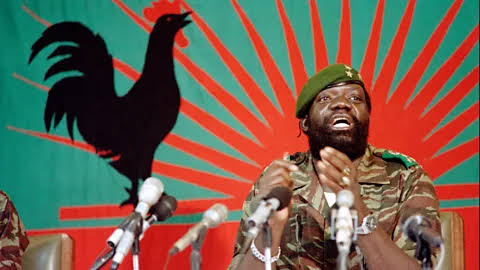
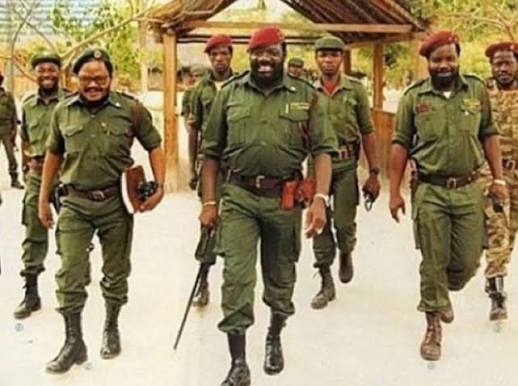
UNITA was built in the image of its leader. In the sprawling, remote expanses of the Angolan interior, Savimbi transformed himself into a guerrilla king. He possessed an electrifying personal charisma that mesmerised his followers. Eyewitness accounts from journalists and foreign emissaries frequently noted his ability to hold a crowd spellbound for hours under the harsh African sun, switching effortlessly between Portuguese, Umbundu, French, and English.
His military instincts were sharp, allowing him to exploit the rugged terrain and maintain popular support among the rural Ovimbundu peasantry through a sophisticated blend of traditional authority and political indoctrination.
Former UNITA fighters recalled a commander who ate the same rations as his troops, walked the endless bush tracks alongside them, and remembered the names of ordinary soldiers. Yet, this accessibility was carefully managed; it coexisted with an uncompromising, iron-fisted control over the movement’s internal hierarchy.
The Cold War Celebrity and the Private Man
As the Angolan civil war escalated into a devastating proxy conflict involving Soviet arms, Cuban troops, and South African intervention, Savimbi adroitly navigated the global stage. He transitioned from a bush commander into a Cold War celebrity.
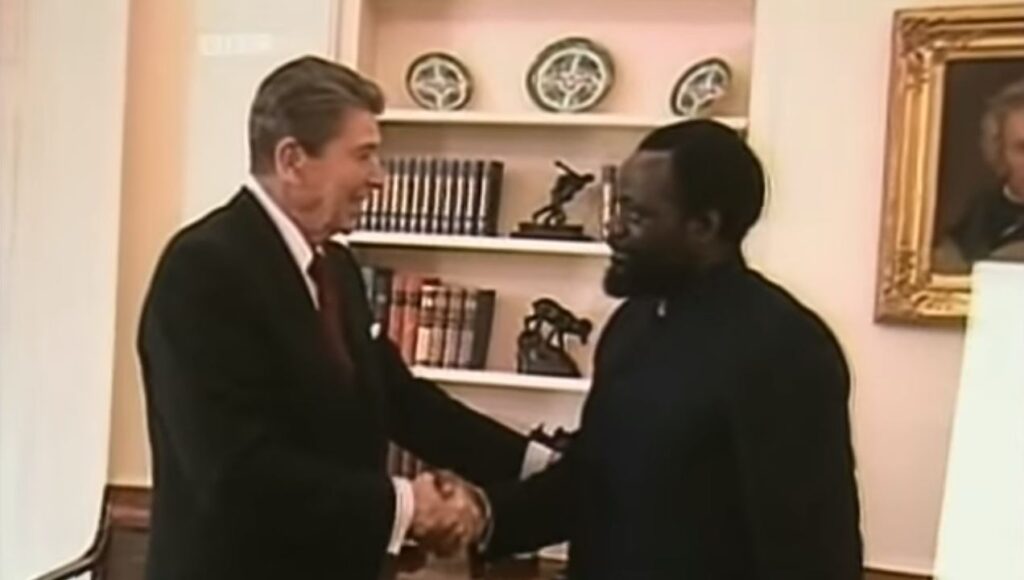
In 1986, he made a triumphant visit to Washington, D.C., where the Reagan administration feted him as a heroic freedom fighter against Soviet expansionism. He walked the halls of Capitol Hill, met with President Ronald Reagan, and secured vital covert military and financial backing. Henry Kissinger described him as one of the most remarkable and intelligent political figures of the era.
Yet, this international packaging masked deep contradictions. The champion of African nationalism was heavily reliant on logistical support from the apartheid regime in Pretoria, a paradox that his critics never let him forget.
Away from the klieg lights of international diplomacy, Savimbi was a complex, multi-faceted figure. He was an avid reader who surrounded himself with books even in the most austere jungle camps, retaining a lifelong fascination with military history and global affairs. He possessed a sharp, often dry wit, frequently disarming hostile journalists with self-deprecating remarks before turning the conversation back to his political grievances.
He loved traditional African music and dance, yet maintained a meticulous personal presentation, often appearing in immaculate guerrilla fatigues adorned with polished insignia, brandishing an ivory-handled sidearm or a walking stick.
Foreign journalists who spent time in his stronghold of Jamba often remarked on the surreal atmosphere: a sophisticated jungle headquarters complete with briefing rooms, international radio links, and disciplined fighters, presided over by a leader who combined the intellectual polish of a European professor with the absolute authority of a traditional African monarch.
The Democrat and the Authoritarian
The core tragedy of Savimbi’s life lies in the chasm between his democratic rhetoric and the realities of his internal regime. Within UNITA-controlled territories, dissent was treated as treason. Human rights organisations and defectors documented horrific purges, arbitrary executions of alleged spies, and the systematic silencing of internal rivals.
Figures like Tito Chingunji, a senior UNITA official who fell out of favour, met violent ends that exposed the dark, ruthless underside of Savimbi’s leadership. To his supporters, Savimbi was the sole bulwark against a corrupt, Marxist-aligned government in Luanda that had ruined the country’s economy. To his enemies and victims, he was a warlord willing to sacrifice millions of lives to satisfy his personal ambition for absolute power.
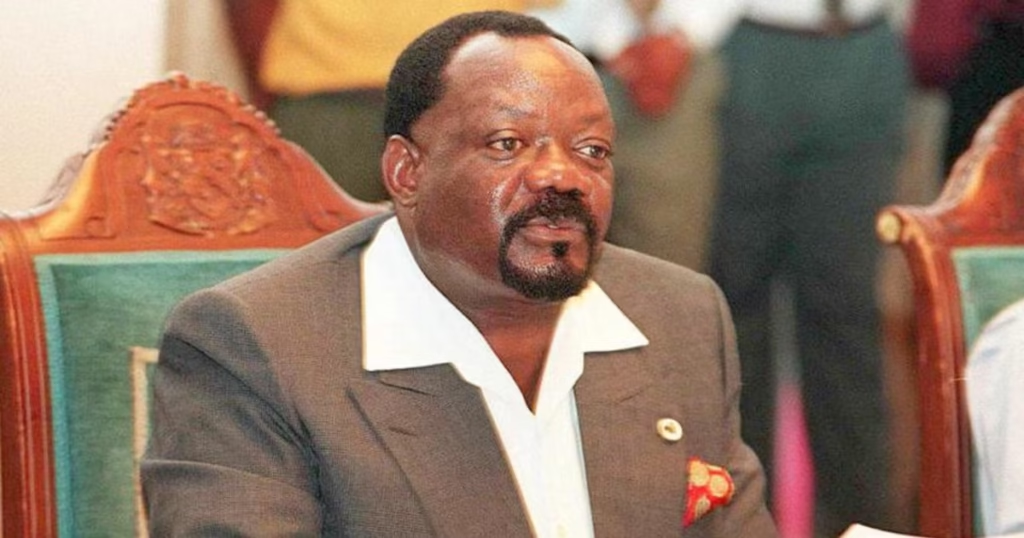
This tension culminated in the watershed year of 1992. Following the Bicesse Accords, Angola experienced its first-ever multiparty democratic elections. Savimbi shed his guerrilla fatigues for tailored suits, campaigning across the country as a presidential candidate promising national reconciliation and democratic renewal. He genuinely believed the rural masses would sweep him into the presidential palace.

When the official first-round results placed incumbent President José Eduardo dos Santos ahead, and subsequent international observers declared the elections largely free and fair, Savimbi refused to accept the verdict. Citing widespread electoral fraud, he rejected the outcome and plunged the nation back into an even more ferocious phase of civil war.
Historians still debate whether 1992 was Savimbi’s greatest missed opportunity to transition from warlord to legitimate head of state, or whether his authoritarian instincts always rendered compromise impossible.
The Final Years and Legacy
The return to war proved to be his undoing. With the end of the Cold War, superpower patronage dried up. UNITA sustained its war machine through the exploitation of conflict diamonds, but international sanctions, arms embargoes, and a modernised Angolan military gradually choked the movement. Savimbi found himself increasingly isolated, retreating deeper into the remote Angolan bush as government forces closed the net.
For years, he lived the life of a hunted fugitive, moving from camp to camp until the final ambush in Moxico province in February 2002.
History refuses to place Jonas Savimbi neatly into a single category. He was an intellectual who chose the brutality of the jungle; a passionate nationalist who allied with foreign powers; a champion of democracy who rejected the ballot box when it did not favour him; and a charismatic leader who brought both liberation and devastation to his homeland.
He remains one of modern Africa’s most compelling enigmas – a man who sought the presidency of Angola for decades, only to find his legacy written not in the halls of power, but in the enduring mythology of the bush.