By Gabriel Manyati
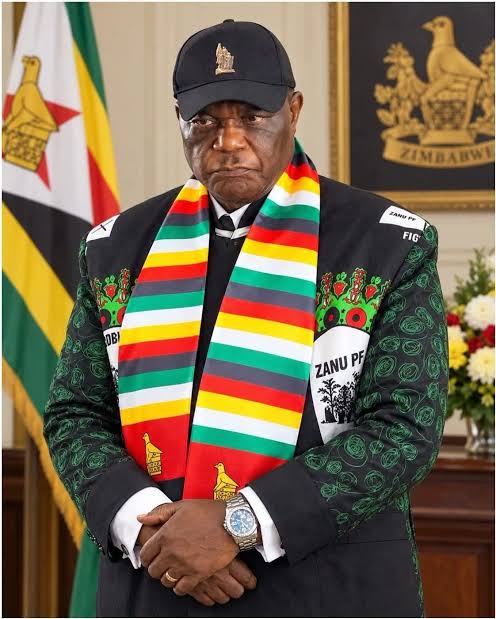
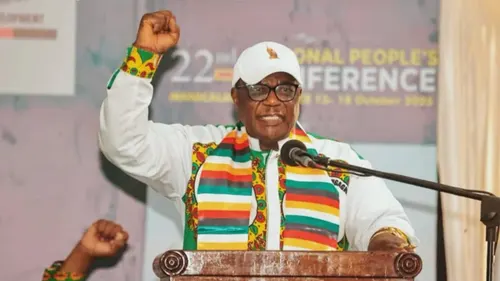
When the dust settled over the arena in Chinhoyi at the 23rd ZANU PF Annual National People’s Conference, one overarching narrative eclipsed all the boilerplate revolutionary rhetoric: Vice President Constantino Chiwenga had walked directly into a meticulously orchestrated political ambush. The former commander of the Zimbabwe Defence Forces, who famously led the November 2017 military intervention that ousted the late Robert Mugabe, found himself publicly dismantled, mocked, and politically isolated by the very party apparatus he helped install.
Yet, viewed through the lens of political tragedy, Chiwenga emerged less as a factional plotter and more as a solitary martyr of conscience – a leader paying the heavy price for trying to force a compromised party to look in the mirror and do the right thing.
Chiwenga’s fundamental offence was simple yet unforgivable in the high-stakes arena of ZANU PF succession politics. He broke the carefully scripted narrative by taking the podium to deliver an unexpected address that probed the party’s internal decay. Pushing back against the controversial campaign by party loyalists to extend President Emmerson Mnangagwa’s constitutional tenure beyond 2028, Chiwenga delivered a warning against leadership overreach, institutional decay, and democratic backsliding.
Speaking in a mixture of Shona and English, Chiwenga confronted the assembly with a set of existential questions regarding the party’s trajectory:
“Chii chakaita kuti Second Republic ivepo? Kwaive kugadzirisa zvakaipa zvanga zvichiitika kumashure. Hatisi kudzokorora here kuita zvatakambotadza? Ndomubvunzo watinofanira kuzvibvunza.” (What led to the emergence of the Second Republic? It emerged from correcting the rot that was prevailing. Are we not repeating the same mistakes? That is the question we should be asking ourselves).
He went further, urging a brutal and honest self-appraisal and reminding party leaders that power cannot be treated as personal property:
“Our party belongs to the people, never to individuals… Change is inevitable. It must be orderly, engaged through our party structures, and guided by our constitution. Change must be driven by the people, not imposed from above. You may recall, Your Excellency, that the voice of the people is the voice of God… Our time on earth is finite, and we must therefore ask ourselves: What legacy are we leaving behind? We are here to serve the people, never to be served by them”.
The response from the loyalist faction surrounding Mnangagwa was rapid, brutal, and heavily coordinated. Within hours, party heavyweights, provincial leaders, and communication officials launched a series of sharp counter-attacks aimed at delegitimising the vice president’s critique.
What transpired over the remainder of the conference was a systematic campaign to undercut Chiwenga’s authority, strip away his revolutionary aura, and demonstrate where real political power resides within the contemporary ZANU PF structure. The most explicit public rebuke came from ZANU PF national spokesperson Christopher Mutsvangwa. In a statement issued following the speech, Mutsvangwa dismissed Chiwenga’s warnings as the actions of a politically stranded figure:
“Ah… that one… he opportunistically abused the granted privilege to introduce H.E. as guest of honour. His dissonant welter of ‘wrongs’ was brushed aside. He laboured in vain much like a loose bolt in a car engine. He remained thereafter hoping for follow-up support. None came. He was just shrugged off. No political harvest at all for unrequited political ambition. The EDM bus of economic deliverables through Vision 2030 and prospect of middle-income nation prosperity rolled over his self-centred and furtive pursuit of dictatorial aspiration for political power.”
By comparing a former military commander and sitting vice president to a loose bolt in a car engine, the party spokesperson signalled that Chiwenga had become an extraneous component in the state machinery.
The rhetoric turned to cosmic metaphors as provincial leaders moved to reinforce absolute loyalty to Mnangagwa. Figures such as Minister of Local Government and Public Works and ZANU PF Mashonaland East provincial chairman and Daniel Garwe and Midlands provincial chairman Edson Chiherenge deployed the two suns narrative to counter Chiwenga’s standing, asking how two suns could possibly rise or shine simultaneously in the same political sky without scorching the land. They declared that only one sun shines in ZANU PF, and anyone attempting to create a second sun is merely chasing shadows. The metaphor was aimed directly at Chiwenga’s position within the presidium, framing any exertion of independent authority as an unlawful attempt to establish a parallel centre of power.
Jabulani Sibanda, the former leader of the war veterans, delivered a targeted critique focused on party governance and constitutional authority. Sibanda reminded the audience of the structural division between executive mandate and secondary appointment, noting that some leaders were elected by the masses while others were merely appointed, and an appointed official cannot dictate terms to the authority that appointed them. This intervention targeted Chiwenga’s political base, reminding the gathering that while Mnangagwa claims an electoral mandate from both party congresses and national elections, the vice president’s position exists purely through presidential appointment.
While avoiding direct personal references, Mnangagwa used his official remarks to reinforce discipline across the party ranks. Mnangagwa addressed internal divisions, explicitly condemning individualism, which he termed “mazvake mazvake”, a term Chiwenga had used in his address:
“ZANU PF is a party of order, discipline, and collective purpose. There is no room for ‘mazvake-mazvake’ – every man for himself – or personal agendas that seek to derail our collective vision. Those who believe they are bigger than the party will find that the revolutionary train leaves them behind.”
Stepping beyond the conference hall doors, the president delivered an even starker warning to the press regarding internal dissent. Addressing the friction openly, Mnangagwa downplayed the rift as routine within a revolutionary movement, yet issued a chilling ultimatum that carried heavy undertones for his deputy:
“ZANU PF is united. In any movement, you have people who divert from the centre of the party. That is expected. But overall, the party is united. If you have a party and from January to December you find no dissenting voice, something is wrong… However, failure to toe the party line has consequences. Any revolutionary party will always have people that fail to run the correct line and fall by the wayside”.
This explicit warning tied directly back to Chiwenga’s ordeal in Chinhoyi. It framed the vice president’s courageous plea for self-reflection not as a noble act of internal democratisation, but as a dangerous deviation from the centre – a misstep that carries immediate political consequences in a party intolerant of internal opposition.
In the immediate aftermath of the Chinhoyi conference, viral claims circulated alleging that Information Communication Technology Minister Tatenda Mavetera had ‘publicly insulted’ Chiwenga. Reports suggested she had reprimanded delegates for applauding Chiwenga’s arrival, allegedly using disparaging language to force them to sit down. However, a close review of conference proceedings shows that the specific claim of Mavetera ‘insulting’ Chiwenga directly from the stage remains unverified.
While Mavetera actively participated in chanting slogans supporting Mnangagwa’s continued tenure, there is no verified recording of her issuing an official podium reprimand or direct insults at the vice president. Instead, the narrative gained traction through online platforms and political commentators.
Nevertheless, the broader effort to suppress Chiwenga’s message was undeniable, as state media outlets like the Zimbabwe Broadcasting Corporation and Star FM promptly deleted or muted digital clips of his address to limit its public reach.
To evaluate why the ruling party reacted with such hostility to Chiwenga’s speech, one must analyse the shifting power dynamics within ZANU PF since 2017. The primary driver of the conflict is the project to keep Mnangagwa in office until 2030, and Chiwenga’s speech represented an explicit challenge from within the senior leadership against altering the constitutional two-term limit. Furthermore, in November 2017, Chiwenga drew authority directly from his command of the armed forces.
Over the subsequent nine years, Mnangagwa systematically restructured the military and security apparatus, reassigning key generals and promoting loyalists. Consequently, Chiwenga’s military leverage has been significantly reduced, leaving him vulnerable within civilian party structures. By labeling Chiwenga’s speech a furtive pursuit of dictatorial aspiration, the loyalist faction inverted the constitutional debate, depicting him as an ambitious actor attempting to bypass party processes rather than a defender of the constitution.
In Chinhoyi, Vice President Constantino Chiwenga stood as a tragic figure of martyrdom, appealing to the party’s historic commitments and constitutional boundaries while knowing the steep cost of dissent. But the response demonstrated the ruthless realities of power within modern ZANU PF. Isolated on stage, publicly derided by party spokespersons, threatened by presidential warnings of falling by the wayside, and edited out of state broadcasts, the former general discovered that in the unforgiving theatre of civilian authoritarian politics, trying to do the right thing is the most dangerous crime of all.