By Gabriel Manyati
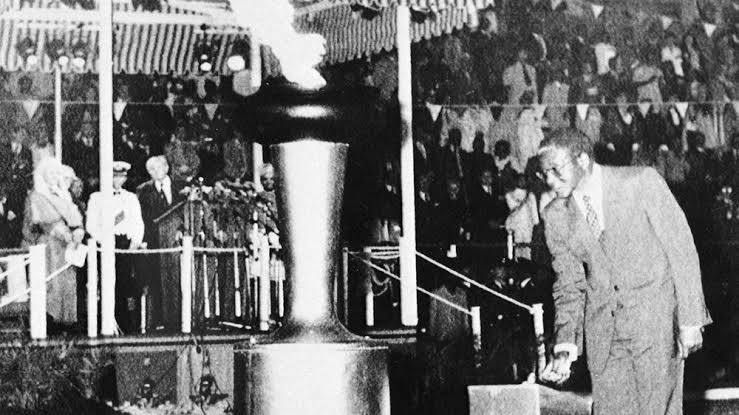
The man who stepped to the microphone at Rufaro Stadium in April 1980 to lead a newly independent Zimbabwe seemed, to many foreign observers, to have emerged fully formed from the crucible of African nationalism. Yet the narrative of Robert Gabriel Mugabe’s inevitable march to power is a polite myth constructed after the fact.
To look closely at the two decades preceding independence is to discover a story not of an unbroken, preordained ascent, but of a chaotic, uncertain, and frequently desperate struggle for survival inside his own party.
Mugabe was not the military hero, the charismatic orator, or the undisputed first choice of Zimbabwe’s liberation movement. He was an accidental contender who navigated a minefield of prison politics, bloody purges, military rebellions, high-profile assassinations, and deep scepticism from regional allies. His ultimate emergence as the leader of the Zimbabwe African National Union (ZANU) was less a personal conquest than the result of a political elimination contest in which he was, above all else, the last man standing.
The Unlikely Revolutionary
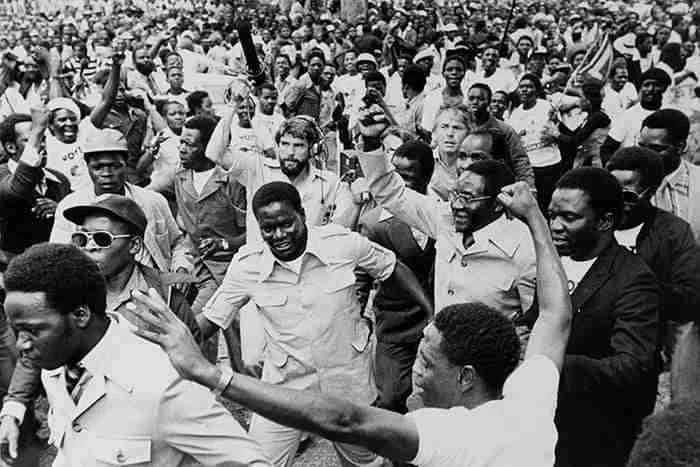
Long before he was a guerrilla commander or a statesman, Mugabe was a schoolteacher with an appetite for academic degrees. Born in 1924 at Kutama Mission, his intellectual discipline set him apart early. As a boy growing up in rural Zvimba, he was famously intense and solitary, rarely seen without an open book in hand even while herding cattle across the dusty communal lands.
His pursuit of higher education took him south to South Africa, where he attended the University of Fort Hare between 1949 and 1951. It was an extraordinary intellectual nursery; during those precise years, the institution was also shaping a young Nelson Mandela, exposing Mugabe to the broader pan-African currents sweeping the continent.
By the late 1950s, while teaching at St Mary’s Teacher Training College in Takoradi, Ghana, Mugabe observed firsthand the radical pan-Africanism of Kwame Nkrumah. Ghana was a revelation, exposing the quiet, devout Catholic teacher to the mechanics of anti-colonial revolution. It was also where he met Sarah “Sally” Hayfron, a brilliant Ghanaian teacher who shared his political fervour.
The two fell in love and were married in 1961, establishing a personal and political partnership that would endure through the darkest years of the liberation struggle.
When Mugabe returned to Southern Rhodesia in 1960, his credentials were extraordinary for the time. Yet inside the emerging nationalist movement, his cerebral demeanour made him an unusual fit. He was not a natural populist like Joshua Nkomo, the imposing leader of the Zimbabwe African People’s Union (ZAPU), nor did he possess the flamboyant, fiery rhetoric of the Reverend Ndabaningi Sithole.
Mugabe entered mainstream politics as the publicity secretary for the National Democratic Party (NDP) and later ZAPU.
When internal frustrations over strategy split the movement in August 1963, leading to the formation of ZANU at Enos Nkala’s home in Highfield, Salisbury, Mugabe joined the breakaway faction. The new party was led by Sithole, flanked by figures like Leopold Takawira and Herbert Chitepo. Mugabe was appointed secretary-general. He was valued for his administrative rigour, his sharp analytical mind, and his ideological precision, but few in 1963 viewed him as a future national ruler.
By late 1964, the white minority government of Ian Smith moved aggressively to crush the nationalist leadership. Mugabe, along with Sithole, Takawira, Edgar Tekere, and dozens of others, was arrested. What was meant to be a brief detention turned into a decade of imprisonment.
The Prison Laboratory and the Fall of Sithole
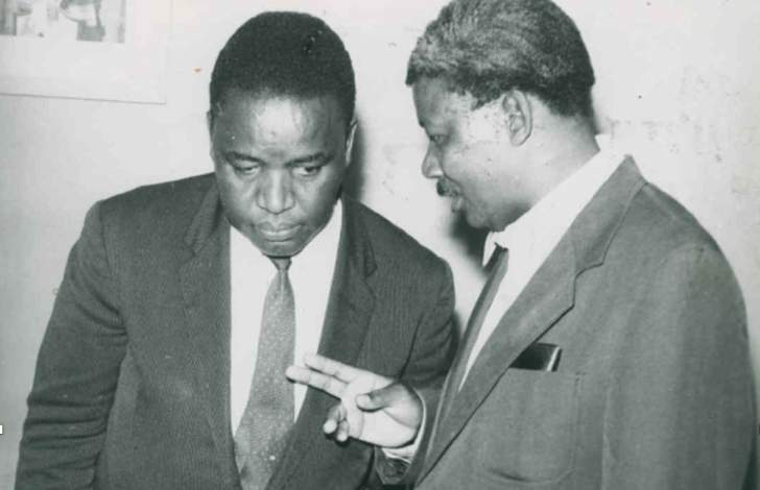
Between 1964 and 1974, Mugabe was held in Que Que Prison, Gwelo Prison, and Salisbury Maximum Security Prison. Rather than neutralising the nationalist leadership, prison transformed into an intense political laboratory. Mugabe approached incarceration with rigid, ascetic discipline. He deepened his intellectual authority behind bars, eventually earning seven academic degrees in total across his life.
Three of these advanced qualifications – in economics, law, and administration – were completed entirely by correspondence with the University of London while confined in his cell. He taught fellow inmates and maintained an unyielding personal routine.
Tragedy struck in 1966 when his three-year-old son, Nhamodzenyika, died of encephalitis in Ghana. Ian Smith’s regime refused Mugabe’s desperate pleas to attend the funeral alongside Sally, a refusal that deepened his resolve and hardened his outlook towards his captors.
Inside Salisbury Maximum, a quiet coup was brewing. Ndabaningi Sithole’s authority as ZANU president began to erode. Sithole was increasingly viewed by his fellow detained executive members as indecisive and overly cautious. The fatal blow to Sithole’s leadership came in 1969, when he was tried for allegedly smuggling a letter out of prison plotting to assassinate Ian Smith. During his trial, a shaken Sithole publicly denounced the armed struggle to save himself from execution.
For many ZANU detainees, this was an unforgivable betrayal. In late 1974, while still behind bars, a group of executive members including Mugabe, Tekere, and Enos Nkala held a vote to depose Sithole as party leader. They selected Mugabe, as secretary-general, to assume executive authority. However, this prison executive vote was far from universally accepted. Outside the prison walls, ZANU’s external wing, led in Lusaka by chairman Herbert Chitepo, hesitated to recognise an internal prison coup while the movement was fighting a war.
Mutiny in the Ranks: The Nhari and Badza Rebellions
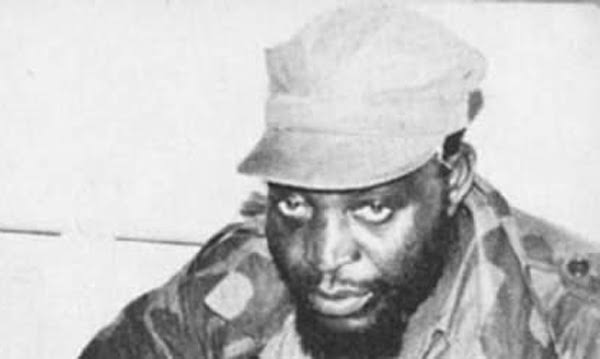
While the political leadership argued inside prison and across diplomatic circuits, the front lines were quietly decaying. In late 1974, ZANU’s armed wing, the Zimbabwe African National Liberation Army (ZANLA), was rocked by a devastating internal revolt known as the Nhari and Badza rebellions.
Led by Thomas Nhari and Dakari Badza, two frustrated field commanders operational in the Zambezi Valley, the mutiny erupted out of severe logistics breakdowns and deep rank-and-file resentment.
Combatants on the front lines faced extreme shortages of ammunition, clothing, boots, and medicine, while enduring relentless Rhodesian patrols. Tensions boiled over due to allegations of corruption and luxury amongst the High Command residing in Lusaka, along with complaints that senior commanders were mistreating recruits and ignoring tactical warnings from field officers.
Nhari and his supporters staged a daring raid on the ZANLA operational headquarters in Chifombo, capturing several high-ranking officers and forcing their way to Lusaka. The rebellion was ultimately crushed with extreme severity by ZANLA High Command forces led by Josiah Tongogara. Dozens of mutineers were rounded up, court-martialled, and executed in the bush.
The brutal suppression of the Nhari revolt left deep, lasting scars. It shattered trust between the field combatants, the military High Command, and the political bureaucracy, establishing a dangerous precedent: internal dissent within ZANU would be answered not with political compromise, but with lethal purges. It created a deep ideological rift regarding who truly held authority over the revolution – the commanders in safe havens, or the fighters in the mud.
The Chitepo Assassination: Theories and Consequences
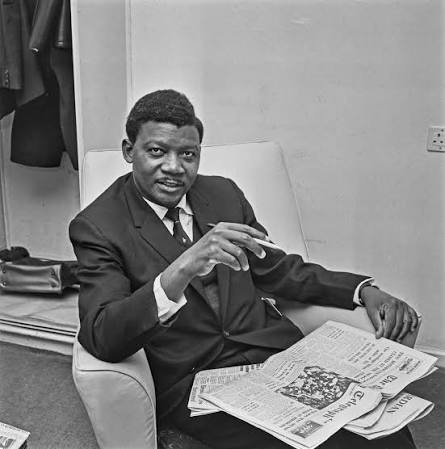
The fragile stability established after the mutiny vanished entirely on 18 March 1975, when Herbert Chitepo, ZANU’s National Chairman and the undisputed titan of its external wing, was assassinated by a car bomb outside his home in Lusaka.
The assassination remains one of modern African history’s most fiercely debated political murders. Two competing theories continue to dominate historical analysis. The Rhodesian Covert Operation thesis asserts that the bomb was planted by Rhodesian Central Intelligence Organisation (CIO) agents, notably double agent Michael “Sam” MacIntyre, who were instructed to destabilise ZANU during a delicate geopolitical moment. By killing Chitepo, Salisbury sought to paralyse ZANLA’s military apparatus and provoke lethal internal infighting.
Conversely, the Internal ZANU Purge thesis presents a radically different interpretation. Contending accounts, including the findings of an international commission set up by Zambia, argued that Chitepo was killed as a result of ethnic and factional rivalries within ZANU’s Supreme Council (Dare reChimurenga). This line of argument linked his death directly to the fallout of the Nhari rebellion, claiming Karanga-dominated military elements targeted the Manyika chairman to secure total operational control.
Regardless of who planted the bomb, the political fallout was instantaneous and catastrophic. The death of Chitepo eliminated the single most formidable, respected, and administrative figure in ZANU’s external leadership. His removal cleared a structural vacuum at the apex of the party that few remaining figures had the stature to fill.
The Zambia Crackdown and the Detention of the High Command
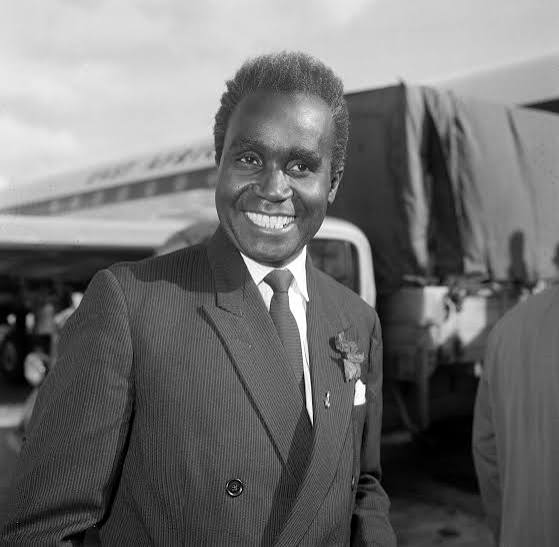
Zambian President Kenneth Kaunda was outraged by Chitepo’s murder on Zambian soil. Already committed to a regional “détente” strategy with South Africa to force negotiated settlements, Kaunda viewed internal ZANU feuds as a direct threat to his nation’s security and diplomatic vision.
Convinced that ZANLA’s internal power struggles were responsible for the car bomb, Kaunda ordered a sweeping, uncompromising crackdown on ZANU’s infrastructure inside Zambia. ZANLA Commander-in-Chief Josiah Tongogara, alongside core High Command members including Rugare Gumbo, Kumbirai Kangai, and Joseph Taderera, were arrested and incarcerated in Lusaka’s Mpima Maximum Security Prison. Over 1500 ZANLA combatants were disarmed and interned at Mpika camp.
Tongogara and his colleagues were held in harsh detention conditions for over 18 months, facing prosecution for murder in Zambian courts. This sudden arrest of virtually the entire military leadership paralysed ZANLA’s war machine. Command and control at the front completely collapsed. Supply lines from Zambia were cut off, combat operations ground to a halt, and thousands of young recruits flooding across the border found themselves stranded in logistical limbo.
Tongogara was eventually released in late 1976, primarily through intense diplomatic pressure exerted by Mozambique’s Samora Machel and the geopolitical necessity of uniting the liberation factions before the Geneva Constitutional Conference. Though acquitted of direct involvement in Chitepo’s death, Tongogara returned to an army that had transformed fundamentally in his absence – an army that had found a new political anchor.
Escape, Rebellions, and the Mgagao Turning Point
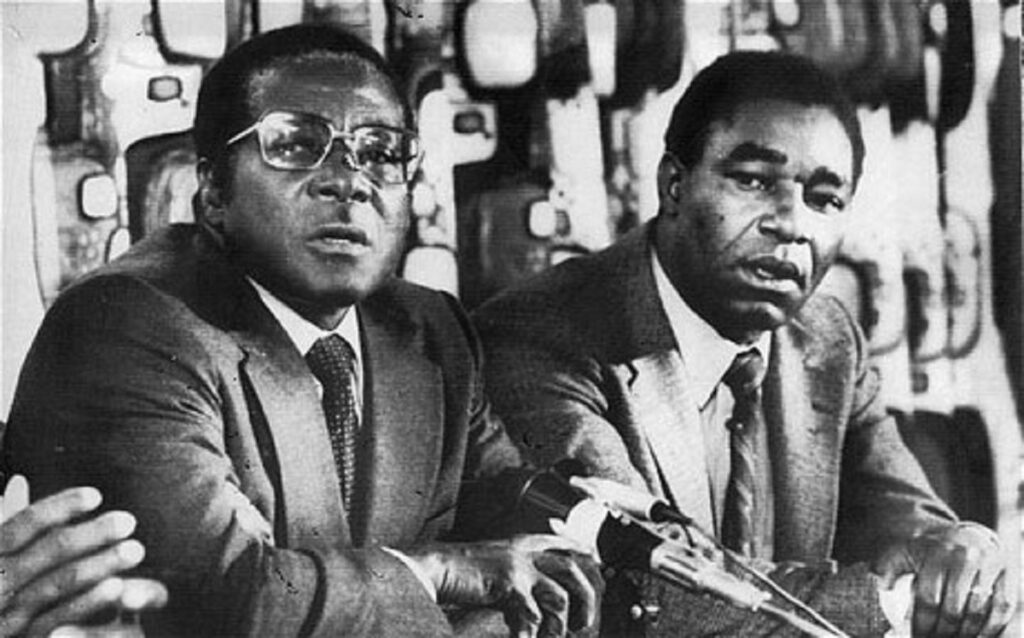
Released from Rhodesian prison in late 1974 under the failed détente initiative, Mugabe emerged into this shattered, leaderless political landscape. He realised that to claim actual leadership of ZANU, he needed to establish direct contact with the fighting forces operating out of Mozambique.
In April 1975, accompanied by Edgar Tekere and guided by the legendary Chief Rekayi Tangwena, Mugabe crossed the mountainous eastern border into Mozambique on foot. The trek was perilous, avoiding Rhodesian security patrols and navigating rough terrain.
Yet crossing the border was only the beginning of his political trial. Upon arrival, Mugabe did not find an eager army waiting to crown him.
With Tongogara and the High Command languishing in Zambian jails, thousands of young ZANLA combatants in training camps like Mgagao in Tanzania and King Cross in Mozambique were leaderless, bitter, and deeply suspicious of the old civilian politicians trying to manage the war from afar.
It was from the damp, overcrowded barracks of Mgagao Camp in Tanzania that the decisive political directive emerged in late 1975. A group of young officers and political commissars drafted the Mgagao Declaration. Written in unsparing revolutionary language, the document delivered an explicit rejection of Ndabaningi Sithole, Bishop Abel Muzorewa, and James Chikerema, declaring that these leaders had “proved to be completely unfaithful to the Zimbabwean revolution” through their willingness to compromise with imperialist diplomacy.
Crucially, the young commanders declared that they would only recognise Mugabe – as the elected Secretary-General – as the legitimate political representative of the fighting forces. Prominent among those who championed Mugabe’s cause during this crucial phase was Solomon Mujuru – a relative of Mugabe – then operating under the nom de guerre Rex Nhongo.
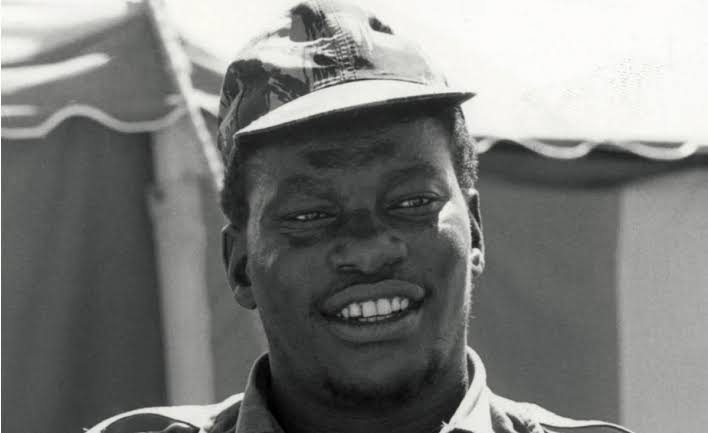
Mujuru and fellow commanders saw in Mugabe a disciplined, uncorrupted, and highly educated figure who could give the armed struggle international respectability without selling out its radical military objectives.
Yet Mugabe’s installation was not a personal military victory; it was a marriage of convenience. The military leadership elevated Mugabe because they needed a credible civilian face for the diplomatic stage, while Mugabe needed the guerrillas to enforce his political legitimacy.
Frontline Doubts, ZIPA, and the Geneva Conference
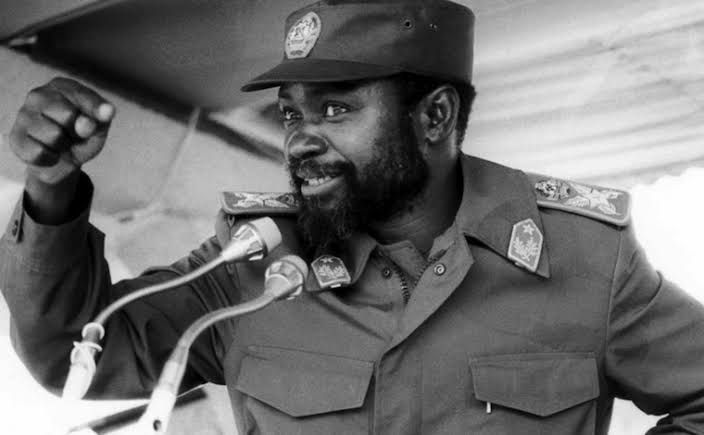
Even after Mgagao, Mugabe’s leadership was far from secure. The leaders of the Frontline States, the regional coalition supporting the liberation wars, viewed Mugabe with deep scepticism.
Mozambique’s President Samora Machel initially placed Mugabe under virtual house arrest in Quelimane, unsure of who this quiet former teacher was and whether he truly commanded the guerrilla army.
Zambia’s Kenneth Kaunda openly preferred Joshua Nkomo, regarding Mugabe as an ideological radical whose movement was hopelessly prone to violent internal purges.
To bypass the political logjam, the Frontline States facilitated the creation of the Zimbabwe People’s Army (ZIPA) in late 1975 – an attempt to force an operational integration of ZANU’s ZANLA and ZAPU’s military wing, ZIPRA. Led by young commanders like Wilfred Pasipaodi and Dzinashe Machingura, ZIPA briefly sought to run the war independent of the old political leadership, including Mugabe.
However, the ZIPA integration collapsed rapidly in violent clashes in training camps across Mozambique and Tanzania. Ideology, ethnic mistrust, and historical rivalries between ZANLA and ZIPRA proved impossible to bridge. When Mugabe, backed by a newly released Tongogara and Solomon Mujuru, reasserted political authority, the radical ZIPA leadership was purged and arrested in early 1977.
The diplomatic breakthrough arrived with the 1976 Geneva Conference. British and American diplomats sought to negotiate a transition to majority rule, forcing the nationalist factions to organise. Recognising their vulnerability if divided, Mugabe and Joshua Nkomo formed a tactical alliance: the Patriotic Front.
Though built on mutual distrust, the Patriotic Front presented a united anti-colonial block that effectively neutralised internal rivals like Sithole and Muzorewa.
The Geneva platform projected Mugabe onto the global stage. No longer just a factional contender, he was now recognised internationally as a co-leader of the armed resistance. It was during this pivotal conference in late 1976 that Mugabe famously articulated his uncompromising philosophy regarding military leverage and political power, declaring: “Our votes must go together with our guns”. For Mugabe, negotiation was never a replacement for armed resistance, but its direct extension.
The Road to 1980
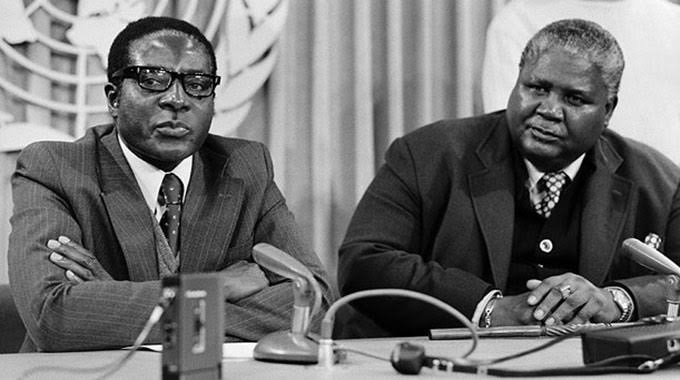
By the time the final negotiations took place at Lancaster House in London in late 1979, Mugabe had solidified his authority over ZANU. He had outlasted Sithole, survived the death of Chitepo, weathered regional hostility, crushed internal rebellions, and subordinated the military command to his political authority.
Yet even as constitutional terms were finalised, tragedy struck the liberation movement once more. On 26 December 1979 – just six days after the Lancaster House ceasefire was signed – Josiah Tongogara died in a car accident in Mozambique while travelling to brief ZANLA forces on the peace agreement. His sudden death raised immediate suspicion and remains fiercely disputed to this day, underscored by declassified CIA cables from the era that had explicitly identified Tongogara as a powerful potential rival to Mugabe for the leadership of a free Zimbabwe.
Broadcasting on the Voice of Zimbabwe radio station to a stunned nation, Mugabe announced “an extremely sad message” to the fighting forces, mourning the loss of the legendary commander who had held the army together.
When the ceasefire took full effect and the 1980 election campaign began, Mugabe returned to a country he had not freely walked in 15 years. British authorities and Rhodesian military intelligence calculated that Mugabe would fail to win an outright majority, expecting a coalition government between Nkomo’s ZAPU and Muzorewa’s United African National Council (UANC).
The campaign path was fraught with extreme danger, as elements of the old order made desperate attempts to eliminate him before the polls opened. During February 1980 alone, Mugabe survived two direct assassination attempts: on 6 February, a grenade was thrown at his home in the Salisbury suburb of Mount Pleasant, and on 10 February, a massive roadside bomb containing roughly 80 pounds of explosives detonated under his motorcade as he travelled toward an election rally near Fort Victoria (now Masvingo).
Furthermore, a covert plan by the Rhodesian Special Air Service (SAS) code-named Operation Hectic – designed to assassinate Mugabe and the ZANU leadership outright – was called off barely three hours before its scheduled launch.
The white minority regime fundamentally misjudged the political reality of the countryside. Years of ZANLA guerrilla mobilisation, combined with Mugabe’s uncompromising stance on land restoration and national sovereignty, had struck a deep chord with the rural majority. When the votes were counted in late February 1980, ZANU PF won 57 of the 80 common-roll seats in a landslide victory.
On the eve of independence, 18 April 1980, the former prison inmate and schoolteacher took the oath of office as Prime Minister. In a historic radio broadcast to the nation, he struck a remarkably magnanimous tone, extending a hand of reconciliation to the white minority and his former adversaries: “If yesterday I fought you as an enemy, today you have become a friend.”
The man who walked into State House in 1980 was not a political favourite who had coasted to an easy triumph. He was the product of nearly two decades of factional warfare, imprisonment, betrayal, and relentless adaptation. His rise was not inevitable, but the result of a brutal political survival course.
Mugabe had learned the central rule of revolutionary politics: power ultimately belongs not to the person who begins the race as the favourite, but to the person who survives long enough for the field to change.