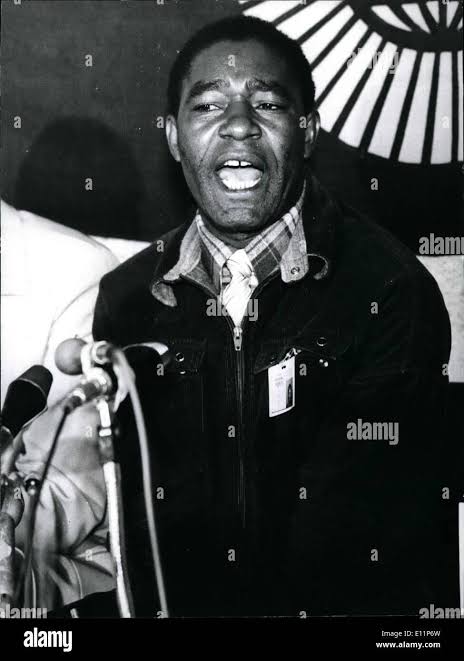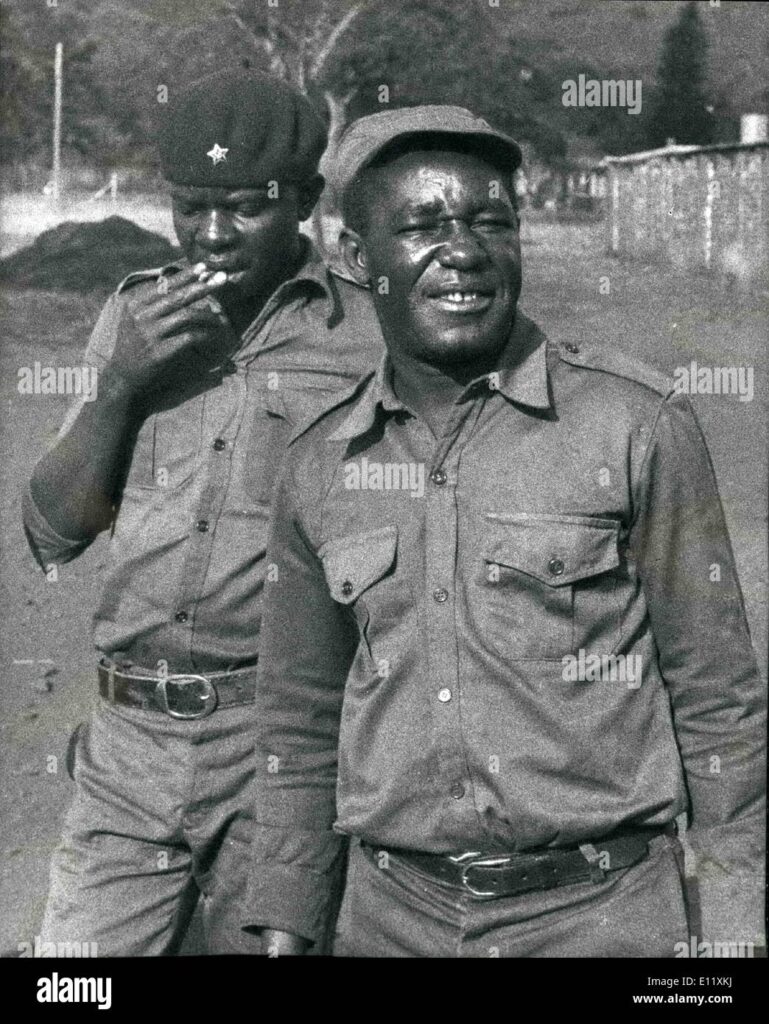
By Gabriel Manyati
On 4 August 1980, barely four months after the Union Jack was lowered in Salisbury to mark the birth of independent Zimbabwe, a vehicle carrying heavily armed men pulled up at Stamford Farm, near the suburb of Stamford on the western periphery of the capital. At the centre of the squad was Edgar Zivanai “Two-Boy” Tekere: a central figure in the ruling ZANU party, its powerful secretary-general, and the Minister for Manpower Planning and Development. What followed in the afternoon heat was a confrontation that culminated in the execution-style shooting of Gerald William Adams, a 68-year-old white farm manager.
Adams, an unarmed civilian working on the property, was shot dead after Tekere’s security detail launched an armed assault on the farmstead, ostensibly to flush out an alleged military threat. The incident shocked a fledgling nation attempting to heal from a brutal decade-long liberation war. For Prime Minister Robert Mugabe, who had spent the preceding weeks delivering speeches emphasising racial reconciliation, respect for the rule of law, and national unity, the killing was an acute political disaster. His trusted comrade, key strategist, and political ally was implicated in an act of vigilante violence that threatened to unspool the fragile compromise governing the post-colonial state.
The Stamford Farm shooting stood as an early warning of a fundamental tension in Zimbabwean politics: how to transition a movement forged in violent guerrilla insurgency into a disciplined civilian administration bound by institutional restraint.
The Trial That Shook Salisbury
Tekere and seven of his bodyguards were promptly arrested and charged with murder. The trial, held in the Salisbury High Court in late 1980, became a major legal test for the young republic, drawing international media coverage and putting the independence of the judiciary under intense global scrutiny.
The prosecution built a formidable case, demonstrating that Tekere had led an organised, heavily armed assault on the farm premises following an altercation at a nearby motel the previous evening. Tekere’s defence team, led by British Queen’s Counsel Louis Blom-Cooper, relied on an unexpected legal instrument: the Indemnity and Anti-Terrorism Act of 1975. Ironically enacted by Ian Smith’s minority regime to shield Rhodesian security forces from prosecution during counter-insurgency operations, the legislation protected officials who acted in “good faith” to suppress terrorism. Tekere maintained he believed he was acting to neutralise an imminent security threat posed by hostile former Rhodesian forces.
In December 1980, the court delivered its verdict. High Court Judge John Pittman found Tekere guilty of murder, concluding that the assault lacked any legal justification. However, under the Rhodesian-derived judicial system, the judge could be outvoted by his two lay assessors. The assessors, both black civil servants, ruled that Tekere had acted in the good-faith belief that he was safeguarding state security under the provisions of the 1975 Act. By a 2-to-1 majority decision, Tekere and his co-defendants were acquitted of murder.
While legally freed, Tekere emerged from the dock politically altered. The trial laid bare the friction between the government’s official pledge of racial reconciliation and the uncompromising militancy of its guerrilla vanguard. The legal outcome preserved judicial process on paper, but left a lasting impression that senior figures within the ruling elite could operate above the law.
The Origins of “Two-Boy”
To understand the man who stood trial in 1980, one must trace the roots of his uncompromising nature. Born in April 1937 in Umtali (now Mutare) in Manicaland, Tekere grew up in the Eastern Highlands. The nickname “Two-Boy”, which stayed with him throughout his public life, originated in his childhood. As Tekere recalled in his 2007 autobiography, A Lifetime of Struggle, his combative spirit and eagerness to fight both peers and authority figures led family members and neighbours to quip that he possessed the physical energy and stubbornness of two boys combined.
Educated at St Augustine’s Mission in Penhalonga, an Anglican institution that nurtured several future nationalist leaders, Tekere matured into a fiercely independent young man. Unlike colleagues who pursued administrative careers or academic doctorates abroad, Tekere’s political persona was built on direct action, raw courage, and an unshakeable refusal to mince words.
The Making of a Nationalist Vanguard
Tekere entered nationalist politics during the late 1950s, joining the Southern Rhodesia African National Congress. When the colonial government banned successive nationalist formations, he participated in establishing the National Democratic Party (NDP) and later the Zimbabwe African People’s Union (ZAPU).
By 1963, ideological differences, tactical disputes, and frustration with Joshua Nkomo’s leadership style triggered a historic split in the nationalist movement. Tekere aligned himself with the breakaway faction that formed the Zimbabwe African National Union (ZANU) under Ndabaningi Sithole. During this period of political factionalism, Tekere forged a decisive personal alliance with Robert Mugabe, then a cerebral nationalist serving as ZANU’s publicity secretary.
Tekere’s organising capacity quickly made him an indispensable figure within ZANU’s internal hierarchy, operating in the shadow of police surveillance and colonial repression.
Prison, Exile, and the Long Walk to Power
In 1964, as Ian Smith’s government moved to crush African political opposition ahead of its Unilateral Declaration of Independence (UDI), Tekere was arrested alongside Mugabe, Sithole, and other ZANU leaders. He spent the next decade in colonial detention facilities, including Salisbury Maximum Security Prison and Que Que Prison.
Detention refined Tekere’s political worldview. While in prison, he stood firmly by Mugabe during the internal party coups that gradually stripped Sithole of the ZANU leadership. Following their release in late 1974 under a regional détente initiative, Tekere executed one of the most critical manoeuvres of the war. In April 1975, assisted by Chief Rekayi Tangwena, Tekere and Mugabe crossed the mountainous eastern border into Mozambique on foot to take personal control of the ZANLA guerrilla army following the assassination of Herbert Chitepo.
In Mozambique, Tekere served as the essential bridge between the political wing of ZANU and the young combatants in the field. As secretary-general of ZANU following the party’s 1977 Chimoio conference, Tekere reorganised the party’s administrative apparatus, managed military logistics, and represented ZANU at international peace negotiations, including the 1979 Lancaster House Conference.
Independence and Early Friction
When Zimbabwe achieved independence in April 1980, Mugabe appointed Tekere Minister of Manpower Planning and Development, while Tekere retained his influential party position as ZANU secretary-general. He was widely regarded as the third most powerful figure in the new administration, behind Mugabe and Deputy Prime Minister Simon Muzenda.
However, Tekere struggled to adapt to the constraints of ministerial office. He viewed the civil service bureaucracy with suspicion and frequently clashed with white civil servants retained under the Lancaster House Constitution. The August 1980 Stamford Farm shooting exposed these structural strains. Though acquitted, Mugabe quietly removed Tekere from his Cabinet post in early 1981, and later that year, Tekere was ousted from his position as ZANU secretary-general.
The Breakdown of the Alliance
Stripped of executive authority, Tekere transformed from an insider militant into an uncompromising internal critic. As the 1980s progressed, Tekere observed with growing alarm the centralisation of state power, the suppression of opposition voices, and the emerging culture of political corruption within ZANU PF.
When Mugabe began publicly campaigning for the formal establishment of a constitutional one-party state in the late 1980s, Tekere emerged as its most prominent opponent. He used his platform as a Member of Parliament for Mutare Urban to launch scathing attacks on party elites.
“A one-party state is a dictatorship,” Tekere famously declared to reporters and parliamentary colleagues in 1988, warning that ZANU PF was decaying from within. “The democracy we fought for is being stolen by a political elite that has forgotten the people. Power is corrupting us.”
Tekere directly targeted the growing culture of patronage, pointing out that ministers were enriching themselves with private property while former combatants remained destitute. His public defiance shattered the illusion of ZANU PF unanimity. For Mugabe, who prized absolute party discipline, Tekere’s rebellion became an intolerable challenge. In October 1988, the ZANU PF Central Committee voted formally to expel Tekere from the party he had spent a quarter-century building.
The ZUM Challenge and the 1990 Election
Unbowed by his expulsion, Tekere took a step that broke the political consensus of post-independence Zimbabwe. In April 1989, he founded the Zimbabwe Unity Movement (ZUM), establishing the country’s first major post-independence opposition party rooted in the liberation tradition.
ZUM formed a broad anti-authoritarian coalition, uniting disillusioned university students, urban workers, veteran nationalists, and even conservative elements opposing ZANU PF’s economic policies. The party’s platform demanded the preservation of multi-party democracy, an aggressive crackdown on government corruption, and economic reform.
The tension culminated in the March 1990 presidential and parliamentary elections. Tekere directly challenged Mugabe for the presidency, marking the first time Mugabe faced a serious rival from within the ranks of the liberation struggle.
The campaign was marked by state-directed intimidation, violent clashes between ZANU PF and ZUM supporters, and heavy state media bias against the opposition. In Gweru, ZUM candidate Patrick Kombayi was shot and critically wounded by state security agents during the campaign.
When the official results were announced, Mugabe secured victory with 2,026,976 votes (83.05 percent), while Tekere won 413,840 votes (16.95 percent). In the parliamentary contest, ZUM won two seats in Tekere’s political home of Manicaland, despite capturing roughly 20 percent of the national popular vote across contested areas. While Mugabe retained power, Tekere had proved that the ruling party was not politically invincible and demonstrated that an opposition movement could command hundreds of thousands of votes despite state opposition.
The Manicaland Identity and Final Years
Tekere’s political longevity was tied to his base in Manicaland. To the people of the Eastern Highlands, Tekere was a local hero who stood up to central authority. However, his political reach extended beyond regional sentiment; his opposition to the one-party state resonated strongly among urban intellectuals and trade unionists nationwide, laying the organisational groundwork for the civic opposition that would later emerge under the Movement for Democratic Change (MDC) in the late 1990s.
Following the 1990 election, ZUM gradually fractured due to internal squabbles and financial pressures. Tekere stepped back from active political leadership, spending his later years reflecting on the country’s trajectory. In 2007, he published his autobiography, A Lifetime of Struggle, which offered a critical accounting of Mugabe’s leadership and detailed the inner workings of ZANU during the war years.
Edgar Tekere died on 7 June 2011 at the age of 74 in Mutare after a long battle with cancer. In an unexpected nod to his contributions, the ZANU PF Politburo unanimously granted him National Hero status, and he was buried at the Heroes Acre in Harare, the very pantheon of the state he had fought to create, served, and subsequently spent decades trying to reform.
The Unresolved Legacy
The life of Edgar Tekere returns inevitably to the scene at Stamford Farm in August 1980. The shooting of Gerald William Adams exposed the early contradictions of a liberation movement attempting to remake itself as a civilian government.
Tekere embodied the paradoxes of Zimbabwe’s revolutionary generation. He was brave yet reckless, a loyal comrade who became a fierce adversary, and a revolutionary who helped build a political machine only to find himself crushed by its gears. His legacy poses an enduring question for post-colonial Africa: what happens when the fighters who challenge colonial tyranny find themselves expected to submit to a new authority once their movement takes power? For Edgar “Two-Boy” Tekere, the answer was clear: he refused to submit to either.