The long-running mystery surrounding the murder of American rapper Tupac Shakur has entered a new chapter, with jury selection beginning in Las Vegas in the trial of the man accused of orchestrating his killing nearly 30 years ago.
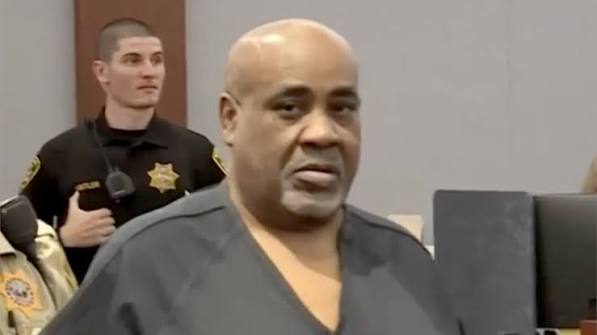
Duane “Keffe D” Davis, a 63-year-old former gang leader, is the only person to have been charged in connection with Shakur’s September 1996 murder. He has pleaded not guilty.
Jury selection began on Monday, 10 August, at the Clark County District Court, marking the formal start of a case that has attracted global attention and remained unsolved for decades. Prosecutors are expected to argue that Davis helped organise the drive-by shooting and supplied the firearm used in the attack.
Davis does not have to be the person who fired the fatal shots to be convicted. Prosecutors are relying on Nevada laws governing accomplice liability to argue that he can be held responsible for the killing if jurors conclude that he helped plan or facilitate the attack.
The prosecution’s case is expected to draw heavily on statements Davis made publicly over several years, including comments in interviews and his 2019 memoir, Compton Street Legend. In those accounts, Davis acknowledged being in the white Cadillac involved in the shooting and described events surrounding the attack.
However, Davis has since disputed the significance of his earlier statements. His defence is expected to argue that his accounts were exaggerated, that parts of the memoir were written by a ghostwriter and that he did not participate in Shakur’s murder.
What happened to Tupac?
Shakur, one of the most influential figures in hip-hop, was shot on 7 September 1996 while travelling in a BMW driven by Death Row Records co-founder Marion “Suge” Knight near the Las Vegas Strip.
The shooting followed an altercation earlier that evening at the MGM Grand involving Shakur and Orlando “Baby Lane” Anderson, a member of the South Side Compton Crips and Davis’ nephew.
Later that night, a white Cadillac pulled alongside Knight’s BMW and gunfire erupted. Shakur was struck several times.
He died six days later, aged 25.
Four men were believed to have been inside the Cadillac: Davis, Anderson, DeAndrae “Dre” Smith and Terry “Bubble Up” Brown. All except Davis have since died. Anderson, who was long regarded by investigators as a suspect in the killing, was never charged and died in a 1998 shooting.
Why Davis is on trial
Investigators’ case against Davis gained momentum years after the murder following his public comments about the shooting.
Police arrested him in September 2023 after a search of a property in Henderson, Nevada, two months earlier as part of the renewed investigation.
Prosecutors have characterised Davis as the “shot caller” who helped organise the retaliatory attack following the casino confrontation. They allege that he obtained or provided the gun that was ultimately used in the shooting.
Davis has maintained his innocence and has not admitted to being the gunman.
The identity of the person who actually fired the shots has remained one of the central unresolved questions in the case. Anderson was long suspected, while other accounts have pointed to DeAndrae Smith as a possible shooter. Both men are now dead.
Suge Knight could feature in trial
One potentially significant figure in the proceedings is Suge Knight, who was driving the vehicle in which Shakur was travelling when the shooting occurred.
Knight survived the attack but was wounded. He is currently serving a prison sentence for an unrelated conviction.
Reports indicate that prosecutors have considered Knight as a potential witness, although his willingness to participate remains uncertain.
About 75 potential jurors are being screened as the court seeks a panel capable of hearing one of the most closely watched murder trials in recent US history. The proceedings are expected to last roughly four to five weeks.
If convicted of murder with a deadly weapon, Davis faces the possibility of life imprisonment.
For Shakur’s family and millions of fans, the trial represents the most significant development in a case that has remained one of hip-hop’s greatest mysteries since the rapper’s death in 1996.
The proceedings could finally provide a courtroom account of what happened on that Las Vegas night — and whether Davis played the role prosecutors allege in the killing.
Agencies