By a Correspondent
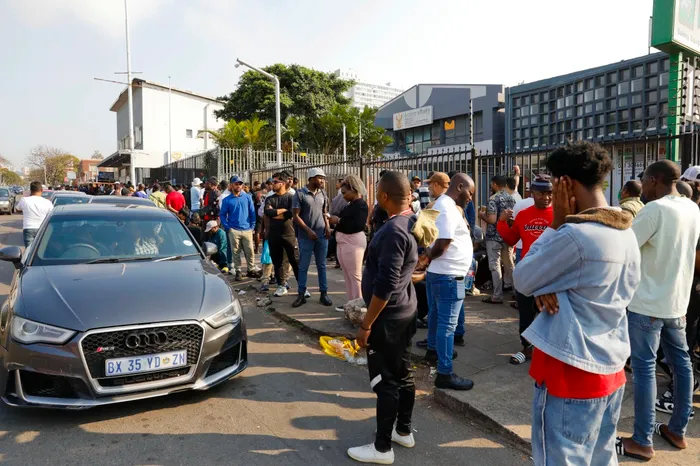
Tensions over immigration in South Africa escalated on Wednesday after anti-migrant protesters blocked access to a Home Affairs refugee reception centre in Durban, forcing thousands of asylum seekers to disperse as police moved in to prevent a confrontation.
Members of the anti-illegal migration group March and March descended on the Refugee Reception Centre on Che Guevara Road, declaring that foreigners would not be allowed to enter the facility.
A large number of foreign nationals had gathered outside the centre after the Department of Home Affairs directed its refugee reception offices to admit people who present themselves and indicate that they want to apply for asylum.
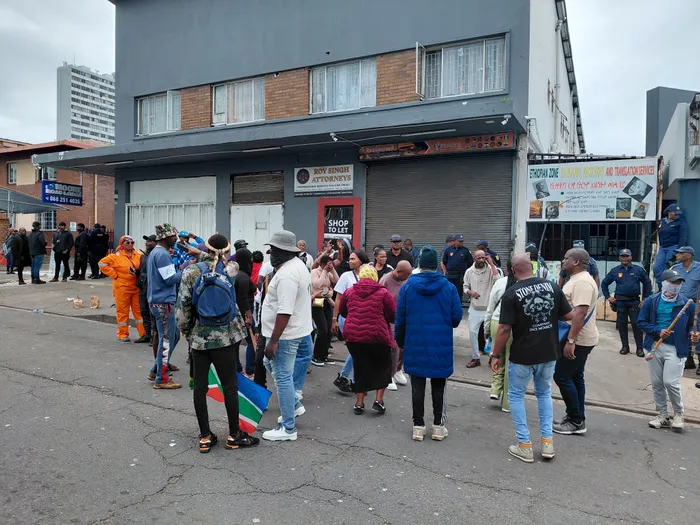
The situation became tense when protesters, some carrying sticks and sjamboks, arrived at the centre. Police were deployed and the road leading to the facility was closed as authorities sought to prevent violence.
The confrontation left asylum seekers unable to access the centre, with some fleeing the area because of fears for their safety.
March and March leader Jacinta Ngobese-Zuma accused the Department of Home Affairs of failing to distinguish genuine refugees from economic migrants.
She said the government should prioritise clearing its backlog and identifying people with legitimate claims to refugee status.
Political analyst Zweli Ndevu, however, said while protesters had a constitutional right to demonstrate, that right could not interfere with the rights of asylum seekers who were complying with South African law.
He said the government had a responsibility to protect vulnerable people and ensure they could access services to which they were legally entitled.
The Durban confrontation comes amid a wider wave of anti-migrant protests that has resulted in thousands of foreign nationals leaving South Africa.
Nigeria’s Foreign Ministry said on Wednesday that 1,926 Nigerians had been repatriated from South Africa between June 10 and October 2 on 14 chartered flights.
The evacuations followed months of protests and violence targeting undocumented migrants, with Nigeria becoming increasingly critical of South Africa’s handling of the situation.
Nigeria’s National Assembly last month suspended official visits and engagements with South Africa indefinitely over attacks on Nigerian citizens and other foreign nationals.
Nigeria has accused South Africa of failing to do enough to protect its citizens amid recurring anti-migrant violence.
The current tensions have been fuelled by high unemployment, inequality and concerns over pressure on public services, with anti-migrant groups accusing undocumented foreigners of taking jobs and exploiting government services.
The government has, however, warned against violence and vigilantism and has continued with deportations of foreign nationals found to be in the country illegally.
The Durban protest also follows a Constitutional Court ruling that resulted in Home Affairs instructing refugee reception offices to accept people who arrive in person and indicate that they wish to seek asylum, including those who may have entered South Africa unlawfully.
The confrontation in Durban comes just days after another anti-illegal immigration demonstration in the city, highlighting the growing pressure on the South African government to balance immigration enforcement with its constitutional obligations towards asylum seekers and refugees.