By Gabriel Manyati
Somewhere among Dolly Parton’s old tapes and memories lies a detail that explains almost everything about her: “Jolene” and “I Will Always Love You” were written in the same sitting, on the same afternoon, by the same 27-year-old woman. One song was a plea against losing someone she loved; the other was a farewell to someone she had outgrown. Two different aches, one astonishing creative current.
That instinct, to feel deeply and then turn feeling into something useful, never left her. Neither did the other instinct that proved just as important: knowing what her work was worth.
When Elvis Presley’s people came calling for “I Will Always Love You”, Parton faced what seemed like an irresistible opportunity. The King wanted to record her song. But Colonel Tom Parker’s team wanted half the publishing rights. People around Parton urged her to accept. She remembered being told she would be foolish to refuse Elvis Presley.
She refused anyway.
“Something in my heart says don’t do that,” she recalled. “And I didn’t do it and they didn’t do it.”
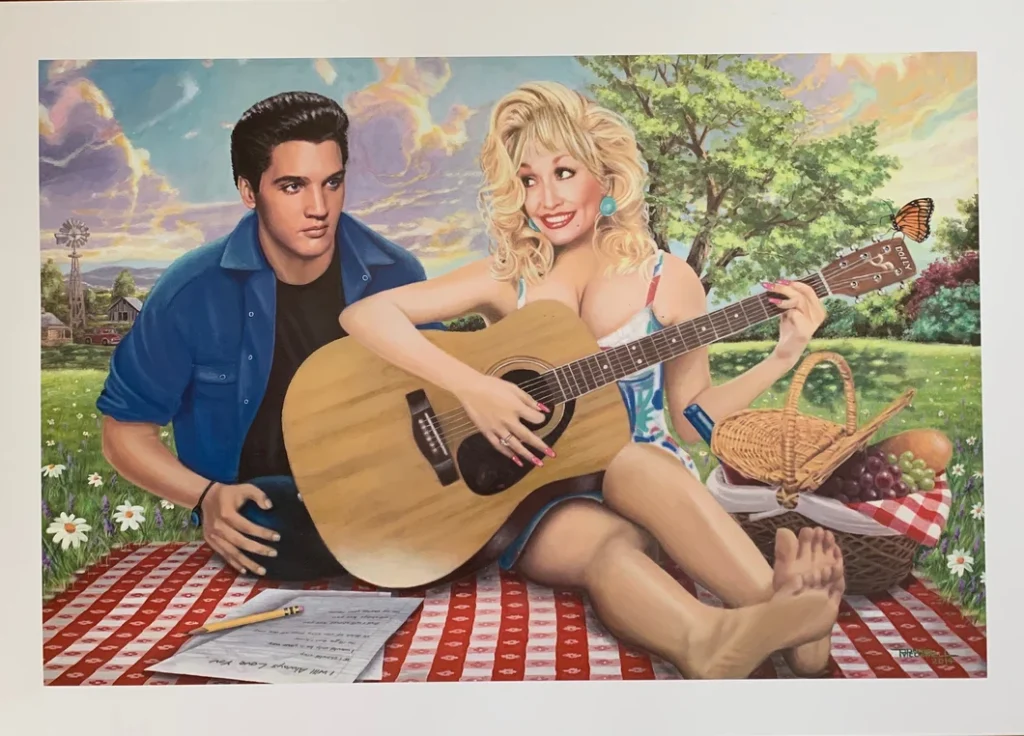
It was not merely an artistic decision. It was a business decision, made by a young woman who understood something that many established musicians did not: a song could earn money long after the singer had left the studio. Fifteen years later, Whitney Houston’s version became one of the best-selling singles of all time. Parton retained ownership of her publishing, and the decision became one of the clearest examples of the financial intelligence beneath her deliberately extravagant image.
The rhinestones could distract you. The wigs could distract you. The jokes about her appearance could distract you. Parton knew that too.
Born in January 1946 in a one-room cabin on the Little Pigeon River in Tennessee, she was the fourth of 12 children. Her family had very little money. Her father was a sharecropper who never learned to read, and family lore says he paid the doctor who delivered Dolly with a sack of oatmeal because cash was scarce.
Parton never forgot that detail.
Her father’s illiteracy became part of the explanation for one of her most enduring acts of philanthropy. In 1995, she established the Imagination Library, a programme that mailed free books to children from birth until they started school, regardless of family income. By the time of her death, more than 250 million books had been distributed worldwide.
The logic was characteristically Parton. She did not simply escape poverty. She kept reaching back towards it.

Years earlier, she had experimented with the same principle closer to home through the Buddy Programme, pairing struggling students and paying each US$500 if both remained in school through graduation. Sevier County’s dropout rate, which had been above 30 percent when she began, fell into single figures.
This was the other Dolly Parton, the one that could disappear beneath the sequins. The woman who understood branding also understood leverage. Fame could sell records, but it could also put books into children’s homes. Money could buy a theme park, but it could also change what a child believed was possible.
Her private life was similarly resistant to the mythology built around her.
Carl Dean, the intensely private man who became her husband, met Parton the day after she arrived in Nashville at 18, outside a launderette. “This good-looking man just drives by and he says something like, ‘Well, you’re gonna get sunburned out here,'” she remembered. “And I said something stupid like, ‘Well, what’s it to you?'” They married two years later and stayed married until his death last year, a fact odd enough, in an industry built on spectacle, that gossip filled the vacuum for decades.
Some of the gossip centred instead on her lifelong friendship with Judy Ogle, which Parton addressed plainly and without defensiveness. “Judy and I have been best friends for 64 years, since we were little kids,” she told an interviewer in 2019, describing two girls from the same corner of Tennessee who simply never stopped being close.
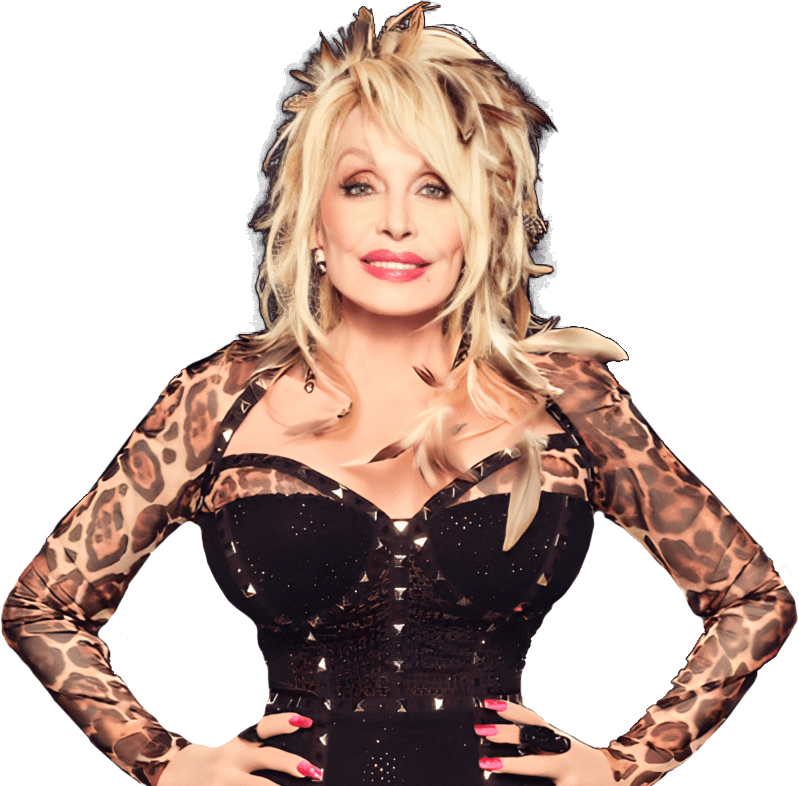
She was equally candid about not having children. Speaking to Oprah Winfrey in 2020, Parton said she believed God had not meant for her to have children so that everybody’s children could be hers. It was an explanation that fitted the pattern of her life: private limitation transformed into public purpose.
Even her famous image was something she understood as a construction, and therefore something she could laugh at.
Parton once entered a drag queen lookalike contest as herself, using a false name, and lost. The other contestants, she recalled, had pushed the Dolly look further than she had. So she exaggerated everything: the beauty mark, the eyes, the hair. She lost the competition, but the joke revealed her mastery of the character she had created.
She knew “Dolly Parton” was partly a costume. More importantly, she knew the woman underneath it did not have to disappear.
That distinction helps explain Dollywood. The theme park became one of the most recognisable extensions of her name, yet Parton reportedly never rode a rollercoaster there during more than three decades of ownership. Her father had taught her that some risks were not worth taking.
It is an oddly perfect image for the woman she became.

Parton was willing to gamble on songs, businesses, contracts and ideas. She was willing to bet against the expectations imposed on a poor girl from Tennessee. But she was rarely careless about the stakes.
That may be the most revealing thread running through her life. Dolly Parton did not simply become famous. She learned how fame worked, then made it work for her. She turned vulnerability into songs, appearance into a brand, ownership into wealth and wealth into opportunity.
The girl who arrived in Nashville with little money eventually built a kingdom large enough to contain music, business, philanthropy and fantasy. Yet the most remarkable thing was never the size of that kingdom.
It was that she understood who should own it.
And she never forgot where she came from.