By a Correspondent
The Government has urged Zimbabweans to remain calm ahead of the 2026/27 agricultural season, which is expected to be influenced by El Niño conditions, saying lessons from the severe 2024 drought have enabled the country to put in place measures to protect food security.
Speaking at the 2026 Midlands Agricultural Show in Gweru, Agriculture, Mechanisation and Water Resources Development Minister Dr Anxious Masuka said Zimbabwe had developed comprehensive strategies to mitigate the potential impact of reduced rainfall.
“We now know, with 88-92 percent certainty, that this summer 2026/2027 season will likely be an El Niño season,” Dr Masuka said.
“This should not cause alarm. Riding on our rich experiences in 2024, when we experienced the worst El Niño in living memory, we have robust plans to emerge stronger, more united and more food secure.”
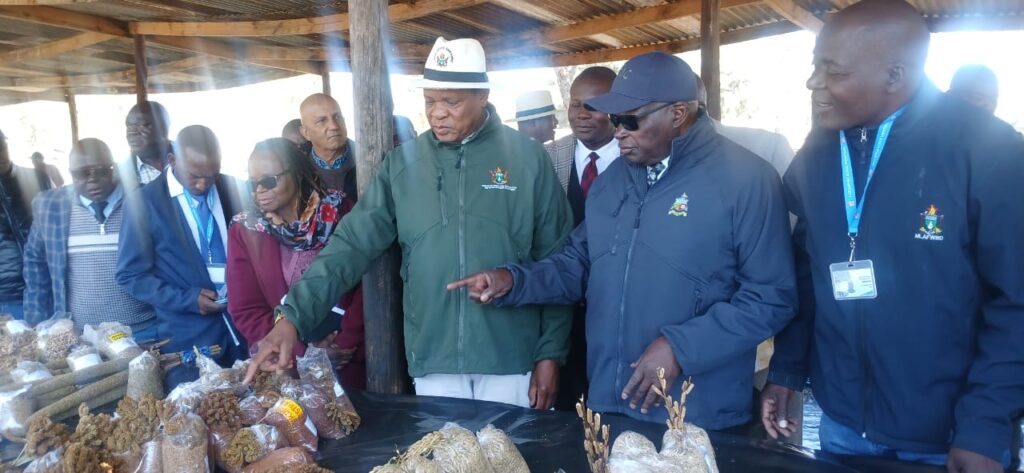
Dr Masuka said the Government’s response was anchored on six strategic pillars designed to minimise the effects of drought and protect agricultural production.
The pillars include strengthening strategic grain reserves, promoting climate-smart agriculture, establishing an integrated financing architecture, mitigating the impact of drought on livestock, enhancing imports, and strengthening coordination, early warning systems and capacity building.
The minister said Government would continue creating an enabling policy environment to boost agricultural production while promoting value addition and beneficiation to ensure that more value generated within the sector is retained locally.
He said agriculture remained a key pillar of the economy, supporting industrial activity through the supply of raw materials and creating demand for manufactured goods.
“Last year’s 8.3 percent growth of the economy was anchored by agriculture, which grew by a stellar 27.9 percent, contributing 25 percent of the GDP growth in 2025,” Dr Masuka said.
He said 63 percent of raw materials used by industry came from agriculture, while the agricultural sector consumed up to 40 percent of industrial output.
Dr Masuka also highlighted progress made towards reducing Zimbabwe’s dependence on imports for key agricultural commodities.
“Only in 2017, Zimbabwe imported over 80 percent of its annual wheat requirements, yet in 2026 we project another record crop of 700 000 metric tonnes, up from the 640 000 metric tonnes produced last year, against our soft wheat annual requirements of 450 000 metric tonnes,” he said.
He said similar gains had been recorded across several agricultural value chains, including tobacco, blueberries, goats and dairy.
Milk production, for example, has increased from 67 million litres in 2017 to 154 million litres in 2026, raising the prospect of Zimbabwe achieving self-sufficiency in milk production this year.
Two processing facilities have been established since 2017, while three additional maize milling plants have increased combined processing capacity to 6 000 metric tonnes per day, up from 4 500 metric tonnes in 2017.
The Government has also sought to increase value addition in the tobacco sector, with processing capacity rising from two percent in 2017 to 11 percent in 2025.
“Cigarette manufacturing companies have increased from four to eight during the same period, and capacity has increased from 2.6 billion to 8.8 billion cigarettes per year,” Dr Masuka said.
The flour subsector has also expanded, with six new processing plants increasing cumulative daily capacity from 800 metric tonnes in 2017 to 1 500 metric tonnes, an increase of 87.5 percent.
Dr Masuka said the investments demonstrated the progress being made in strengthening agricultural and industrial value chains while building the country’s resilience to climate-related shocks.
He said the experience of the 2024 drought had provided valuable lessons on the need for early preparation, diversification and climate-resilient farming as Zimbabwe prepares for another potentially difficult agricultural season.
The Government’s strategy is expected to focus on ensuring the availability of grain and other essential commodities, supporting farmers and livestock producers, and maintaining food supplies should rainfall patterns deteriorate.
The minister urged farmers and other stakeholders to make use of available climate information and adopt appropriate farming practices to minimise risks associated with the anticipated El Niño conditions.