By a Correspondent
Nigeria’s National Assembly has suspended all official travel and legislative engagements with South Africa in response to renewed reports of xenophobic violence targeting Nigerian nationals and other African migrants.
The directive follows consultations between the leadership of the Senate and the House of Representatives and comes amid reports of xenophobic violence, intimidation and the destruction of property belonging to Nigerians and other African nationals living in South Africa.
In an official communication conveying the directive, Nigeria’s Clerk to the National Assembly, Kamoru Ogunlana, expressed the legislative body’s “profound concern” over what it described as escalating hostility towards Nigerians.
Ogunlana said there had been reports of Nigerian citizens being killed, injured and displaced, with some forced to abandon their homes, investments and legitimate businesses because of recurring violent attacks.
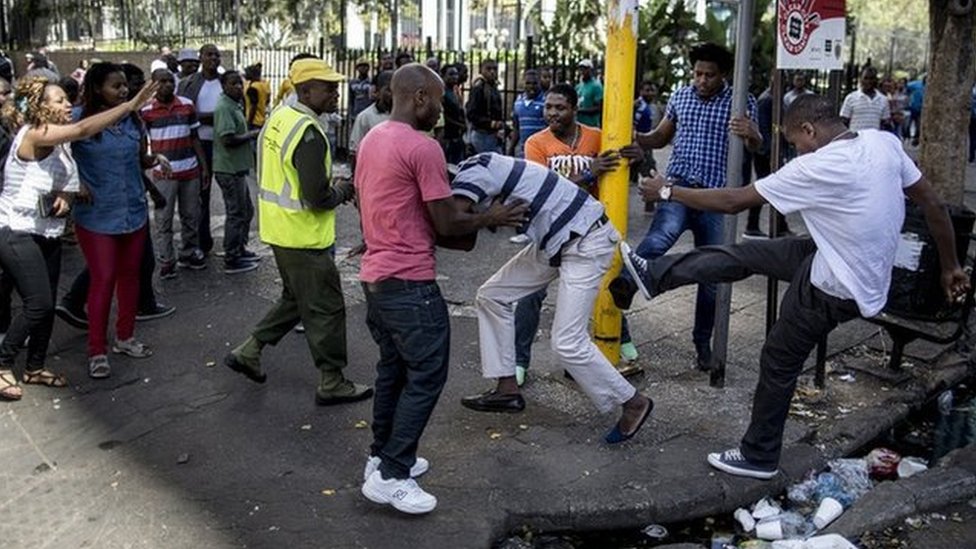
Of particular concern to Nigerian authorities is what they described as the “systematic failure” of South African authorities to curb the violence.
The National Assembly said that despite repeated appeals by the Nigerian government and regional stakeholders for decisive measures to protect foreign nationals and bring perpetrators to justice, the attacks had continued with limited legal accountability.
It acknowledged ongoing government interventions, including state-backed efforts to evacuate vulnerable Nigerian nationals.
The National Assembly said such emergency measures underscored the gravity of the situation and reinforced the responsibility of Nigerian state institutions to safeguard the lives, dignity and interests of citizens abroad.
Following the joint resolution by parliamentary leaders, the suspension took effect immediately and will remain in force until further notice.
The ban applies to planned visits to South Africa by the National Assembly, its standing committees, lawmakers and administrative staff.
It also prohibits participation in conferences, seminars, workshops and parliamentary exchanges hosted, organised or co-sponsored by the South African Parliament.

The restriction applies to both physical travel and online or virtual meetings hosted by South African legislative institutions, the National Assembly said.
The Nigerian parliament has also urged the leadership of state Houses of Assembly across the country’s 36 states to adopt similar measures.
The legislative leadership described the boycott as a firm but measured response aimed at prioritising the welfare and dignity of Nigerians.
While the National Assembly said it valued parliamentary diplomacy and inter-state cooperation, it maintained that such relationships must be based on mutual respect and a shared commitment to the rule of law.
Officials described the decision as an “unambiguous expression of protest” against what they said was the unsafe environment confronting Nigerians in South Africa.
The Senate and House of Representatives urged the South African government to fulfil its international obligations by taking steps to end violence against African nationals.
They called on South Africa to prevent further xenophobic attacks, thoroughly investigate reported incidents of targeted violence and arrest and prosecute those responsible.

The Nigerian parliament said such measures were necessary to restore confidence and goodwill between the two countries, which are among Africa’s largest economies.
The House of Representatives said it would continue monitoring developments and that the suspension would be reviewed only when there was a verifiable improvement in the safety of Nigerians in South Africa.
Nigeria’s Minister of State for Foreign Affairs has said 98 Nigerians died in mob and hate-related incidents in South Africa between 2022 and this year.
A further 1,695 Nigerians have voluntarily been evacuated from South Africa this year amid xenophobia-related tensions, according to Nigeria’s acting high commissioner in Pretoria.
“This decision is a strong expression of concern over the safety, dignity and welfare of Nigerians living and conducting legitimate businesses in South Africa,” parliament spokesperson Akin Rotimi said on Friday.
South African Foreign Minister Ronald Lamola led a delegation to Abuja in July for talks with Nigerian officials aimed at easing tensions over attacks on Nigerians and other African nationals in South Africa.
Lamola said at the time that the South African government condemned “all forms of xenophobia”.