
By Bhekithemba Ncube
As High Court Judge, Justice Anita Tshuma prepares to deliver judgment on Thursday 19 November 2026 in the protracted Springs Farm dispute involving war veterans, Zimbabwe faces fundamental questions about natural justice, constitutional rights, institutional accountability, investment security and the very ideals upon which independence was founded.
At the centre of the dispute are war veterans and other beneficiaries who have occupied and productively utilised their land for approximately 25 years, made substantial investments and established livelihoods. They now face the prospect of losing their land following the withdrawal of their agricultural offer letters, amid a controversial and clandestine arrangement under which approximately 671 hectares of Springs Farm were transferred to Marimba Residential Properties, a company linked to businessman Conrad Muller ‘Billy’ Rautenbach, as compensation for land he never owned in Aspindale Park.
The reason for withdrawal of offer letters was conversion of agricultural land to urban use. The subsequent transfer of the property to a private interest then raise serious questions about the circumstances, legality and public interest considerations behind the transaction.
A question being raise is: Are we gradually cultivating a culture of impunity in which the powerful can displace, dispossess and destroy the livelihoods of ordinary citizens without accountability?
From Chisumbanje, Nuanetsi, Chewore, Chipinge, Hwange, Aspindale, Stuhm Farm, Springs Farm, St Martins, Oldham Farm, Esidakeni and Warwick Farm, various land disputes, displacements and demolitions have raised serious concerns about the protection of homes, property, investments, businesses and livelihoods.
HOW CAN YOU TAKE FROM PETER TO PAY PAUL?
Perhaps the most fundamental question is whether one innocent Zimbabwean must lose everything so that another can benefit.
How can you take from Peter to pay Paul, and who compensates Peter for his losses? Is Paul more deserving of justice? Is Paul more human or more Zimbabwean than Peter?
Land reform was intended to correct historical imbalances and empower indigenous people. How, then, do we justify the dispossession of one indigenous Zimbabwean to benefit another? Are we not reversing the very objectives of land reform when one citizen’s economic advancement comes at the expense of another’s legitimate rights?
The Esidakeni Farm judgment by Bulawayo High Court Justice Bongani Ndlovu provides an important judicial reference point. On 30 June 2025, the court declared the compulsory acquisition unlawful and unconstitutional, citing failures of administrative justice and procedural fairness. Justice Ndlovu highlighted the fundamental contradiction of taking land from one group of black Zimbabweans to give to another.
The ruling reinforced an important principle: historical injustices cannot be corrected by creating new victims of injustice. Private interest cannot become a convenient justification for arbitrary dispossession.
Land administration must remain anchored in the Constitution, the law and the principles of natural justice. Every affected citizen deserves to be heard and treated fairly.
WHO PROTECTS THE ORDINARY ZIMBABWEAN?
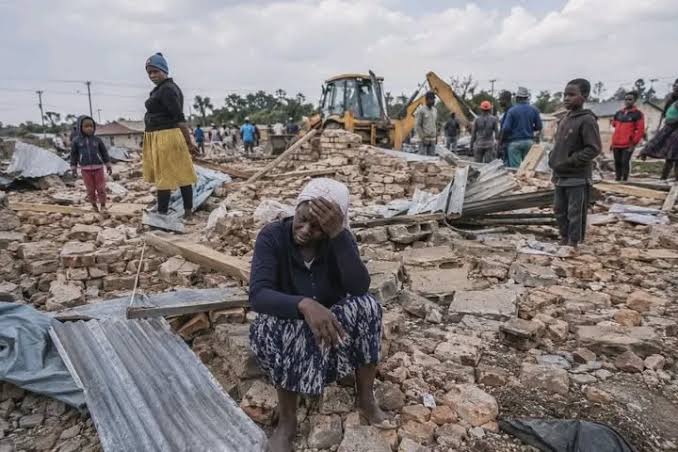
The same questions arise from residential demolitions, particularly at St Martins, where residents have maintained that they held council-issued documentation and approved building plans before their houses were demolished.
How can councils sell residential stands, approve plans, collect payments and subsequently demolish the very houses they authorised people to build?
What happens to families with children and minors who suddenly find themselves homeless, particularly during the rainy season? Can casual promises of compensation after demolition restore years of savings, investment and human dignity?
Harare Mayor Jacob Mafume, speaking in his capacity as president of the Urban Councils Association of Zimbabwe, has acknowledged that councils may have to compensate residents where unlawful demolitions and wrongful damage are established.
Local government minister Daniel Garwe a key figure in the Springs issue case , casually acknowledged that homes in St Martins case were demolished and compensation will be worked out only after the demolition. Where are these people expected to be staying in the meantime?
But should compensation only become a consideration after families have lost their homes? Where is the accountability for those who approved the transactions, authorised construction or failed to resolve land disputes before demolition?
Citizens should not bear the entire burden of administrative failures by institutions entrusted with protecting them. Even where planning irregularities exist, lawful procedures, procedural fairness and constitutional protections must be observed.
Where is the humane treatment and dignity that every Zimbabwean deserves?
THE ECONOMIC COST OF IMPUNITY
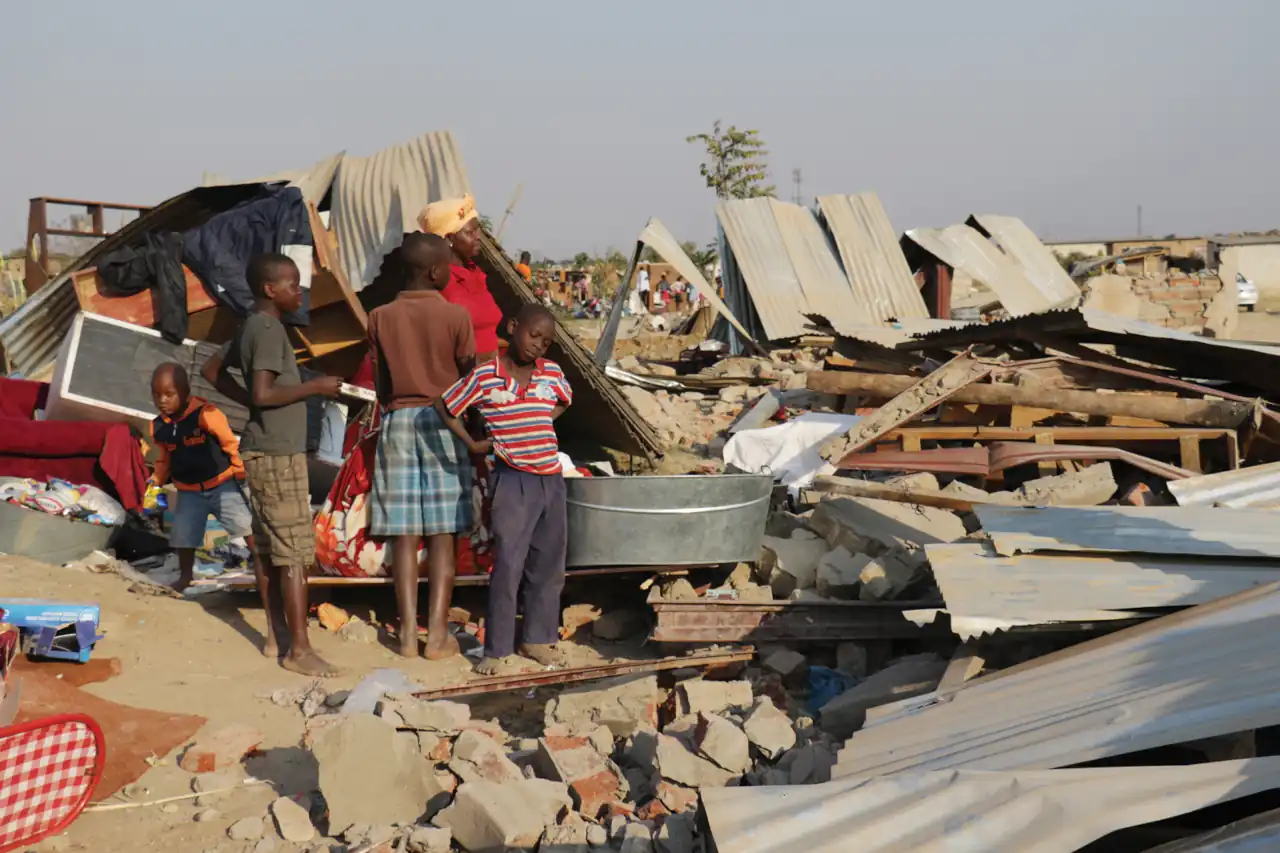
Which serious investor would commit capital to a country where land tenure is uncertain, investments are exposed to contested administrative decisions and businesses can be destroyed without accountability?
Have we calculated the cumulative economic value of the homes, buildings, businesses and productive investments being lost through demolitions and displacement? Is this not a direct loss to the national economy and the living standards of ordinary citizens?
Capital requires confidence. Employment requires investment. Economic transformation requires predictable institutions and respect for property rights.
The disputed land allocations involving Billy Rautenbach, particularly Springs Farm and Stuhm Farm, therefore deserve transparent public scrutiny.
Springs Farm presents an even bigger question: should a businessman be considered more deserving of economic opportunities and land than indigenous Zimbabweans who have occupied, developed and productively utilised that land? The issue is not the race of an investor, but whether the same standards of legality, fairness and accountability apply to everyone.
The dispute also threatens a proposed US$200 million development involving war veterans and the Zimbabwe National Army. How can Zimbabwe pursue Vision 2030 and attract substantial investment while established beneficiaries, livelihoods and proposed national development projects remain exposed to prolonged uncertainty over land rights?
As Justice Tshuma considers the Springs Farm matter, the nation must reflect on the exercise of ministerial and local authority powers, existing land rights, previous judicial decisions and constitutional protections.
The judiciary must be allowed to determine the dispute independently, based on the evidence and applicable law.
WHAT EXACTLY DID WE FIGHT FOR?
The liberation struggle was about land, dignity, equality and freedom from arbitrary dispossession. Independence was supposed to guarantee a new social and economic order in which indigenous Zimbabweans would enjoy security, justice and meaningful economic opportunities.
It would be a profound contradiction if, decades after independence, our own people experienced arbitrary displacement and destruction of livelihoods in an unlawful manner and without meaningful remedies.
We must ask ourselves: If these circumstances had occurred under the Rhodesian regime, what would our liberation heroes have said? What sacrifices did they make, and what kind of society did they envision?
We cannot correct colonial injustices by reproducing the same practices against our own citizens. Nor can we celebrate economic empowerment while destroying the investments and livelihoods that should drive development.
Zimbabwe must ask itself: Are our institutions serving the national interest? Is the law being applied equally? Who takes responsibility when public authority is abused?
We cannot take from Peter to pay Paul and call it compensation. We cannot celebrate independence while demolishing the homes of our people and tolerating arbitrary unlawful dispossession. And we cannot demand investment while undermining the very security that investment requires.
As the nation awaits the Springs Farm judgment, perhaps the most important questions are these:
What exactly did we fight for? What did we gain at independence? And what kind of Zimbabwe are we leaving for the next generation?



