By Managing Editor
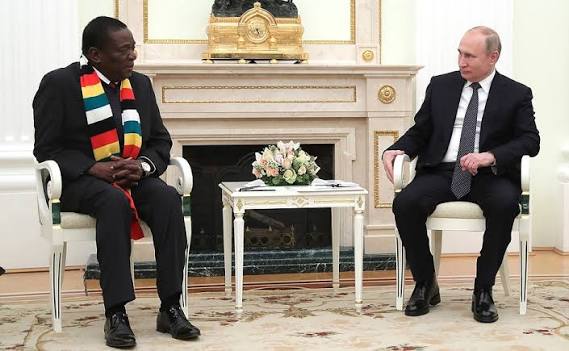
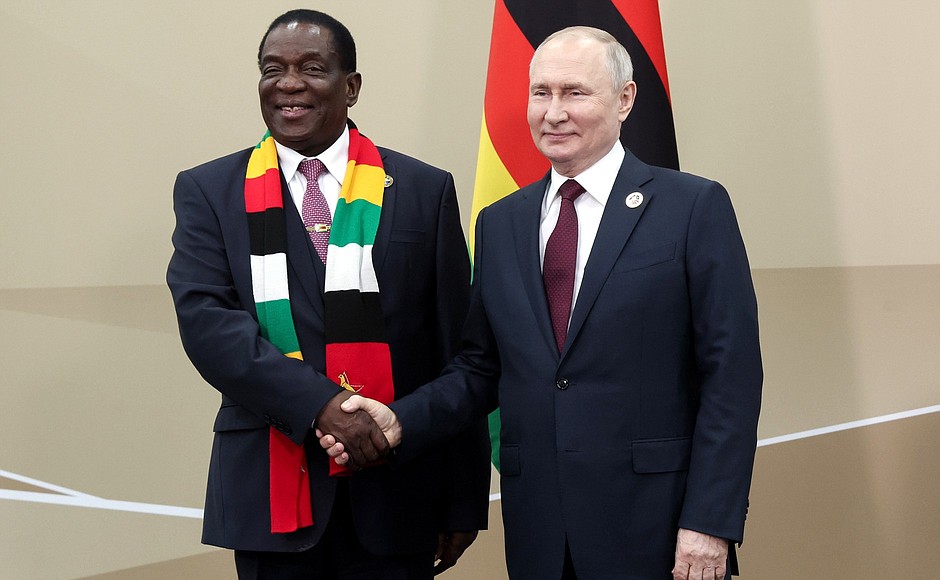
MOSCOW, Russia – Russia’s State Duma has ratified an agreement with Zimbabwe aimed at protecting citizens of both countries from what the two governments describe as abuses of international and national criminal justice systems.
The agreement between the Russian Federation and Zimbabwe provides for mutual protection against the alleged misuse of criminal justice mechanisms to interfere in the sovereign affairs of either country.
According to the Russian State Duma, the agreement commits both parties to refrain from interfering in each other’s sovereign affairs through the use of international or national criminal justice mechanisms. The two countries also undertake not to assist third parties seeking to use such mechanisms against the other state.
The ratification represents another development in the growing legal and diplomatic cooperation between Zimbabwe and Russia, with the two countries seeking to strengthen protections for their citizens and public officials against what they consider politically motivated or otherwise improper criminal proceedings.
Under the agreement, Zimbabwe and Russia will be required to reject certain requests from third parties involving citizens of the other country.
These include requests where there are serious grounds to believe that the person concerned could face torture, cruel, inhuman or degrading treatment or punishment.
The agreement also provides for the rejection of requests connected to the prosecution or punishment of individuals on the basis of political beliefs, race, religion or nationality.
This provision is intended to provide safeguards against the use of criminal proceedings as instruments of political or discriminatory persecution.
The agreement further establishes protections against the transfer of protected persons to third countries through deportation, expulsion or other forms of forced removal without the prior and express consent of their country of nationality.
Where such consent is not granted, the two governments undertake to take measures to facilitate the person’s transfer to their country of citizenship.
One of the significant elements of the agreement concerns the recognition of immunity for serving and former government officials.
Under its provisions, Zimbabwe and Russia recognise certain immunities enjoyed by officials of the other country from foreign criminal jurisdiction.
The agreement specifically identifies the President, Vice-President and Minister of Foreign Affairs and International Trade of Zimbabwe as holders of personal immunity while they occupy those offices.
On the Russian side, the corresponding positions are the President, Prime Minister and Minister of Foreign Affairs.
The personal immunity provisions cover official and private conduct, regardless of when the alleged conduct occurred, for as long as the individual holds the specified office.
The agreement also recognises immunity for serving and former public officials in relation to acts performed in their official capacities.
This form of protection continues after an official leaves office and relates to conduct undertaken while performing official duties.
The treaty also provides for the possibility of a country voluntarily waiving the immunity of one of its officials. Such a waiver must be expressly communicated in writing.
The agreement also addresses requests originating from international courts and tribunals, including the International Criminal Court (ICC).
It provides that participation by one country in an international court or tribunal does not automatically create legal obligations for the other country or diminish the protections and immunities guaranteed under the agreement.
Where a request from an international court or tribunal conflicts with the agreement’s provisions, the parties undertake to act in accordance with the agreement, subject to the relevant international legal framework.
The treaty makes a distinction between international tribunals established under agreements binding on both parties, or through legally binding United Nations Security Council resolutions adopted under Chapter VII of the UN Charter, and other international judicial mechanisms.
Another provision requires both governments to take necessary measures to prevent unlawful restrictions on the freedom of protected persons by third parties or individuals assisting them.
The countries are also required to notify each other promptly if they receive information about threats of unlawful detention or similar actions involving protected persons.
These safeguards are intended to strengthen cooperation between the two governments in situations where citizens or officials could face attempts to arrest, detain or transfer them outside the agreed legal framework.
The agreement forms part of a broader package of three legal cooperation instruments signed by Zimbabwe and Russia on 18 May 2026.
The other two agreements concern the transfer of sentenced persons to serve their prison terms in their countries of nationality and mutual legal assistance in criminal matters.
According to Russia’s Ministry of Justice, the agreements are intended to establish a framework for cooperation between the judicial and law enforcement authorities of the two countries, improve efforts to combat crime and strengthen the protection of citizens against unlawful criminal prosecution.
The agreement on the transfer of sentenced persons is intended to give convicted individuals an opportunity to serve their sentences in their countries of citizenship, while the mutual legal assistance treaty provides a framework for cooperation in criminal investigations and related judicial proceedings.
The three instruments cover different but interconnected aspects of criminal justice cooperation, including the treatment of convicted persons, the investigation of offences and protection against alleged abuses of criminal justice mechanisms.
The ratification of the mutual protection agreement highlights the expanding scope of Zimbabwe-Russia relations beyond traditional diplomatic and economic cooperation.
The two countries have continued to engage in areas including trade, investment, education, agriculture, mining and diplomatic cooperation.
The latest legal agreement adds another dimension to these relations by establishing a framework for addressing matters involving criminal jurisdiction, sovereign immunity and the protection of citizens.