
By Bongani Matshelela
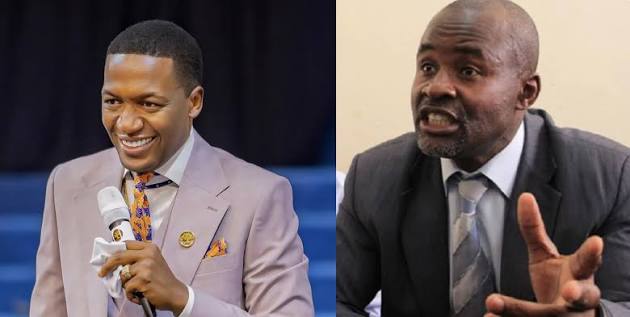
The public altercation between former legislator Temba Mliswa and high-profile preacher Uebert Angel has once again exposed an uncomfortable feature of Zimbabwean politics: the curious relationship between political power and religious influence.
Mliswa’s blistering public attacks on Angel, including allegations concerning his conduct have opened another window into the intersection of religion, political influence and state power.
These are serious allegations that require evidence and impartial investigation, not political theatre or trial by social media. But beyond the personalities involved lies a much bigger question: why does religion become politically welcome when it blesses those in power, but suddenly dangerous when it questions them?
Zimbabwean politicians appear to have developed a convenient theology. A pastor may pray for the President, a prophet may bless the government, an apostolic leader may mobilise thousands of worshippers, and a church congregation may be courted during election campaigns. Nobody seems particularly troubled by the proximity of religion to politics then.
But let a bishop or pastor speak about corruption, constitutional manipulation, poverty, human rights or the abuse of public office, and suddenly someone remembers the separation of Church and State.
Apparently, the Constitution requires the Church to stay out of politics, except when politicians need prayers, blessings, congregations and votes. The pulpit is welcome at election time; it becomes a crime scene when a bishop or pastor starts asking questions.
The argument is particularly absurd in a country where Christianity is woven into the fabric of public life. Zimbabwe’s Christian population is put at over 80 per cent. These Christians do not cease to be citizens when they enter a church. They are voters, taxpayers, soldiers, police officers, civil servants, businesspeople and, yes, members of political parties.
The person singing hymns on Sunday is the same person queuing to vote on election day or aspiring to be president. The vendor attending a prayer meeting is the same vendor struggling to afford mealie-meal, pay school fees and obtain medicines from a public hospital. Why should her faith disqualify her from speaking about the conditions under which she lives?
The Constitution protects freedom of conscience, religion and belief, political rights, including the right to participate in political activity. These rights are not enemies. They belong to the same citizen who participates in political activities.
But the idea that Church and State can be completely separated is a fallacy. A Christian does not surrender citizenship at the church door. He votes, pays taxes and lives under the same President and laws as everyone else. He cannot be expected to have two identities as though his faith and citizenship exist in separate worlds. Separation must never become a convenient shield behind which politicians escape moral scrutiny.
Indeed, the Zimbabwean State itself recognises that religion has a legitimate place in public institutions. The security services and correctional system have chaplaincy and spiritual-support arrangements. Why, then, should a church leader be considered politically improper simply for asking whether the government is governing justly?
The irony becomes even more pronounced when Zimbabwe’s own history is examined.
During the liberation struggle, the nationalist movement understood something that contemporary politicians sometimes pretend not to know: spirituality carries enormous social and political influence. Guerrilla movements, particularly ZANLA, cultivated relationships with traditional spirit mediums, or masvikiro, whose authority in rural communities could help legitimise the struggle and mobilise support.
Ironically, some spirit mediums are now asking uncomfortable questions about the unappeased spirits of those who perished during the liberation struggle at Chimoio, Nyadzonia and Tembwe, as well as those who died inside Zimbabwe.
They question why the remains of some fallen combatants have still not been repatriated for dignified burial at home. There is a growing sense that those who sacrificed their lives alongside the very establishment now in power have been forgotten by the political leadership they helped bring to power.
The Christian Church, too, was not sitting in some politically neutral corner waiting for independence to arrive. Religious figures participated directly in nationalist politics. Reverend Ndabaningi Sithole was among the founders of ZANU in 1963. Reverend Canaan Banana became Zimbabwe’s first President in 1980.
Beyond Zimbabwe, the World Council of Churches supported liberation movements.
The point is not that churches should become political parties or that religious leaders should be immune from criticism. It is that Zimbabwe’s political history makes the demand for religious silence look remarkably selective.
Today, the Church’s engagement with public affairs is not an abstract theological debate. It is unfolding against a background of economic distress, corruption allegations, contested constitutional changes and growing anxiety about the concentration of political power.
These are not merely church matters. They concern the constitutional arrangements under which every Zimbabwean lives. Whether one agrees with every position taken by the churches is beside the point. A government confident in its constitutional legitimacy should be able to answer criticism with facts, arguments and transparent processes, rather than demanding that the critics return to their sanctuaries.
The theological argument for silence is just as shaky. Those who quote 1 Timothy 2:1–2, urging Christians to pray for those in authority, sometimes read it as though prayer comes with a compulsory endorsement slip. But Ian Smith, P.W. Botha, Pol Pot and Hitler were also people in authority.
Unless we have discovered a new biblical commandment: Thou shalt pray for the ruler, and thereafter suspend your conscience. Prayer is not applause, and praying for a ruler does not mean giving him a divine licence to rule as he pleases.
Asking God to guide a government is not endorsing every policy it introduces. Prayer is not a political loyalty oath, and the Bible is not a public-relations manual for incumbents.
Saul was chosen by God, but that did not make him untouchable. When he lost his way, God raised David. Those who mistake their appointment to power for permanent divine endorsement should remember that the God who elevates kings can also replace them.
Indeed, the biblical tradition is full of people of faith confronting political authority. Nathan challenged King David. Elijah confronted Ahab. Their calling was not to make rulers comfortable, but to remind them that power has moral limits.
The Church should not become an extension of ZANU-PF, the opposition or any political faction. Religious leaders must also be transparent, accountable and willing to have their own conduct scrutinised. A collar, cassock or prophetic title is not a certificate of innocence.
But politicians must abandon the convenient fiction that religious leaders are citizens only when they are praying for those in power. They cannot court prophets when they need legitimacy, invoke God when they need votes, celebrate the spiritual contribution of the liberation struggle and then demand silence when churches speak about corruption and injustice.
The Church is not a political condom: something to be used when protection, legitimacy or public approval is needed and discarded when it becomes inconvenient.
Zimbabwe needs a State that is secure enough to tolerate a Church that speaks. It needs religious leaders who are courageous without becoming partisan, and politicians who understand that criticism is not treason, disagreement is not insurrection, and a sermon about justice is not an attempted coup.
The demand for the Church to stay out of politics should therefore be treated with the suspicion it deserves whenever it comes from those who have spent years inviting religion into their political affairs.
God may be asked to bless a nation, but that blessing cannot be converted into a licence for its rulers to escape accountability. And if politicians wish to keep inviting the Almighty into their campaigns, they should not be surprised when His representatives arrive with questions.



