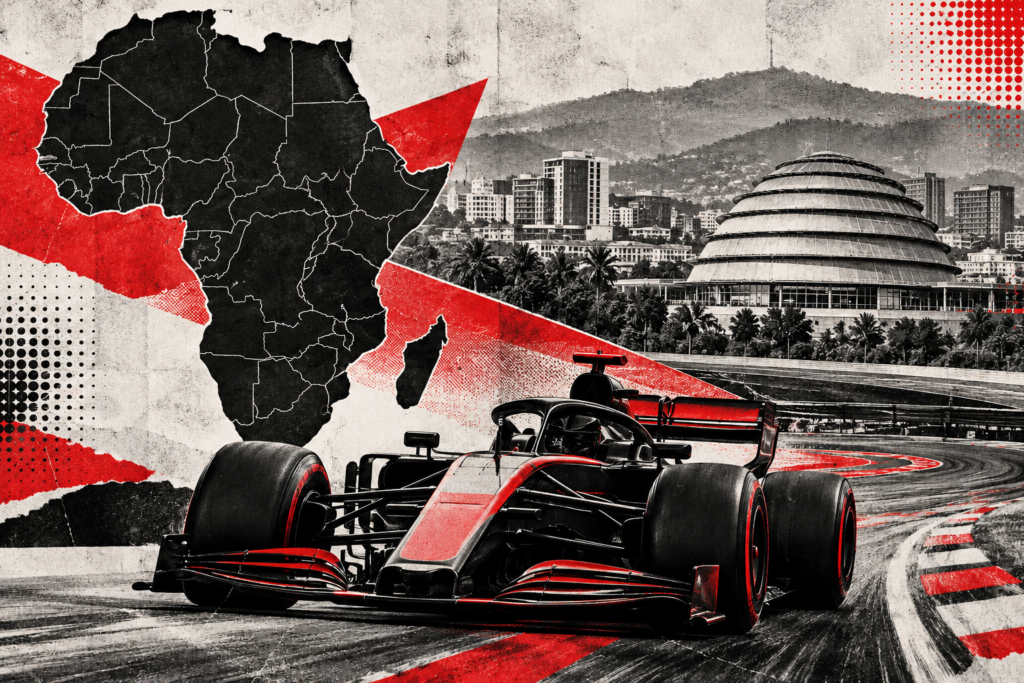
Rwanda’s agreement to bring Formula 1 back to Africa is more than a sporting triumph. It is a chance to turn decades of continental absence into opportunities for African talent, businesses, and fans. The benefits cross borders, not stopping in Kigali.
Formula 1 last raced on African soil in 1993, at South Africa’s Kyalami circuit. On October 13, the championship announced a 10-year deal for the African Grand Prix, presented by Visit Rwanda, with racing expected in the early 2030s. A purpose-built circuit is planned for Bugesera, roughly 40 kilometres south of Kigali, beside the new international airport. The inaugural race date is yet to be confirmed.
This is a historic breakthrough for a continent that has long watched Formula 1 from the sidelines. Yet history should also sharpen Africa’s ambitions. Morocco hosted a championship Grand Prix in 1958, while South Africa staged races for decades. Returning to the calendar is an achievement. Staying there, and widening African participation, would be an even greater victory.
Formula 1 is far more than fast cars and television spectacle. It is a global industry built on engineering, data, manufacturing, logistics, broadcasting, tourism, and hospitality. A Grand Prix can attract international investment and visitors, but its greater value lies in the skills, contracts, and industries it helps create.
Rwanda has laid out a vision beyond a single race weekend. The Rwanda Development Board is leading a wider sports and commercial project, with the Bugesera circuit planned to meet the FIA’s highest, Grade 1, standards. Formula 1 says the venue could also host other motorsport competitions, conferences, and entertainment events throughout the year.
That vision must extend across Africa. The continent cannot remain satisfied with buying tickets, watching broadcasts, and consuming merchandise. Africans should help design, manage, supply, and eventually compete in the sport. That means building pathways from classrooms and local racetracks to the garages, control rooms, and boardrooms of international motorsport.
Rwandan institutions could work with universities and technical colleges across Africa to create internships in mechanical engineering, data analysis, event management, and broadcasting. Regional companies could compete for contracts in transport, catering, accommodation, security, and media production. Motor sport authorities could strengthen karting and junior racing programs, giving aspiring African drivers a clearer route forward.
None of this is guaranteed by a signed agreement. It demands targeted training, fair procurement, regional partnerships, and measurable commitments from organizers and investors.
The audience is already there. Formula 1 estimates that Africa has more than 100 million fans, with nearly 60 percent of followers in key sub-Saharan markets under 35. Those figures represent enormous commercial potential but also a generation eager for opportunities in science, technology, engineering, and sport.
Rwanda deserves credit for securing the agreement after years of negotiations. Its record of hosting international sporting events, including the 2025 UCI Road World Championships, has strengthened its credentials. President Paul Kagame has also said the Grand Prix should pave the way for other African races, a continental ambition worth pursuing.
Seven-time world champion Lewis Hamilton has similarly spent years advocating Formula 1’s return to Africa, underscoring how long the continent has waited for this opportunity.