By Washington Katema
In my earlier article, “ZANU PF’s Succession Battle: Three Scenarios to Watch,” I argued that the struggle unfolding within ZANU PF was about more than who succeeds President Emmerson Mnangagwa. It concerned the rules governing succession, the balance of power within the party, the growing influence of wealthy political actors and the future of the establishment that emerged from the events of November 2017.
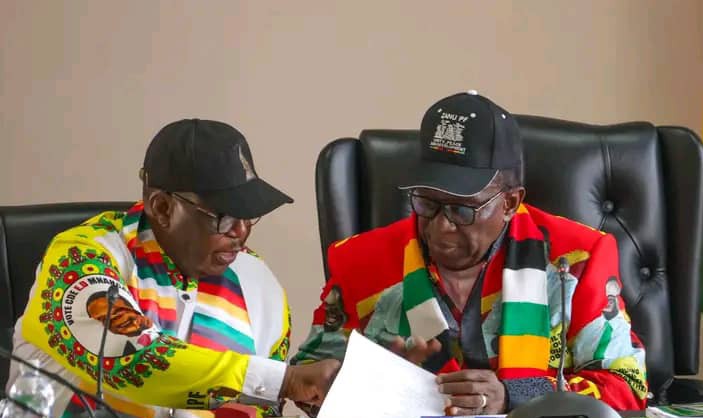
The resolutions adopted at the party’s 23rd National People’s Conference in Chinhoyi have sharpened that argument. The party endorsed Mnangagwa as its presidential candidate for 2030, resolved to retain him as party leader until then and moved its elective congress to 2029. These decisions have given institutional expression to the political project associated with the constitutional changes.
But the conference also exposed the fault lines beneath the appearance of unity. Vice-President Constantino Chiwenga’s speech, with its emphasis on accountability, internal democracy, collective leadership and the need for change to emerge from the party’s structures, deserves particular attention. Although he did not explicitly reject the resolutions, his insistence that the party belongs to its members rather than individual leaders raised questions about how decisions are made and whose interests they serve.
The central question is therefore no longer simply who succeeds Mnangagwa. Is the President preparing to hand over power, or are the succession arrangements being shaped to ensure that he remains in office for as long as possible?
The Tagwirei question
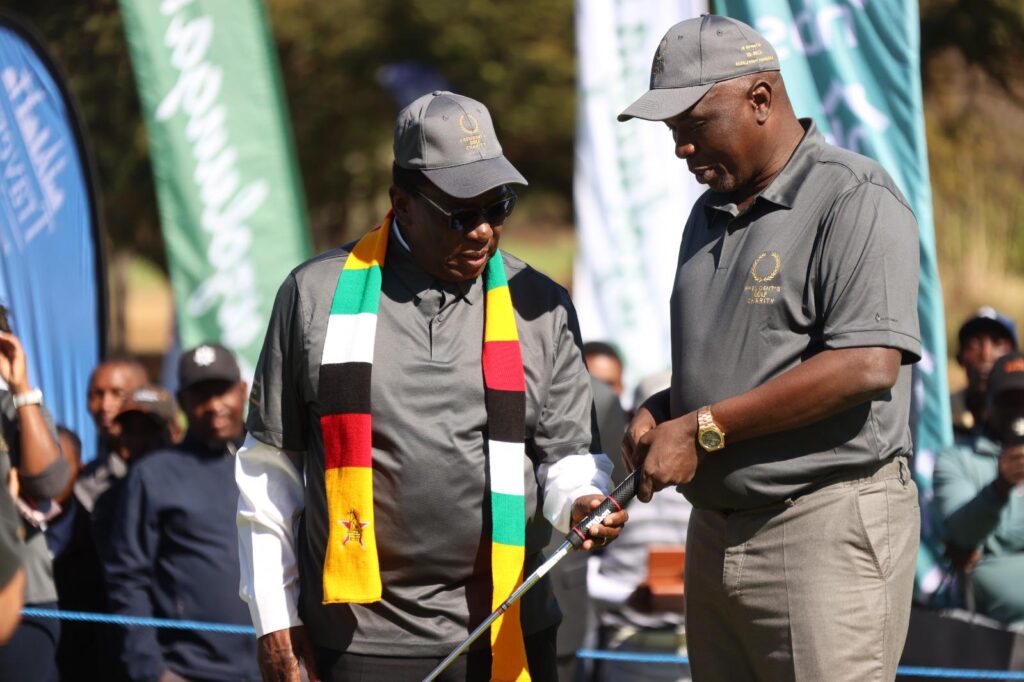
Kudakwashe Tagwirei’s rapid ascent through business, government and ZANU PF’s senior structures has placed him at the centre of the succession debate. His entry into the Politburo and growing political prominence have strengthened perceptions that he is being positioned for a more consequential role in the ruling establishment.
Yet it would be premature to conclude that Mnangagwa intends Tagwirei to succeed him.
Political alignment is not the same as a succession agreement. A powerful businessman can be an important political ally without being the designated heir. An incumbent may also find it useful to cultivate several centres of influence, provided none becomes powerful enough to challenge his own authority.
Tagwirei’s growing prominence could therefore mean several things. He may be positioning himself for eventual succession; he may be helping consolidate Mnangagwa’s political and economic networks; or he may be serving as a counterweight to established party and security elites. These possibilities are not mutually exclusive.
The more important question is whether his growing influence translates into demonstrable support within the institutions that will determine the eventual outcome. Access to the President, wealth and senior appointments can open doors, but they do not automatically confer the authority required to lead ZANU PF.
There is also a wider development that deserves closer scrutiny: the growing role of money in political competition.
Money has always mattered in Zimbabwean politics. What may be changing is the extent to which financial resources translate directly into political influence, access to party structures and the ability to shape internal decisions.
Allegations circulated around the Chinhoyi conference that money had been given to provincial structures to boo Chiwenga. These allegations remain unverified, and there is no established evidence that such payments took place. They should not be presented as fact.
Nevertheless, the allegation itself points to an important analytical question. If financial inducements are increasingly being used to manufacture political demonstrations of support, rather than merely sustain existing networks, the implications for succession politics would be significant.
It would suggest that visible expressions of factional strength may not always reflect genuine political allegiance. Money could be influencing not only who receives support, but also how that support is displayed.
Under a system in which Parliament selects the President rather than the electorate doing so directly, the ability to cultivate and maintain political loyalties could become even more consequential. This does not establish that parliamentary votes will be bought or that money will determine the succession. It does mean that the relationship between wealth and political power must be treated as a central variable in the analysis.
Chiwenga, the military and the limits of historical precedent
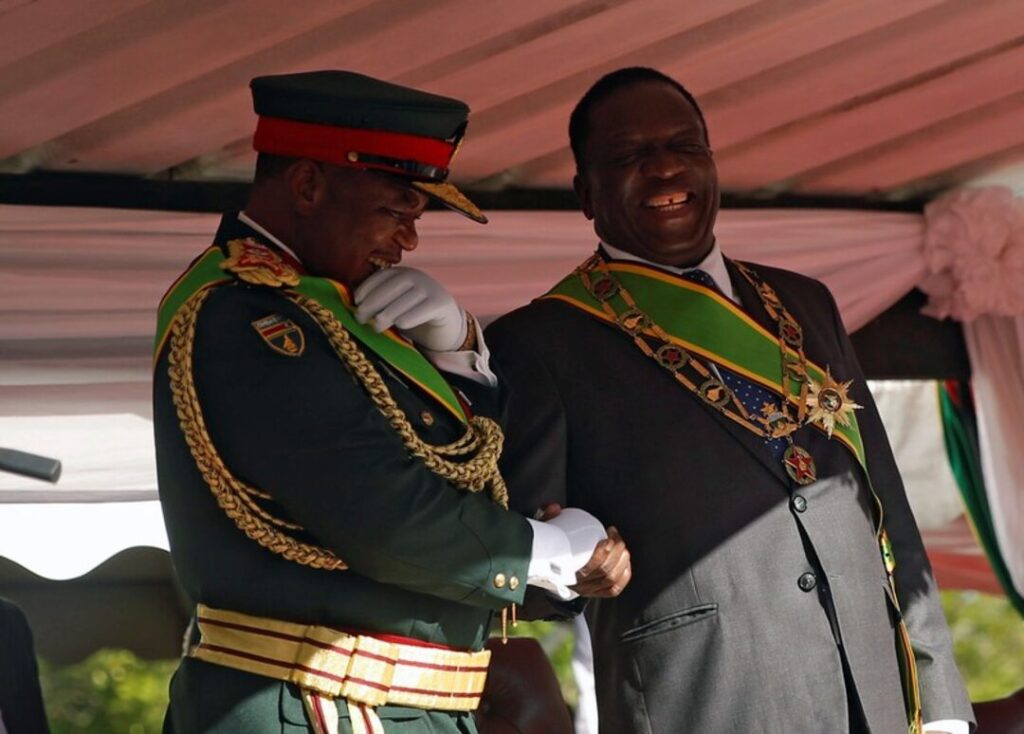
Chiwenga remains central to the succession equation. His role in the 2017 transition, his position as Vice-President and his historical connections to the security establishment make him impossible to ignore.
His Chinhoyi speech adds another dimension to the contest.
By emphasising accountability, collective leadership and the principle that political change should emerge through party structures, Chiwenga placed himself within a broader debate about the distribution and exercise of power in ZANU PF. His remarks were not an explicit declaration of opposition to Mnangagwa, nor did they amount to a rejection of the conference resolutions. But they should not be dismissed as routine conference rhetoric either.
The speech is consistent with several possible interpretations. Chiwenga may be seeking to preserve his political position within the existing arrangements. He may be signalling discomfort with the concentration of power around the incumbent. Alternatively, he may be laying the groundwork for a future contest over the party’s leadership and succession.
The evidence does not yet allow us to determine which interpretation is correct.
What appears increasingly important is whether Mnangagwa considers Chiwenga a potential successor whose influence must be accommodated or a rival whose path to the presidency must be obstructed. The distinction could shape the next phase of the contest.
The military dimension is equally important, but history must be treated carefully. November 2017 demonstrated that factional competition within ZANU PF could converge with military intervention to produce a fundamental change in leadership.
However, 2017 is a reference point, not a blueprint for the present.
The configuration of the deep state has evolved, as have the relationships between political leaders, security institutions and powerful economic actors. We cannot assume that the interests that shaped the 2017 transition remain unchanged or that the same actors would respond identically today.
Nor should the military be treated as a single, unified political actor. Institutional interests, personal relationships and competing calculations may influence how different constituencies within the security establishment respond.
The relevant question is not simply whether the military will intervene, but how the changing balance of power within the security establishment will affect the options available to competing political factions.
For now, there is insufficient public evidence to predict its response with confidence.
Could a dark horse emerge?
One weakness in much of the succession debate is the tendency to concentrate on Tagwirei and Chiwenga as though the eventual outcome must be a contest between the two.
That assumption may prove misplaced.
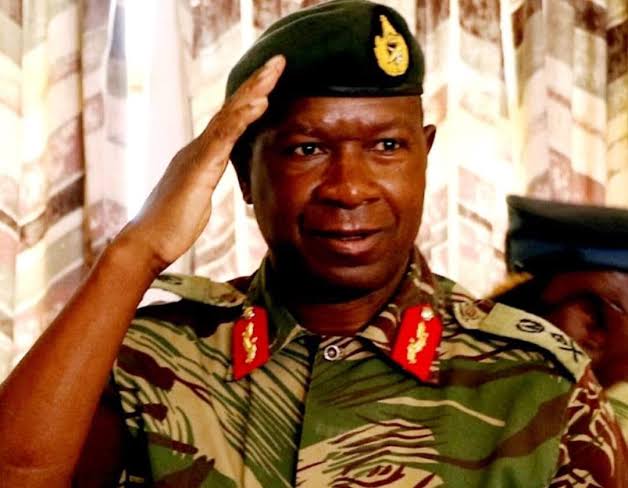
General Philip Valerio Sibanda, the former Commander of the Zimbabwe Defence Forces, is one potential dark-horse candidate worth examining.
Sibanda and Chiwenga share an important feature of their backgrounds: both served as commanders of the Zimbabwe Defence Forces. That common military experience makes Sibanda’s potential role worth examining, although their political trajectories and positions in the current contest are not identical. Sibanda spent more than two decades at the highest levels of military command, including as Commander of the Zimbabwe National Army and subsequently the Zimbabwe Defence Forces. Following his retirement, his appointment to ZANU PF’s Politburo brought him formally into the party’s senior political structures.
He also shares the Shumba totem with Mnangagwa, a connection that has attracted attention in discussions about the President’s political networks and possible succession calculations.
None of these factors establishes that Sibanda is being prepared for the presidency. But his military background, entry into the Politburo and potential acceptability to sections of the establishment make him a legitimate subject of scenario analysis.
His candidacy could become relevant if the incumbent concludes that Tagwirei lacks the political experience or institutional support required to lead the party, or if Chiwenga’s elevation proves unacceptable to influential constituencies.
A figure with military credentials who is not as deeply identified with the current factional contest could, under certain circumstances, offer a compromise between competing interests.
There are, however, important constraints. Military seniority does not automatically translate into political authority, and Sibanda would need to demonstrate support within the party’s structures. His historical military position and shared totem with Mnangagwa are relevant contextual factors, not evidence of an agreed succession arrangement.
The regional experience of Mozambique offers a useful comparison. In 2024, FRELIMO’s selection of Daniel Chapo demonstrated that the candidate widely expected to emerge does not always prevail. President Filipe Nyusi’s preferred candidate, Roque Silva, failed to secure sufficient support within the party’s Central Committee, and Chapo emerged as the successful candidate following an internal contest.
The comparison has limits. FRELIMO and ZANU PF have different internal dynamics, and Mozambique’s experience cannot predict Zimbabwe’s outcome. But it illustrates an important principle: the incumbent’s preferred candidate, the most visible contender and the eventual successor need not be the same person.
A dark horse becomes plausible when leading candidates cannot secure an acceptable settlement, when the incumbent needs a compromise or when influential actors decide that an alternative offers a better guarantee of political stability.
For Zimbabwe, the question is whether the current arrangements leave room for such an outcome or whether the Chinhoyi resolutions have narrowed the field so substantially that an alternative would require a major political realignment.
Three scenarios, one overriding uncertainty
The three scenarios outlined in my earlier article remain relevant, but the conference has changed the context in which they should be assessed.
The first scenario is that Mnangagwa consolidates his position and keeps his options open. The conference resolutions strengthen his immediate position, Tagwirei continues to rise, and Chiwenga’s room for manoeuvre narrows. The incumbent retains control over the timing and terms of any eventual transition. In this scenario, Tagwirei’s growing influence does not necessarily mean that he is the chosen successor. He may remain an important ally without ever becoming the principal beneficiary of the succession process.
The second scenario is a negotiated succession. If Mnangagwa eventually decides to leave office, or circumstances compel him to do so, competing factions may negotiate around a candidate acceptable to the incumbent and influential party, economic and security constituencies. That candidate could be Tagwirei, Sibanda or another figure who emerges as a compromise. Chiwenga’s prospects would depend on his ability to retain leverage and negotiate an acceptable outcome.
The third scenario is that the contest becomes a struggle over the incumbent himself. If Mnangagwa’s continued tenure becomes the principal point of contention, the succession debate could develop into a wider confrontation over the rules, institutions and interests governing the ruling establishment. Such a confrontation could produce a compromise, further consolidation of the incumbent’s position or a prolonged internal struggle.
These scenarios are not mutually exclusive. The first could lead to either of the others, depending on how competing factions respond and whether the incumbent’s calculations change.
Chiwenga’s conference speech is relevant to all three. It could be interpreted as an attempt to preserve his position within an increasingly centralised system, a signal of discomfort with the concentration of power or the articulation of principles that could become more consequential if the succession contest intensifies.
Similarly, the allegations about payments to provincial structures, if substantiated, would indicate that money is playing a more direct role in managing factional competition. At present, however, the allegations remain unverified and cannot be used as proof of a particular faction’s strength or intentions.
The analytical task is to distinguish between what has been established, what can reasonably be inferred and what remains a scenario.
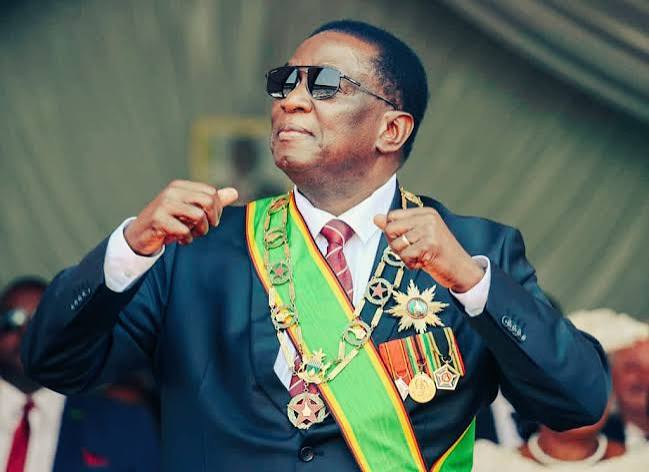
The possibility that Mnangagwa wants to succeed himself
The Chinhoyi resolutions give Mnangagwa’s continued leadership a formal political basis within ZANU PF. The national constitutional changes have also shifted the framework within which the next President would be chosen.
Against this background, the assumption that Mnangagwa is preparing to hand over power should not be treated as a given.
It is possible that his immediate objective is to remain in office, consolidate his political position and postpone the moment when he must choose between competing successors. The succession debate may be useful precisely because it keeps potential contenders focused on their own ambitions while leaving the incumbent at the centre of the political system.
This interpretation would help explain why Tagwirei’s elevation does not necessarily settle the succession question, why Chiwenga’s position remains contested and why a figure such as Sibanda could become relevant without being an obvious front-runner.
The most important distinction is between identifying a preferred successor and identifying the incumbent’s preferred political outcome. They are not necessarily the same thing.
My assessment is that Mnangagwa’s continued hold on power remains the central scenario against which all others must be tested. Tagwirei may be a beneficiary of the current political realignment, Chiwenga may remain a consequential player, and Sibanda or another dark horse may yet emerge. But none of these possibilities should distract from the prospect that the incumbent’s own tenure is the real issue at stake.
The question is no longer simply who succeeds Emmerson Mnangagwa. It is whether the succession arrangements now taking shape are intended to produce a successor at all, or to preserve the conditions under which Mnangagwa can continue to rule.
Until that becomes clearer, declaring any individual the inevitable heir would be premature. The decisive contest is over who controls the rules, the institutions and the timing of political transition. The outcome will depend on how those centres of power interact, not merely on which faction appears strongest today.

About the Author: Washington Katema is an international democracy, governance and human rights consultant with over 20 years of experience.