By Gabriel Manyati
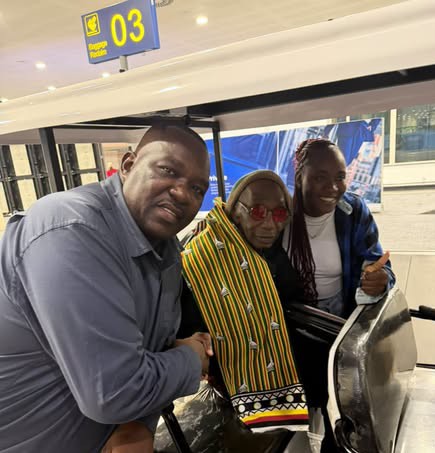
The tarmac at Robert Gabriel Mugabe International Airport on 29 September 2026 offered a tableau that would have been entirely unthinkable a decade prior. Thomas “Mukanya” Mapfumo, the legendary Lion of Zimbabwe whose Chimurenga protest songs spent decades dissecting, mocking and provoking the authoritarian state, touched down in Harare.
He did not arrive to face police dockets or hostile state media broadcasts. Instead, he was met on the tarmac and warmly embraced by serving members of President Emmerson Mnangagwa’s cabinet: Youth Minister Tino Machakaire, Women’s Affairs Minister Monica Mutsvangwa, and Sport and Culture Minister Anselem Sanyatwe.
Minister Machakaire posted video footage of the homecoming, declaring that an icon of Mapfumo’s stature deserved a grand reception, while Minister Mutsvangwa enthusiastically welcomed the veteran musician back to his ancestral soil. Only two years earlier, in 2024, Mapfumo had publicly voiced deep fears of returning to Zimbabwe, citing lingering trauma and the severe political hostility he experienced under the ZANU PF establishment.
Yet here he was, enveloped in state hospitality, arriving for a high-profile return backed by significant cultural and commercial arrangements.
This striking scene forces a fundamental question upon students of Zimbabwean politics. Has President Emmerson Mnangagwa demonstrated a greater capacity than the late Robert Mugabe to absorb, accommodate, rehabilitate or otherwise make political room for individuals who were once arch-critics of the ruling party, enemies of the state or personal adversaries?
To answer this requires exploring the central organising idea of political elasticity. In concrete terms, political elasticity measures a leader’s willingness to bend old antagonisms, stretch party boundaries, and distinguish between yesterday’s political enemy and today’s useful national figure. It asks whether this shifting posture represents genuine national reconciliation, cold strategic co-option, generational pragmatism, or a sophisticated mechanism designed to ensure ZANU PF survival through absorption rather than outright exclusion.
Mugabe Versus Mnangagwa: Two Styles of Containment
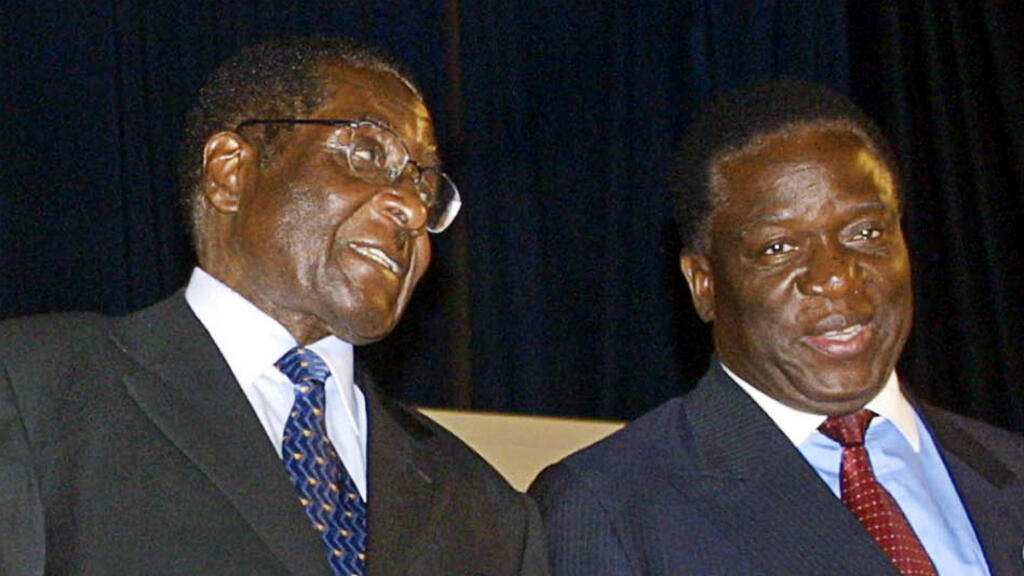
To understand Mnangagwa’s approach, one must contrast it with the rigid political architecture constructed by Robert Mugabe during his 37 years in power. Mugabe’s governance model was fundamentally ideological, personal and Manichean. For Mugabe, political betrayal was rarely a temporary tactical disagreement; it was treated as a permanent moral stain.
Those who broke ranks with ZANU PF or challenged his personal authority were frequently cast into outer darkness, designated as sellouts, agents of Western imperialism, or permanent enemies of the state.
Mugabe’s long presidency was littered with permanent exiles and excluded figures. Nationalist pioneers who fell out of favour found themselves erased not only from government lists, but from the officially sanctioned history of the liberation struggle. Political conflict under Mugabe was zero-sum and fiercely personalised.
Mnangagwa’s administration, by contrast, operates with a different playbook. While it remains thoroughly anchored in the coercive apparatus of the state and brooks no real electoral threat to its survival, it has displayed a notable operational flexibility. Mnangagwa’s method is less about permanent excommunication and more about conditional incorporation.
Where Mugabe built walls to keep adversaries permanently outside the national conversation, Mnangagwa has repeatedly demonstrated an inclination to build low gates, allowing former enemies, sidelined cadres, and even repentant critics to walk back inside the ZANU PF tent, provided they accept the overarching supremacy of the ruling order.
Ndabaningi Sithole and the Liberation Pantheon
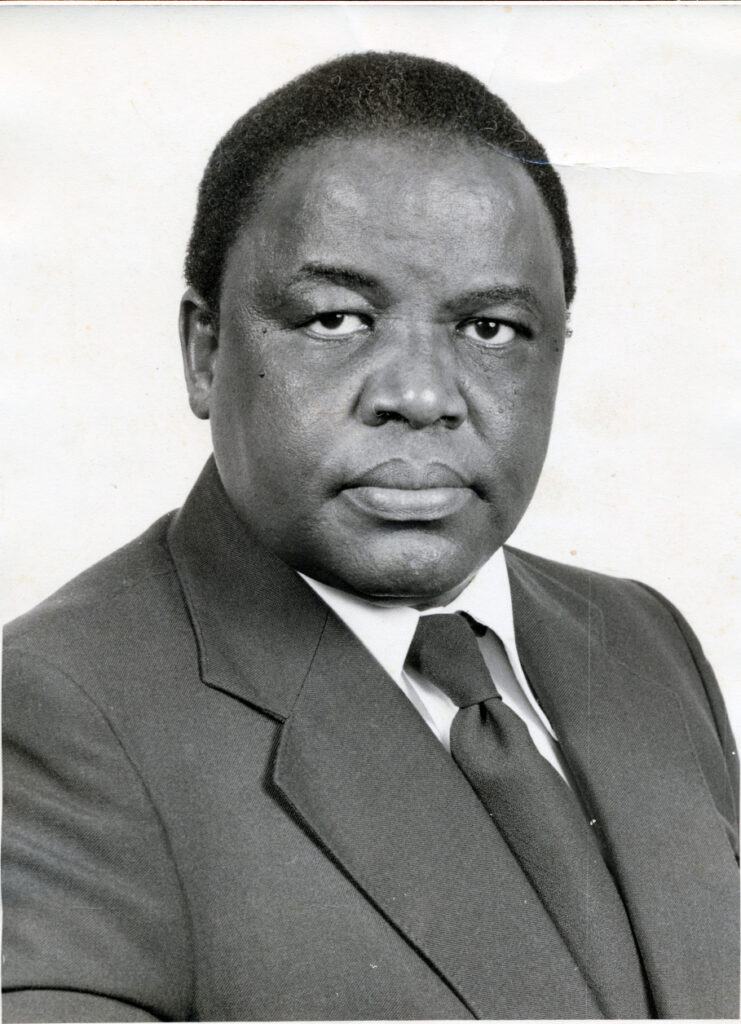
The historical rehabilitation of Reverend Ndabaningi Sithole provides the most dramatic proof that this phenomenon predates the return of Thomas Mapfumo. Sithole was the founding president of ZANU in 1963, a towering figure of early Zimbabwean nationalism, and a political prisoner during the Smith regime. Yet after independence, his relationship with Robert Mugabe fractured completely. Sithole was marginalised, hounded by treason trials related to alleged assassination plots, and eventually reduced to leading a minor opposition grouping, ZANU Ndonga, in Chipinge.
When Sithole died in exile in the United States in 2000, Mugabe and the ZANU PF establishment refused to accord him national hero status. His burial at his rural home was devoid of official state honours, serving as a final, bitter punctuation mark on decades of personal and political estrangement.
Decades later, in 2022, Mnangagwa broke decisively with that legacy by posthumously declaring Sithole a national hero, alongside fellow nationalist James Chikerema. Mnangagwa’s administration officially recognised Sithole’s foundational contribution to the liberation struggle, paving the way for his reburial with full military honours.
This reversal triggered intense national debate. Critics, including former student leader and political figure Arthur Mutambara, dismissed the move as a transparently self-serving political manoeuvre. Mutambara argued that ZANU PF possessed no moral monopoly to grant or strip away historical heroism, suggesting the gesture was a synthetic attempt by Mnangagwa to launder the ruling party’s legacy and project an image of magnanimity.
Yet viewing the decision solely as a cynical trick misses its structural significance. Whether driven by historical correction or political optics, Mnangagwa did something Mugabe steadfastly refused to do: he retroactively expanded the boundaries of the nationalist pantheon to include a man Mugabe had personally anathematised.
By bringing Sithole back into the official fold of national heroes, Mnangagwa signaled that the historical narrative of the liberation struggle could be stretched to accommodate figures who had spent decades in fierce opposition to the ruling party.
The Paradox of the Mugabe Family
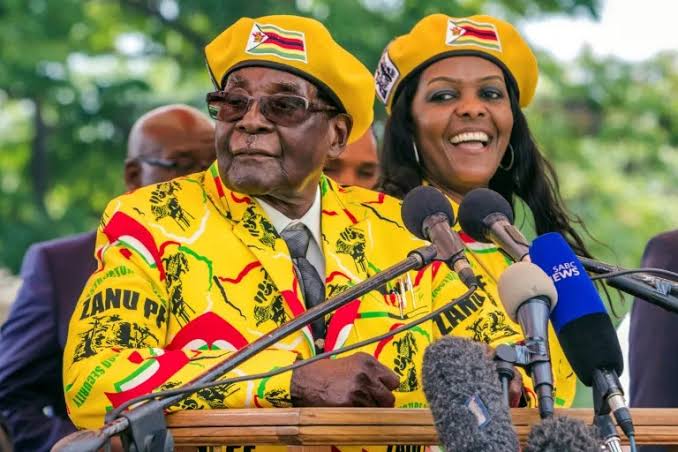
If the rehabilitation of Sithole represents a historical stretch, Mnangagwa’s handling of the Mugabe family after the November 2017 military intervention represents a masterclass in calculated restraint. Mnangagwa was not merely a distant political opponent of Robert Mugabe; he was the vice president who, in late 2017, was publicly humiliated, vilified by Grace Mugabe, and chased out of the country by the G40 faction operating around the aging president.
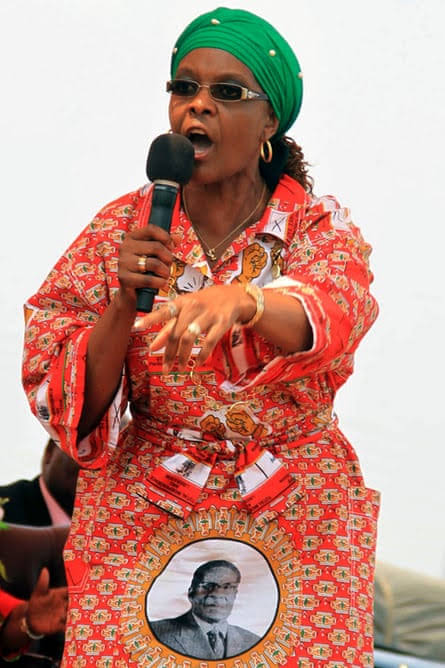
At the height of the succession battles, Grace Mugabe openly humiliated Mnangagwa at provincial rallies, while state machinery loyal to the First Family sought to destroy his political career entirely. Conventional political logic suggested that when Mnangagwa ascended to power through the military-assisted transition, the Mugabe family would face systematic asset seizure, public disgrace, and political annihilation.
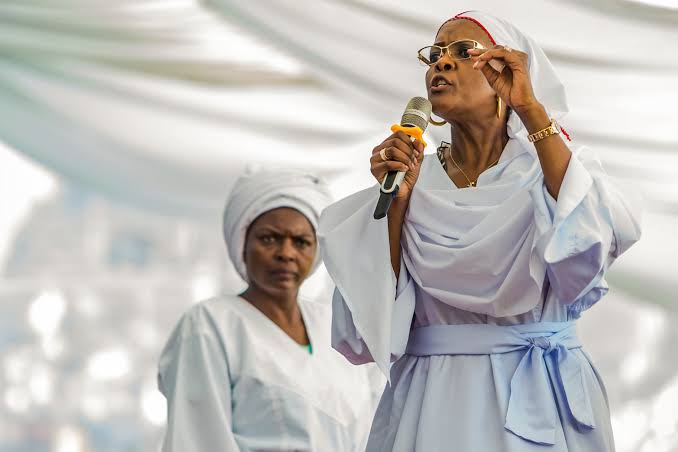
Instead, Mnangagwa orchestrated a remarkably restrained exit and post-presidency for his former patron. Robert Mugabe was granted a lavish state-funded retirement, guaranteed immunity, and retention of extensive private assets. When the former president died in Singapore in September 2019, Mnangagwa’s government funded a protracted, state-managed funeral process, and although disputes arose over the final resting place, the state treated the fallen leader with profound formal deference.
Grace Mugabe and the Mugabe children were largely left unmolested in their commercial farming and business ventures, spared the sweeping judicial persecution that often characterises post-authoritarian transitions across the continent.
This outcome exposes a profound paradox. The man who had been targeted for political execution by the Mugabes chose not to reduce his tormentors to permanent enemies. Instead, Mnangagwa absorbed the shock of the transition by offering the former First Family a velvet-lined cushion, neutralising potential centre of counter-mobilisation by folding them into the background noise of national life rather than driving them into radical martyrdom.
Thomas Mapfumo and the Limits of Cultural Exile
Returning to Thomas Mapfumo brings these threads into sharp focus. Mapfumo’s musical indictment of corruption, human rights abuses, and misgovernance under Mugabe made him a national conscience during the darkest hours of the economic collapse. Albums like Corruption and Chimurenga Explosion earned him the wrath of state broadcasters, and his eventual relocation to the United States was born of genuine security concerns and targeted harassment.
When Mapfumo made a brief return to Harare in 2018 shortly after Mugabe’s fall, the political climate was tentative and hopeful. However, the years that followed showed that Mukanya had not mellowed into a regime loyalist. He continued to excoriate the Mnangagwa administration for economic hardship, systemic looting, and democratic regression.
In 2024, Mapfumo went public with deep anxieties, stating explicitly that returning to Zimbabwe would place his life in mortal danger. Government spokesperson Nick Mangwana countered by insisting that the state bore no malice toward the musician and that he was free to return at any time.
The events of September 2026 proved Mangwana’s point, albeit packaged in high theatre. Mapfumo’s arrival was lubricated by significant commercial interests, most notably a lucrative local entertainment arrangement featuring high-profile promoter Josh Hozheri and reported multi-million-dollar performance bookings backed by prominent tenderpreneur Wicknell Chivayo. Yet the involvement of cabinet ministers like Tino Machakaire and Monica Mutsvangwa transformed a private commercial concert tour into a state-sanctioned homecoming.
What changed is not Mapfumo’s political ideology; he remains critical and unbowed. What has changed is the ruling establishment’s tolerance for cultural dissent. Under Mugabe, a cultural icon who sang truth to power was treated as a dangerous subversive whose very presence threatened state security. Under Mnangagwa, the state has learned that absorbing cultural critics, even unrepentant ones, neutralises their sting.
By welcoming Mapfumo with ministerial handshakes and national media coverage, the Mnangagwa administration successfully co-opts the symbolic capital of the nation’s greatest protest singer, turning a potential emblem of resistance into a beneficiary of state-facilitated hospitality.
Walter Mzembi and the “Come Back Home” Strategy
Political elasticity, however, is not a blank check for unconditional absolution. It has distinct boundaries, driven by pragmatism and security calculus. This is best illustrated by the case of Walter Mzembi.
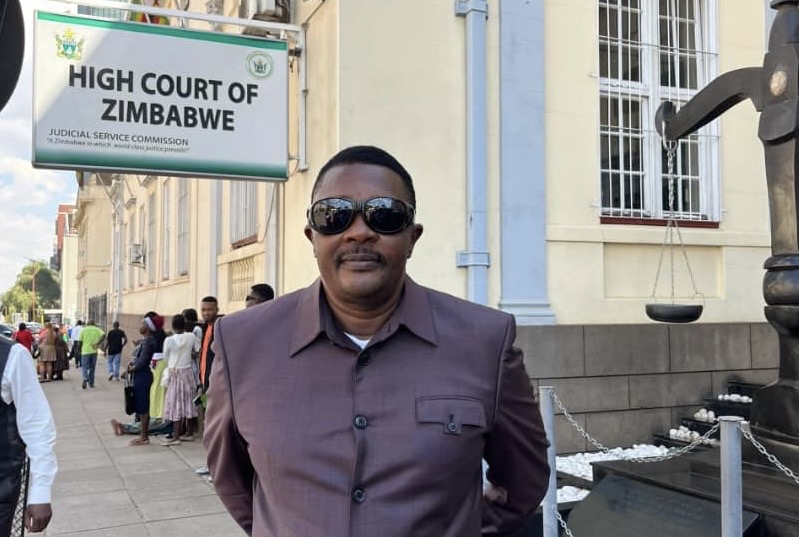
Mzembi was once a high-flying, internationally respected Minister of Tourism and a stalwart of ZANU PF during the Mugabe era. Swept away in the 2017 G40 purge, Mzembi fled into exile and spent years outside the country facing various political suspicions. In 2026, reports surfaced of Mzembi’s formal bid to return to the political fold and seek re-admission into ZANU PF.
Yet his experience proved that opening the door does not mean rolling out an uncritical red carpet. Mzembi’s application encountered stiff resistance at the provincial level in Masvingo, where party structures demanded rigorous explanations for critical social media commentary he had posted during his years in exile. His re-admission was neither instantaneous nor guaranteed, illustrating that while Mnangagwa’s ZANU PF is open to absorbing former prodigal sons, repentance must be absolute and public humiliation for past defiance is frequently demanded by provincial gatekeepers.
This cautious gatekeeping is mirrored in ZANU PF’s broader, highly organised recruitment drives. Initiatives like the Huyai Kumusha, Huyani Ekhaya, or “Come Back Home” campaign launched across the country have systematically targeted former opposition members, particularly disillusioned structures from the Citizens Coalition for Change (CCC). By September 2026, state media gleefully reported that thousands of former opposition election agents and local activists had crossed the floor to join ZANU PF in regions like Bulawayo and Harare, where they undergo formal “reorientation”.
Critics argue that these campaigns represent an aggressive strategy of political cannibalism, designed to eviscerate a fragmented opposition by offering patronage and protection in exchange for public declarations of loyalty. It is elasticity deployed as a weapon of assimilation.
The Architecture of Incorporation
Examining these diverse cases reveals that the contrast between Mugabe and Mnangagwa is not simply a matter of personal temperament. It reflects two distinct technologies of authoritarian control. Mugabe’s method was exclusionary sovereignty: he sought to maintain absolute ideological purity by casting out heretics, ensuring that the boundaries of the ruling elite remained narrow, aristocratic, and fiercely guarded.
Mnangagwa’s method is expansive hegemony. Recognising that a shrinking ruling minority cannot survive indefinitely on coercion alone, Mnangagwa has engineered a political ecosystem that trades ideological rigidity for broad-based incorporation. By welcoming back figures like Thomas Mapfumo, rehabilitating historical exiles like Ndabaningi Sithole, absorbing former G40 technocrats, and recycling opposition foot soldiers through the Come Back Home initiative, Mnangagwa is constructing a big-tent authoritarianism.
This approach carries profound implications for Zimbabwe’s political future. By blurring the lines between the ruling party, the state, the liberation struggle, and national identity itself, Mnangagwa makes it increasingly difficult for citizens to articulate a clean external opposition. When the state can absorb its cultural critics, pardon its historical detractors, and integrate yesterday’s opposition agents into its district structures, the traditional boundaries of political conflict dissolve.
Ultimately, the true significance of Mnangagwa’s political elasticity lies not in whether it makes him softer or kinder than Mugabe. It lies in its chilling effectiveness. By transforming enemies into guests, returnees, and comrades, Mnangagwa has achieved what exclusion never could: a ZANU PF that appears less vulnerable precisely because it has learned to swallow its opposition whole.