By a Correspondent
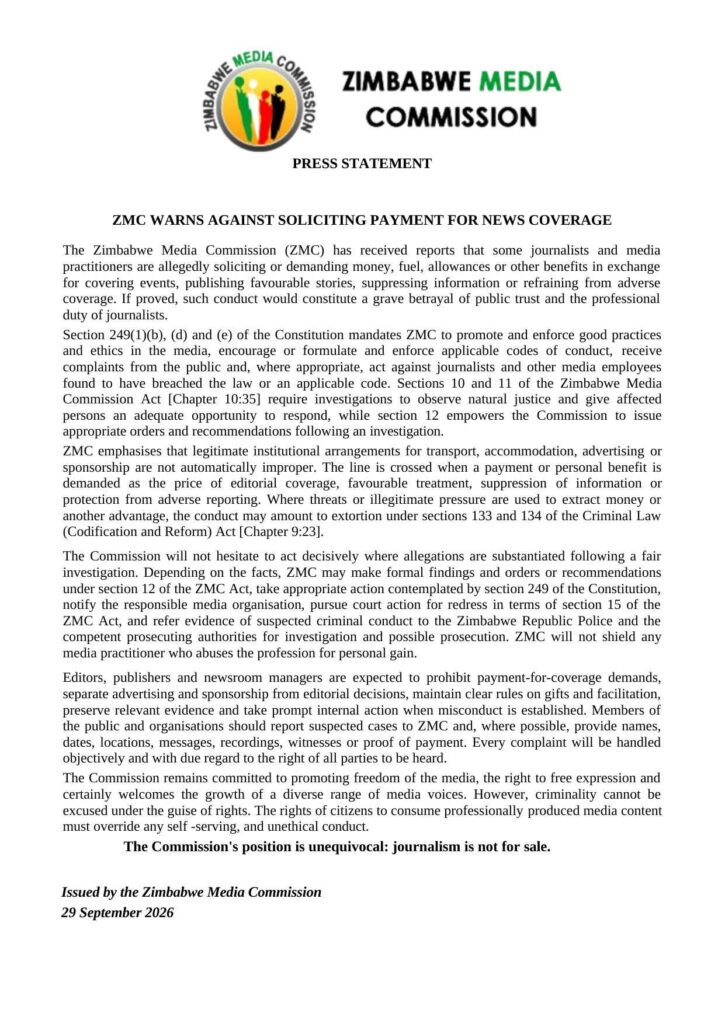
The Zimbabwe Media Commission (ZMC) has issued a strong warning to journalists and media practitioners against soliciting or demanding money, fuel, allowances or other benefits in exchange for news coverage, saying the practice undermines public trust and violates professional ethics.
In a strongly worded statement issued Tuesday, the media regulator said it had received reports that some journalists were demanding payments or other benefits to cover events, publish favourable stories, suppress information or refrain from adverse coverage.
The Commission said such conduct, if proven, would amount to a serious breach of the professional duties of journalists and a betrayal of public trust.
ZMC said while legitimate institutional arrangements for transport, accommodation, advertising or sponsorship were not automatically improper, the line was crossed when journalists demanded personal benefits as a condition for editorial coverage or favourable treatment.
The regulator warned that where threats or illegitimate pressure are used to obtain money or other advantages, the conduct could amount to extortion under Zimbabwe’s criminal laws.
The Commission said it would not hesitate to act where allegations are substantiated following investigations. Possible actions include issuing formal findings and recommendations, notifying media organisations, pursuing court action for redress and referring suspected criminal cases to the Zimbabwe Republic Police and prosecuting authorities.
“ZMC will not shield any media practitioner who abuses the profession for personal gain,” the Commission said.
The regulator also called on editors, publishers and newsroom managers to enforce strict rules separating editorial decisions from advertising and sponsorship arrangements, while maintaining clear policies on gifts and facilitation.
Members of the public and organisations were urged to report suspected cases to the Commission and, where possible, provide supporting evidence such as names, dates, messages, recordings, witnesses or proof of payment.
The Commission reaffirmed its commitment to promoting media freedom and freedom of expression but stressed that criminal conduct could not be justified under the guise of media rights.
“The Commission’s position is unequivocal: journalism is not for sale,” the statement said.