Business Correspondent
JOHANNESBURG: South Africa’s unemployment crisis has worsened, with the official unemployment rate rising to 33.6% in the second quarter of 2026 as hundreds of thousands more people joined the ranks of the jobless.
Statistics South Africa (Stats SA) said the unemployment rate increased by 0.9 percentage points from 32.7% in the first quarter, while the number of unemployed people rose by 345,000 to about 8.5 million.
At the same time, employment declined by 16,000 to 16.7 million, according to the latest Quarterly Labour Force Survey. The labour force grew by 329,000, or 1.3%, during the quarter.
The latest figures point to continued weakness in South Africa’s labour market, with job losses recorded across several major sectors.
Community and social services suffered the biggest quarterly decline, shedding 57,000 jobs, followed by mining with 26,000. Agriculture and manufacturing each lost 15,000 jobs, while utilities recorded a decline of 10,000.
There were, however, employment gains in some sectors. Trade added 70,000 jobs, construction increased employment by 39,000, while finance gained 11,000 positions.
On an annual basis, total employment fell by 68,000. The biggest year-on-year declines were recorded in community and social services, which lost 101,000 jobs, followed by manufacturing with 100,000, utilities with 36,000 and finance with 33,000.
Construction recorded the largest annual gain, adding 94,000 jobs, followed by trade with 74,000, agriculture with 39,000 and mining with 16,000.
Youth unemployment remains a major concern
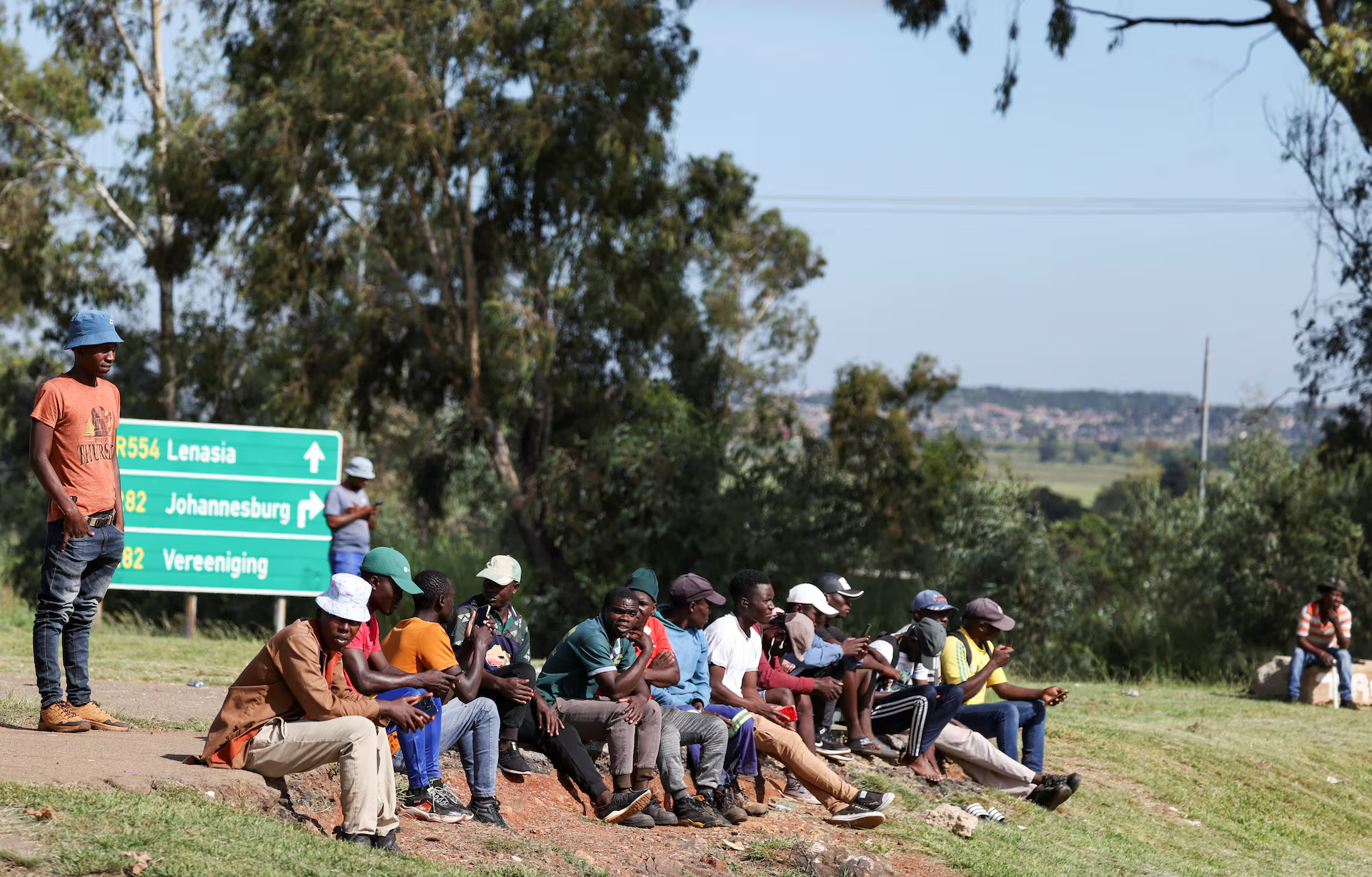
Young South Africans continue to bear a disproportionate share of the unemployment burden.
Stats SA said the number of unemployed people aged between 15 and 34 increased by 264,000 during the second quarter to five million. At the same time, youth employment fell by 40,000 to 5.6 million.
As a result, the youth unemployment rate climbed by 1.5 percentage points to 47.4%.
The broader unemployment picture is even more severe when people who have stopped looking for work are included.
The expanded unemployment rate, which includes people who are unemployed as well as those in the potential labour force, increased slightly to 43.8%.
Stats SA’s composite measure of labour underutilisation remained extremely high at 46.3%, highlighting the extent of unemployment, underemployment and people with weak links to the labour market.
The number of discouraged job-seekers fell by 227,000 to 3.7 million during the quarter, while the broader potential labour force declined by 280,000 to 4.6 million.
The deterioration in the labour market comes despite signs of employment growth in sectors such as construction and trade, underscoring the uneven nature of South Africa’s economic recovery.
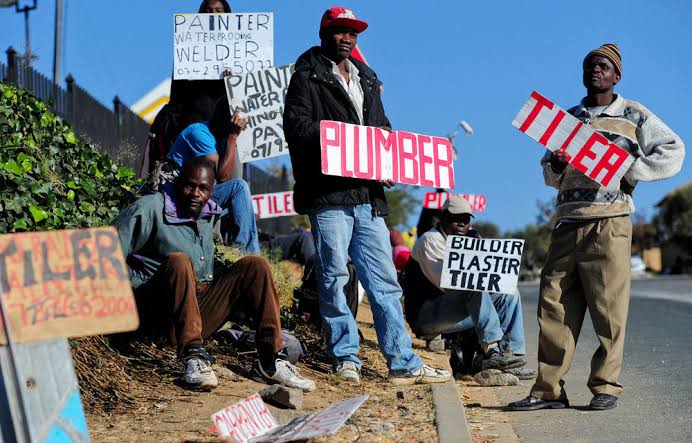
The latest figures are likely to intensify pressure on the government to accelerate economic reforms and job-creation measures, particularly for young people, as the country continues to grapple with persistently high unemployment.
The unemployment rate of 33.6% is the highest recorded since the second quarter of 2022, according to labour-market data.
The Congress of South African Trade Unions has described the worsening unemployment situation as a “ticking time bomb”, calling for urgent measures to create sustainable jobs and address the structural problems weighing on the economy.