By Nigel Nyamutumbu
I follow South African politics the way a typical Zimbabwean football fan follows the English Premier League — obsessively, because I know what happens there will eventually shape what happens at home.
South Africa is the region’s superpower. When its economy sneezes, Zimbabwe catches a cold. When its media debates artificial intelligence, our media follows. When its politics shifts, our politics feels the tremor. Its rand is our informal currency in some parts of the country. The cities host our brothers, sisters, cousins and colleagues. Its democracy — flawed, noisy, resilient — is the one we measure ourselves against most.
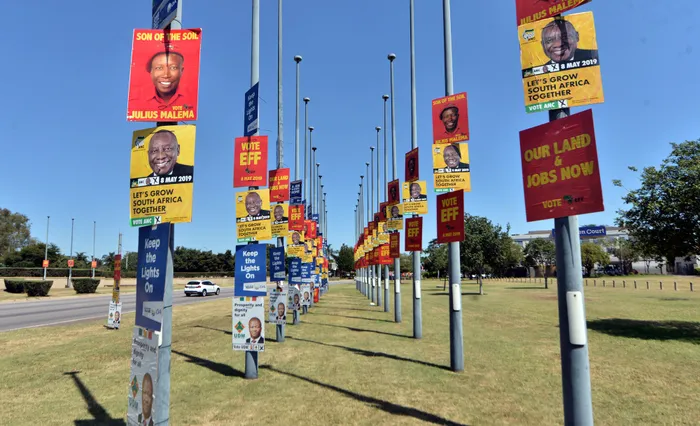
When South Africans went to vote in local government elections on 4 November 2026, I was not a neutral observer. I was watching like someone who once had a small stake in that very system.
In 2010, at University of Witwatersrand in Johannesburg, I led the smaller Young Independent Democrats (YID) party in student politics. The national leader of the party as it was known at that time was Patricia de Lille. While relatively a minor party, it was in the national discourse and had representation in the national legislature and in local government.
As such we were typically not in the mould of the ANC Youth League, nor were we as significant as the students’ arm, SASCO.
We were also not like the DA Students Organisation, which would have bigger mobilization budgets. We were small, independent, stubborn, and convinced that our ideas deserved a hearing even if we did not have the numbers.
During my time at the helm of the Wits YID, I was one of those who were part of merging that party with the DA then. It was not an easy decision. When you are small, merging feels like disappearing. But it also taught me the first law of South African politics: numbers matter, but the system decides whether your numbers count.
That is why I have never stopped believing in proportional representation as the most viable form of democracy. Particularly in entrenching genuine multi-party democracy.
And the results of the 2026 local elections have just proved, once again, why it matters.
Let us start with the facts, because they are stark.
The African National Congress, the party that has governed South Africa since 1994, fell to 30.8% nationally in the local vote, down from 45.6% in 2021. The Democratic Alliance rose to 24.6%. The uMkhonto weSizwe Party, contesting municipal elections for the first time, took 9.8% and 800 seats. The EFF took 6.2%, ActionSA 5.7%, the IFP 4.7%.
But the most important number is not a party’s percentage. It is this: of 213 councils, only 74 have a single party with a majority. 139 are hung.
In 2021, there were 70 hung councils. In 2026, there are almost double.
In Johannesburg, the DA emerged as the largest party with 91 of 270 council seats, the ANC 63 and ActionSA 43. No one can govern alone.
The temptation is to read that as chaos. This will be missing the point.
My analysis is that this is the impact of representative democracy. The gains a country gets from implementing proportional representation.
From my standpoint, the most obvious benefit is that proportional representation guarantees smaller parties a stake into government. This is the most basic, and most beautiful, thing about PR.
In South Africa’s local system, a voter casts a ballot for a ward councillor, and a second ballot for a party on a proportional basis. The PR ballot ensures that a party’s share of seats in a council roughly matches its share of votes.
That means you do not have to win a ward to win a seat. You just have to win enough trust.
The election results of 2026 are a case in point.
The SACP, with just 2.4% of the vote, won 273 seats. The Patriotic Alliance, with 2.0%, won 192 seats. The Freedom Front Plus, with 3.0%, won 249 seats. The African Transformation Movement, with 1.0%, won 102 seats.
In a first-past-the-post system — the system Zimbabwe still uses for most constituency elections — those votes would have been wasted. The candidate who came second, third, fourth would have gone home with nothing, and their voters would have been told, in effect, that their choice did not count.
In South Africa, those votes become councillors. They become committee members. They become people who can ask questions about the budget, about water, about tenders, about refuse collection. They become a presence in the room where decisions are made.
That is a lesson I believe Zimbabwe, in dealing with the country’s political polarization could draw lessons from. In a winner-takes-all election, a small party is a joke. The joke that we normally make of the likes of Kissnot Mukwazhi, who if I am not mistaken once came third in presidential elections. In a proportional system, a small party is a constituency. It cannot be ignored, because its votes are counted, not discarded.
Secondly, proportional representation forces every party to talk to each other, especially in circumstances where there is no outright winner as was the case in SA’s 2026 elections.
This is the part that makes many Africans uncomfortable, because we are used to a politics of strongmen and outright majorities.
In a hung council, you cannot govern by decree. You have to negotiate. You have to form a coalition. You have to listen to people you spent the campaign insulting.
In SA all parties are talking to each other in one way or the other. The ANC assessed each municipality separately and engaged across the board. The DA negotiated case by case. The EFF has been pushing for closer cooperation among ANC, MK and SACP. The IFP is flexing its muscles in KwaZulu-Natal. ActionSA at the time of writing are posed to be the leaders in Johannesburg and Tshwane despite falling behind the DA in both metros.
Sounds messy? I believe so. Worse, because sometimes these coalitions collapse. South Africans know better than anyone how fragile coalitions can be. Johannesburg has had a revolving door of mayors. Tshwane has had its own dramas. Ekurhuleni has been a theatre of no-confidence motions.
But consider the alternative: a party winning 31% of the vote and ruling as if it won 100%. A party winning a ward with 32% and claiming to speak for the whole ward. That is not stability. That is exclusion dressed up as stability.
PR forces conversation. It forces the DA to talk to ActionSA. It forces the ANC to talk to the PA. It forces MK to talk to the EFF. And in those conversations — in those late-night coalition negotiations that journalists and political analysts love to mock — something democratic happens: no one gets everything they want, and everyone gets something they need.
There is, as a third point – another uncomfortable truth PR exposes, and first-past-the-post hides: in a fragmented society, most voters did not vote for the winner.
The ANC is still the largest party in South Africa, but it won less than one in three votes nationally. In Johannesburg, the DA is the largest party, but with about a third of the vote. In eThekwini, MK led with about 38% — a stunning result for a new party, but still not a majority.
PR does not allow the winner to pretend otherwise. It says, clearly: You are the biggest minority. You are not the majority. Now go and build one.
That is a humbling discipline, and it is good for governance. It prevents the arrogance that comes when a party wins 55% of seats with 38% of votes and then declares it has a mandate to do anything.
In Zimbabwe, we know that arrogance well. We have seen parliamentary majorities built on minority votes. We have seen constituency winners who lost the popular argument but won the seat because the opposition split three ways. PR would not solve all of that, but it would make it harder to hide.
Of course, critics of coalitions are right that they are unstable. South Africa’s experience since 2016, when hung councils first became common, has been a lesson in instability.
But instability is not the same as uselessness.
Coalitions, as the fourth point of my submission, give everyone an opportunity — and by everyone, I mean the voter who does not belong to a big party. The coloured voter in the Western Cape who votes PA. The rural voter in KwaZulu-Natal who votes IFP. The young urban voter who votes ActionSA or Rise Mzansi. The worker who votes SACP.
In a dominant-party system, those voters are permanent spectators. In a coalition system, they are potential kingmakers. A party with 3% can hold the balance of power and force the big parties to deliver on a clinic, on a road, on a water project. That is not chaos. That is leverage for the small.
That is why the jump from 70 hung councils in 2021 to 139 in 2026 should not be read as a failure or another pose for instability. It should be read as voters saying, in the clearest way possible: We do not trust any one of you alone anymore. Work together, or do not work at all.
It is a vote for humility. It is a vote for negotiation. It is a vote for a politics where no one is so big they do not need to listen.
As a Zimbabwean, this is not to suggest a complete copy and paste of this system. Our systems are different. Our histories are different. Our challenges are different.
But the question is the same: How do we make every vote count?
In Zimbabwe, we still largely use first-past-the-post for constituency elections. The winner takes the seat, even if they won with 32% while 68% voted for someone else. The other votes vanish. Small parties, independent voices, women, youth, community interests — they disappear from Parliament and council because they did not come first.
We have a quota for women, a quota for youth, a quota for people with disabilities. Those are attempts to correct the unfairness of winner-takes-all. But they are patches on a system that, by design, wastes votes.
South Africa shows that another way is possible. Not perfect. Not tidy. Not without its own problems. But fairer. More inclusive. More honest about who actually voted for whom.
Proportional representation does not guarantee good governance. A coalition of thieves is still a coalition of thieves. A PR council can still be corrupt, incompetent, and indifferent to service delivery. South Africa’s own metros are proof of that.
What PR guarantees is something more basic: that almost every vote counts for something. That the small party is not a wasted vote. That the minority is not invisible. That power must be built, not just seized.
Zimbabwe had a constitutional moment to deliberate on this but unfortunately squandered it.
When we debated the Constitution and later Constitutional Amendment Act No. 3, we had a chance to reform our electoral system and build a genuine multi-party system. Instead, CAA 3 was used for power retention, not for changing the system for the better. It entrenched the winner, instead of empowering the voter.
POLAD failed for the same reason. It was top-heavy, government-led, and built around leaders, not around a structured party system. It became a talk-shop for those already in power, not a framework for how parties are organised, how they compete, how they account to their members, and how they resolve disputes.
Had we had that framework — a proper law on political parties, on internal democracy, on funding, on how a party can and cannot recall its own members — the unfair recalls that hollowed out Parliament would have been dealt with differently. A recall would not have been a weapon in the hands of one faction leader with a letter. It would have been a process, with rules, with due process, with a party constitution that actually means something.
We have the lessons now. South Africa is showing us, in real time, that you can have a system where a party with 2% still gets a seat, where no party can rule alone on 31%, where coalitions force conversation. Zimbabwe does not need to copy South Africa. But we do need to learn from our own missed moment — and use the next constitutional moment not to protect power, but to distribute it.
That means moving beyond POLAD-style elite pacts to a real, legislated multi-party system: how parties are registered, funded, organised, and held accountable. That is the reform CAA 3 should have been.
When I think back to Wits in 2010, I do not remember the big rallies. I remember the small meetings. The five or six of us, in a room, trying to convince students that voting for a small party was not throwing your vote away.
In a proportional system, it wasn’t. In a first-past-the-post system, it would have been.
South Africa has now given us a national demonstration of that principle. 139 hung councils. Hundreds of small-party councillors. Dozens of coalition negotiations. Millions of votes that, in another system, would have counted for nothing, now counting for something.
That is not a crisis of democracy. That is democracy, in its most honest, most difficult, most beautiful form. Because sometimes, the most important election result is not who won. It is that no one won alone.
Nigel Nyamutumbu is a Harare based media development practitioner. He can be contacted on +263 772 501 557 or nj****@***il.com