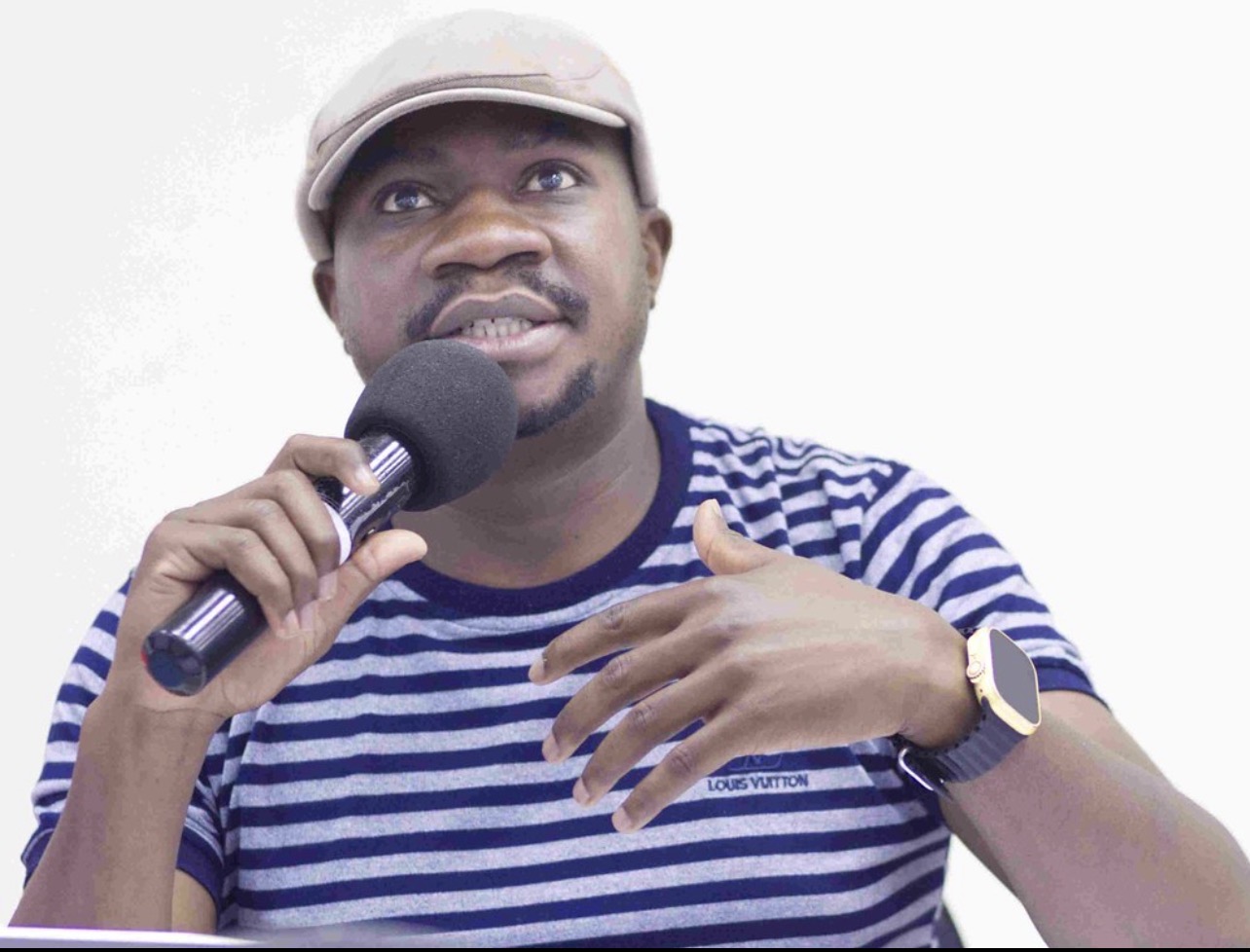
By Perfect Hlongwane and Nigel Nyamutumbu
We begin this submission with renewed calls from the Deputy Chief Secretary to the President and Cabinet for Presidential Communications, George Charamba, for public funding of journalism.
The presidential spokesperson argues that the media should be treated as a public good and supported through mechanisms that protect plurality and the survival of smaller publications.
He put it simply: “The one thing you are taught in Journalism 101 is that it is a public service, indeed a public good.”
He added that in many jurisdictions, the media get public funding in many ways: direct funding by the State — not Government — or indirect funding through numerous tax concessions especially around inputs into their production processes.
We do not agree with Mr Charamba on everything. But on this principle, he is right.
Media policy platforms such as the convening of this year’s Stakeholders Conference as coordinated by the Zimbabwe Media Commission (ZMC) and the Media Alliance of Zimbabwe (MAZ) must take that principle seriously.
Because if journalism is a public good, then the public must fund it. Not to control it. Not to own the editorial direction. But to sustain it.
This submission is about how we do that — without surrendering editorial independence, without spoon-feeding newsrooms, and without leaving journalists to survive on poverty wages while carrying the weight of our democracy.
Let us be clear from the start: public funding is not spoon-feeding. It is not grants for the sake of grants. It is not undefined investment. It is not a blank cheque to keep failing business models alive.
Public funding is a deliberate, transparent investment in what the market will not fund — and will never fund.
No business will support sustained coverage of disasters. No business will fund long-form reporting on climate change, the environment, or the slow erosion of wetlands in Harare.
No business will pay a reporter to spend three weeks in a rural district documenting how minority languages are disappearing from our airwaves. No business will fund investigative journalism that embarrasses its advertisers.
Public funding should and can fund those things.
That is the distinction we must make in this submission: the struck difference between funding journalism as a business, and funding journalism as a public service.
Ghana has just shown us what that can look like. President John Mahama has allocated close to US$1 million in the 2027 national budget as seed funding for a revived Media Development Fund. The fund is meant to support investigative reporting, digital literacy and safety training, along with welfare and professional capacity.
Ghana’s lesson is also a warning. The fund was first announced in 2011, with about US$100 000 allocated in the 2012 Budget. It was never operationalised after concerns over its management, administration and disbursement.
The Media Foundation for West Africa has said success depends on clear governance structures, operational independence, transparent disbursement and sustainable financing beyond the initial allocation.
In other words, the money matters less than who controls it.
Sweden shows us the other end of the spectrum — a mature, institutionalised model.
Sweden has supported newspapers through direct press subsidies since 1971, with the explicit objective of preserving media diversity. Its new media subsidy scheme, launched in January 2024, is fully technically neutral and open to general news media regardless of form of distribution, with the overall aim to promote a diversity of high quality news media throughout the country.
For 2026, a total of about US$84 million SEK has been granted to applicants for media support.
Crucially, Sweden’s success is determined less by the existence of funding itself and more by who controls the money and how decisions are made.
Decisions are made through structures that include researchers, legal experts, industry representatives, and public-interest stakeholders — not politicians.
That is the model we must adapt to Zimbabwe: public money, independent governance, clear priorities.
Before we talk about funds and frameworks, we must talk about people.
The situation for journalists as workers in Zimbabwe today is gloomy.
First, poor salaries.
Many journalists earn salaries below the poverty datum line.
Zimbabwe Union of Journalists (ZUJ) members complain, repeatedly, that even those salaries do not come on time.
A journalist who is not paid cannot be independent.
A journalist who is hungry cannot hold power to account.
Second, massive retrenchments.
Newsrooms are shrinking. The double-barrel impact is devastating: loss of jobs, and more workload for those who remain. One journalist now does the work of three — reporting, shooting, editing, posting, and moderating comments — for less pay.
Third, and most chilling, employers are now taking journalists to court over reporting delays in salary payment. Let us name this for what it is: intimidation.
When a worker is dragged to court for saying “we have not been paid,” it has a chilling effect on the whole newsroom. It creates an intimidating environment where journalists self-censor not because of the State, but because of their employer.
Fourth, freelance journalists are further disadvantaged and are treated as second-class journalists. They have no contracts, no medical aid, no pension, no protection when they are arrested on assignment, no payment when their story is killed. Yet they produce some of the most courageous journalism in this country.
Community broadcasters and volunteers are in the same predicament. We now have a plural broadcasting system — more stations, more licences, more voices — but that plurality is not supported by investment across the board. We have licensed diversity without funding diversity. A community station with no resources cannot serve its community.
On the working environment, while cases of arrests and harassment of journalists have decreased, we have a new elephant in the room — the Cyber and Data Protection Act.
Particularly provisions read together with the Criminal Code on cyber bullying, insult provisions and reporting falsehoods. We consider these provisions as criminalising free expression.
A journalist who reports a falsehood — even in good faith, even while correcting it the next day — risks criminal prosecution. A journalist who criticises a public official risks an insult charge. A journalist who publishes an uncomfortable truth online risks a cyber-bullying charge.
That is not regulation. That is criminalisation of journalism.
Further journalism as we know it is also under threat from masquerades.
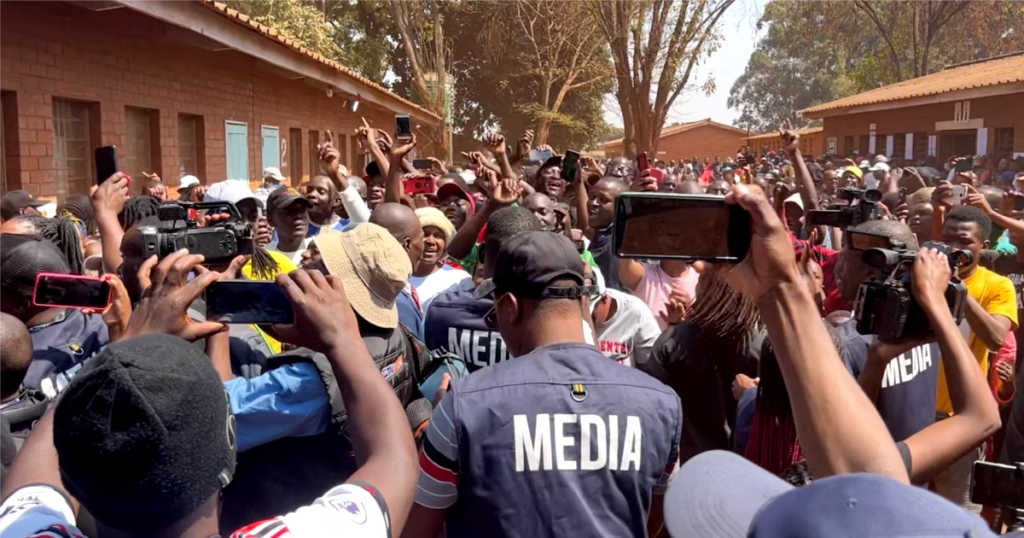
Political communicators and online activists masquerading as journalists are tainting the image of the industry. They wear press jackets, they carry cameras, they go live — but they have no code of conduct, no editor, no accountability.
When they lie, the public blames “journalists.” When they extort, the public blames “journalists.” When they spread propaganda, audiences lose trust in all of us.
Institutionalised journalism with gatekeepers has also been overtaken by influencers. We do not fear influencers. We fear a world where there is no difference between a verified, edited, accountable story and a paid post.
That is why platforms such as this Stakeholders Conference must address these matters and begin pointing to solutions. Not just complaints. Solutions.
We propose five pathways.
1) Establishing a National Employment Council for Journalists
We need a joint negotiating platform — a National Employment Council for journalists — to find a middle ground between employers and employees. A place to set minimum conditions of service and employment. A place where salaries, contracts, safety, and working hours are not left to the whim of individual owners.
We further suggest that the Zimbabwe Media Commission should accredit organisations that show cause capacity to remunerate journalists, or for those organisations that would have been party to such negotiations with journalists.
Journalistic privileges must be accorded to those who place value on journalism.
If you cannot pay your journalists, you cannot claim the privileges of a newsroom.
2) Reviving Co-Regulation and Professional Standards
On the point of journalistic privileges, we need to revive the policy dialogues on the implementation of co-regulation. We need to preserve the information ecosystem and journalism standards.
While the discourse has reportedly shifted, we need to revive the Media Practitioners Bill or the amendments to the ZMC Act to ensure enforcement of the code of conduct and promotion of professional journalism.
Co-regulation is not State control. It is shared responsibility: the profession sets its standards, the law gives those standards teeth, and an independent body enforces them fairly.
Without it, masquerades will continue to flourish and real journalists will continue to pay the price for their sins.
3) Reform of Criminalising Provisions
We call for the reform of cyber bullying, insult and falsehoods provisions to ensure a conducive working environment for journalists.
Free expression cannot be a crime. Criticism cannot be an insult. Error cannot be a felony. Zimbabwe cannot claim to want credible journalism while keeping laws that make journalism a criminal risk.
4) Implementation of a Truly Independent Media Fund
We call for the implementation of provisions that provide for a media fund. Zimbabwe already has a Media Fund provided for in the Zimbabwe Media Commission Act. What is missing is implementation.
But there ought to be a Statutory Instrument that sets out a framework for the Fund to be independent and to define the parameters of priority areas of support.
In the spirit of co-regulation, the trustees of the fund could be multi-stakeholder to include members of the media and civil society. Not government appointees alone. Not industry alone. A balanced, transparent board.
The fund could be supported through the fiscus, donations from supporters of journalism, and the fund could receive a share from the Universal Services Fund. The Universal Services Fund exists to ensure access to communication for all Zimbabweans. What is journalism if not access to information for all Zimbabweans?
And the priorities must be clear: innovation, investigative journalism, developmental reporting, climate and environment, disaster coverage, minority languages and minority groups. The journalism the market will not pay for, but democracy cannot do without.
5) Implementation of the Freedom of Information Act
Finally, we call for the full implementation of the Freedom of Information Act to support the work of journalists.
Preliminary findings of a report on the state of compliance with the FOI Act by the Media Institute of Southern Africa suggests that most public institutions are yet to have in place systems established by the law and there are generally low levels of compliance with the Act.
The media coverage of national events remains challenging, with recent requests by some online content creators to cover public interest issues turned down by the courts. Information held by the public and events of national interest nature are what our audiences demand. Growing audiences and providing them credible information makes us sustainable.
You cannot have sustainable journalism if journalists cannot access information. You cannot have a credible information ecosystem if public bodies treat public information as private property.
In conclusion, our calls for public funding of the media as a public good should translate to public action.
We started with Mr Charamba’s provocation: journalism is a public good.
We agree.
But a public good cannot survive on goodwill. It needs public funding with independent governance. It needs journalists who are paid, protected, and professional.
It needs laws that enable expression, not criminalise it. It needs a media fund that is transparent, not partisan. It needs a Freedom of Information Act that works, not one that gathers dust.
And it needs policy platforms such as the Stakeholders Conference to move from dialogue to decision.
Sustainable journalism will not come from the market alone. A safe media environment will not come from self-censorship. A credible information ecosystem will not come from influencers and masquerades.
It will come when we, as a country, decide that journalism is worth paying for — and worth protecting.
That is the pathway. Let us walk it together.
Perfect Hlongwane is the General Secretary of the Zimbabwe Union of Journalists (ZUJ) and Chairperson of the Media Alliance of Zimbabwe (MAZ). Nigel Nyamutumbu is the MAZ Coordinator and can be contacted on nj****@***il.com or +263 772 501 557