Story By Dorcas Mufiri
Pictures By Daphne Machiri
AIDS Healthcare Foundation (AHF) has urged Zimbabwe and other African countries to increase domestic healthcare investment and reduce reliance on international funding, warning that uncertainty over external financial support could undermine progress in the fight against HIV and AIDS.
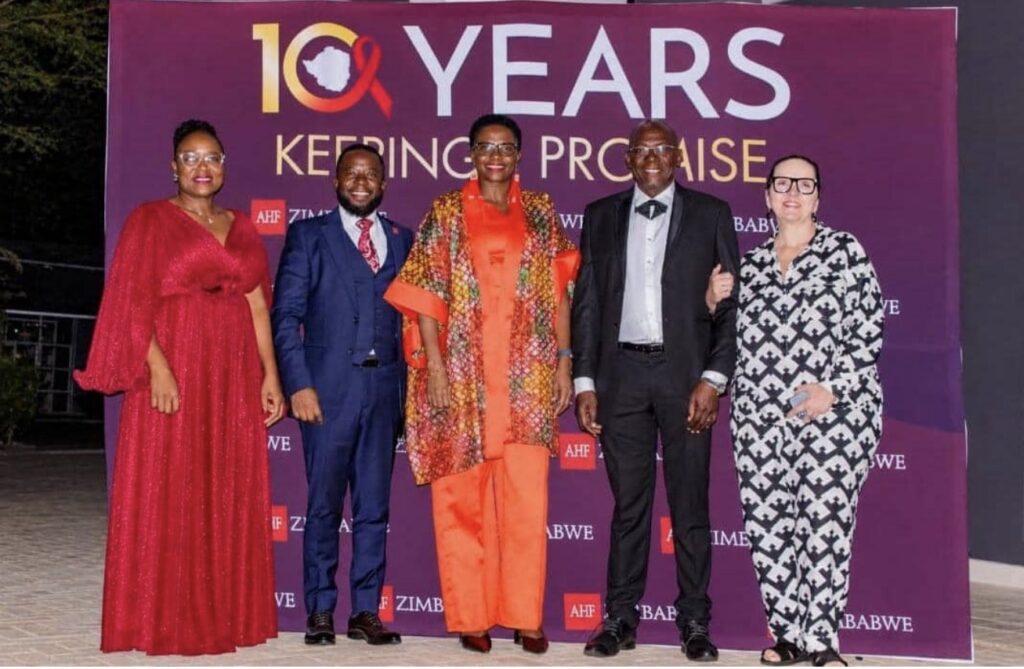
The call comes as AHF marks 10 years of operations in Zimbabwe, where its supported health facilities have served more than 200,000 clients through a partnership with the Government.
Speaking at the organisation’s anniversary celebrations in Harare, held under the theme “Keeping the Promise,” AHF Executive Vice President, Global, Dr Penninah Lutung , said African governments must take greater responsibility for financing their healthcare programmes.
“However, we must acknowledge that external funding is not guaranteed indefinitely. Countries must progressively strengthen domestic financing mechanisms to protect the gains made in the HIV response,” she said.
Dr Lutung challenged governments to prioritise healthcare in national budgets, strengthen parliamentary oversight and develop sustainable financing models to protect essential services from fluctuations in international funding.
She also called for stronger cooperation among Southern African Development Community (SADC) countries to address shared health challenges, improve access to affordable medicines and accelerate the introduction of emerging HIV prevention technologies.
Her remarks highlight growing concerns over the sustainability of HIV prevention, treatment and care programmes in countries that remain heavily dependent on international development assistance.

Meanwhile, the Government has commended AHF for its contribution to Zimbabwe’s national HIV response, particularly its support for public healthcare institutions.
Speaking on behalf of the Permanent Secretary for Health and Child Care, Dr Aspect Maunganidze, Chief Director of Public Health Dr Celestina Dhege described AHF as an important partner in expanding access to HIV prevention, treatment and care.
“Today is not simply a celebration of an organisational milestone. It is an opportunity to reflect on a decade of partnership, recognise the progress achieved together, and reaffirm our shared commitment to building a resilient and sustainable health system,” he said.
Dr Dhege highlighted AHF’s support for Opportunistic Infection and Antiretroviral Therapy clinics at major referral institutions, including Parirenyatwa Group of Hospitals, Mpilo Central Hospital and Sally Mugabe Central Hospital.
He also acknowledged the organisation’s investments in infrastructure rehabilitation, medical and laboratory supplies, equipment, information and communication technology systems and human resources.

According to the Ministry of Health and Child Care’s AIDS, TB and Malaria Unit Director, Dr Owen Mugurungi, AHF-supported facilities have served more than 200,000 clients over the past decade, compared with fewer than 14,000 clients in 2017.
AHF began operating in Zimbabwe in September 2016 following the signing of a Memorandum of Understanding with the Ministry of Health and Child Care.
The partnership initially focused on establishing Centres of Excellence at Parirenyatwa and Mpilo hospitals before expanding to provincial hospitals and primary healthcare facilities.
Its programmes now include HIV testing, antiretroviral treatment, viral load monitoring, counselling, adolescent-friendly services and community outreach, with interventions also extending to selected correctional health institutions.
Beyond direct patient care, the partnership has supported healthcare infrastructure, health workers and institutional capacity to improve access to essential HIV services.
Government has also expressed interest in emerging HIV prevention innovations, particularly Lenacapavir, a long-acting injectable form of pre-exposure prophylaxis administered twice a year.
Dr Dhege described the long-acting HIV prevention medication as a promising addition to existing prevention strategies, saying Zimbabwe looked forward to working with partners, including AHF, to explore opportunities for its introduction and expansion.
Founded in Los Angeles, United States, in 1987, AHF has grown from a community-based hospice into an international HIV/AIDS organisation providing treatment, prevention services and advocacy across several countries.
Its operating model combines healthcare delivery with independently generated revenue from pharmacy operations and social enterprises to help sustain its programmes.
As AHF enters its second decade in Zimbabwe, the organisation has identified domestic healthcare financing, policy advocacy, regional collaboration and investment in resilient health systems as key priorities.
While its anniversary marks a decade of expanded HIV services, it also underscores a pressing challenge for Zimbabwe: sustaining those gains amid uncertainty over international health financing.
The country’s ability to maintain progress will increasingly depend on stronger domestic resource mobilisation, supported by partnerships that ensure continued access to HIV prevention, treatment and care.