
By a Correspondent
The International Fund for Agricultural Development (IFAD) has called for increased investment in agricultural innovation, irrigation infrastructure and market access to strengthen Zimbabwe’s food security and improve the livelihoods of smallholder farmers.
IFAD Country Liaison Officer for Zimbabwe, Joylyn Ndoro, who delivered remarks on behalf of IFAD Country Director Francesco Rispoli, said traditional rain-fed agriculture could no longer guarantee food security amid growing climate-related pressures.
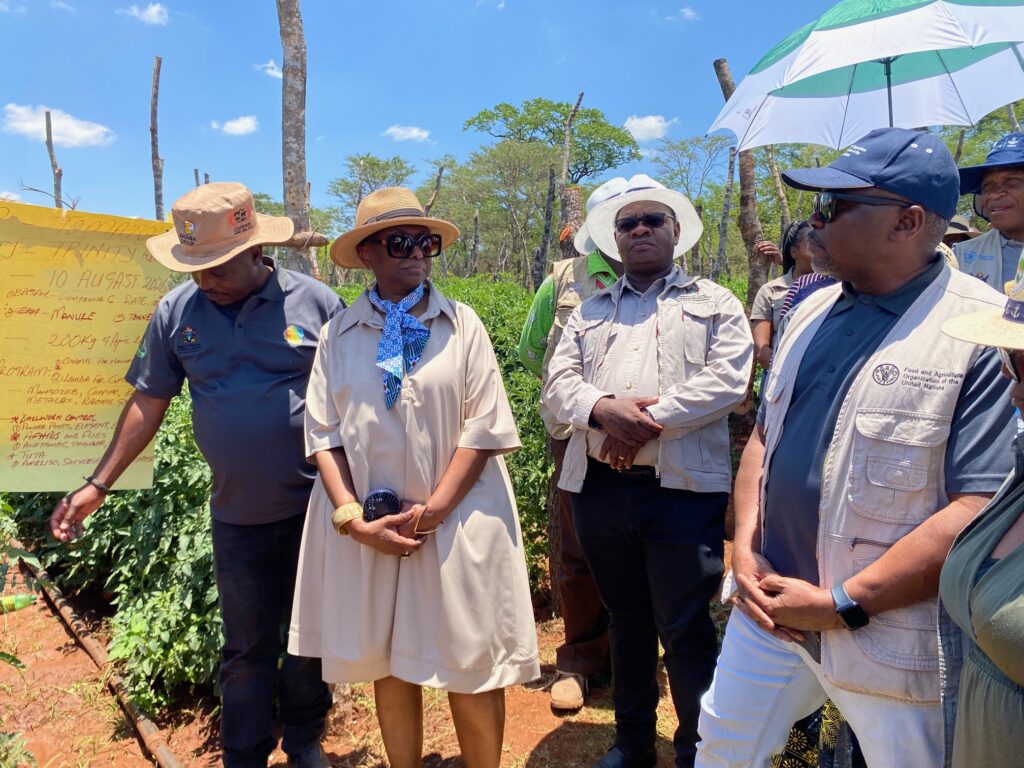
Speaking at Chitora Irrigation Scheme in Mutoko during World Food Day commemorations, Ndoro said the El Niño-induced drought exposed the vulnerability of farmers who depend on rainfall.
She said addressing the challenges required investment in modern farming technologies, affordable financing, reliable water supplies and stronger market linkages.
Ndoro highlighted Chitora Irrigation Scheme, supported under the Smallholder Agriculture Cluster Project, as an example of how coordinated investment in water, skills, markets and finance could transform smallholder farming into viable rural businesses.
She said IFAD had invested more than US$500 million in Zimbabwean smallholder farmers since 1983, working with the Government and other development partners across irrigation, drylands development, horticulture and livestock production.
Through its Smallholder Irrigation Revitalisation Programme, IFAD has reached approximately 35 000 farmers, half of them women and a third young people.
Ndoro said the Smallholder Horticulture Cluster Project was reaching nearly 80 000 farmers across five provinces, including Mashonaland East, through the rehabilitation of irrigation schemes, feeder roads and support for Village Business Units.
She added that another horticulture-based programme was targeting about 70 000 households and would support the construction of 620 Village Business Units.
Ndoro said IFAD was also using matching grants and loans to help farmer groups and small enterprises acquire irrigation equipment, processing machinery and quality agricultural inputs, while connecting producers to formal markets.
She reaffirmed the organisation’s commitment to working with the Government, private sector, development partners and smallholder farmers to build resilient and sustainable food systems.



