By Kelvin Jakachira
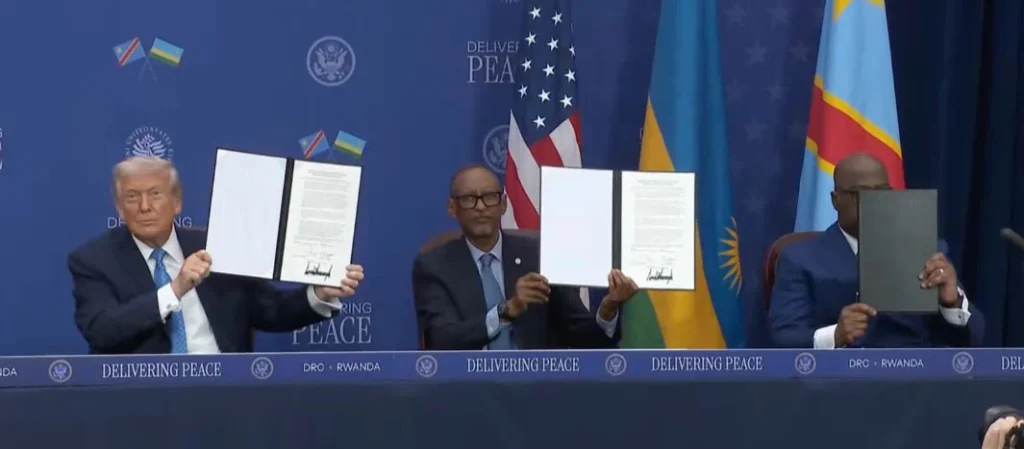
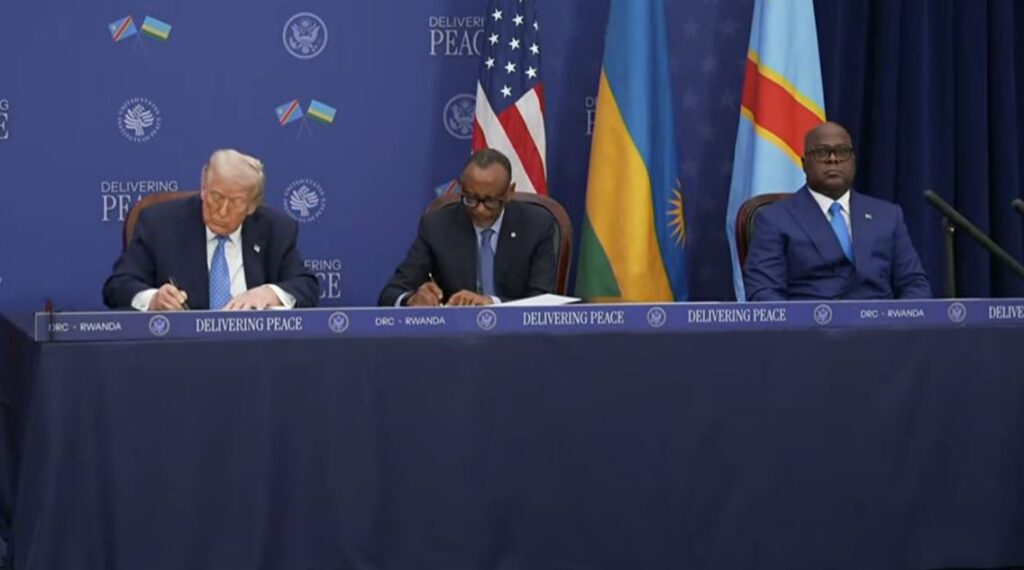
The US has once again exposed its bias by sanctioning Rwanda’s Ministry of Defence and Zigama CSS, undermining the very peace agreement it brokered. The latest round of punitive measures, announced last week, targets one party to the Washington Accords while the other, the Tshisekedi regime, continues to violate its core obligations with impunity.
What we are witnessing is the unmistakable hand of a mediator that has picked a side, threatening to derail the most comprehensive peace framework the region has seen in years.
The Trump administration’s adviser on African affairs, Massad Boulos, previously defended the earlier sanctions against the Rwanda Defence Force by citing the fall of Uvira on December 10, 2025, just days after the Washington Accords were signed. That explanation was hollow then, and it has become even more absurd with time.
The facts on the ground contradict Boulos’s narrative. The AFC/M23 began withdrawing from Uvira on December 16, 2025, and completed its withdrawal by January 17, 2026. The city was subsequently retaken by the FARDC, Burundian forces and allied armed groups, including the FDLR and Wazalendo. The first US sanctions against the RDF and four of its generals were announced on March 2, 2026, well after the withdrawal had been completed. If the intention was to punish a refusal to leave Uvira, the timeline simply does not add up.
What the sanctions actually reveal is a pattern of asymmetric accountability. Under the Washington Accords, Kinshasa is obligated to neutralise the FDLR, a militia formed by remnants of the forces responsible for the 1994 Genocide against the Tutsi. This obligation is the security cornerstone of the entire agreement. Yet the FDLR remains operational, and evidence presented to the Joint Oversight Committee points to continued operational collaboration between the FARDC and the FDLR throughout 2026, including the delivery of ammunition, weapons and cash to FDLR positions. Remarkably, the United States has not sanctioned a single Congolese official or military unit for this sustained breach.
Meanwhile, the Banyamulenge Tutsi communities living on South Kivu’s high plateaus have been subjected to a blockade and a military campaign that community leaders describe as a “slow genocide”. Drone strikes, artillery shelling and ground offensives by the FARDC, Burundian troops and allied militias have destroyed villages, schools and health centres. Humanitarian access has been cut off for nearly a year. A kilogram of sugar in Minembwe reportedly costs $40. Yet the United States has imposed no sanctions on the regime conducting this campaign. Instead, it has sanctioned Rwanda, which is alleged to be helping these communities survive.
This is the contradiction Boulos will struggle to explain. If the goal is to hold the parties accountable for their commitments, sanctions should be directed at Kinshasa and its allies for their continued collaboration with the FDLR and their assaults on Tutsi communities. If the goal is to enforce the Washington Accords, pressure should be brought to bear on the party that has made no meaningful progress on its core security obligation. Instead, the pressure is entirely one-sided.
The risk is obvious. By repeatedly targeting one party while turning a blind eye to the other’s violations, the United States is undermining its own credibility as an impartial mediator. Rwanda has signalled that it remains committed to the Washington Accords, but it has also made clear that it increasingly views the mediation as biased. If Rwanda concludes that the agreement offers no reciprocal accountability and exercises its right to withdraw, the collapse of the Washington Accords will be a direct consequence of American partiality.
And Massad Boulos will have himself to blame.