By a Correspondent
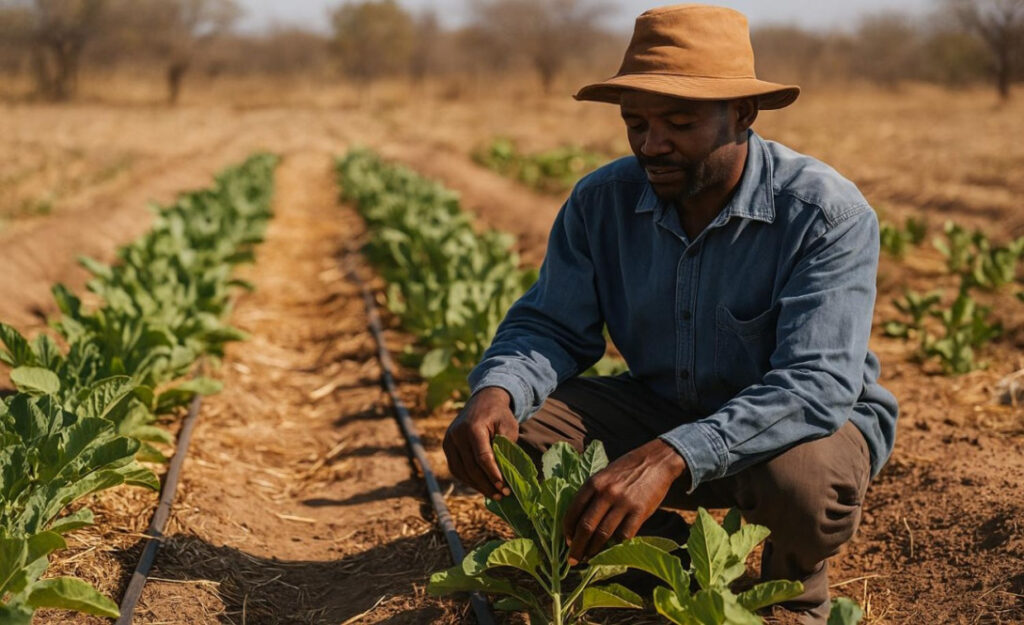
The European Union (EU) and the International Fund for Agricultural Development (IFAD) have launched a €14 million programme aimed at helping smallholder farmers in Zimbabwe adopt climate-resilient horticultural production methods amid growing water shortages and climate pressures.
The Agroecological Transitions for Horticulture in Arid Zones (ATHAZ) programme was launched in Harare on Thursday and will run from 2026 to 2030, covering Zimbabwe, Zambia and Botswana.
The initiative seeks to reach about 15 000 smallholder farming households across the three countries, representing an estimated 75 000 people, with particular emphasis on women and young people.
In Zimbabwe, the programme will build on the IFAD-supported Horticulture Enterprise Enhancement Project (HEEP), focusing on improving water efficiency, strengthening seed systems, promoting integrated pest management and encouraging more sustainable production methods.
The programme will also seek to improve farmers’ access to markets and opportunities for value addition, potentially allowing small-scale producers to earn higher incomes from horticultural crops.
IFAD Country Director for Zimbabwe Francesco Rispoli said ATHAZ would build on the organisation’s existing investments in irrigation and market access.
“By working with farmers, researchers and extension services to test and scale practical solutions, the programme will help smallholders improve productivity, use water more efficiently and access better markets for their produce,” Rispoli said.
The programme comes as Zimbabwe’s agricultural sector continues to grapple with climate-related challenges, including unreliable rainfall and water scarcity, which have increased the risks faced by farmers’ dependent on rain-fed production.
EU Chargée d’Affaires a.i. in Zimbabwe Francesca Fabbri said the programme was designed around the realities facing farmers.
“Water can be the difference between a good harvest and a lost one, and it is getting harder to count on,” Fabbri said.
She said ATHAZ would combine farmers’ existing knowledge with research, improved market access and investment to help them produce more efficiently while using less water.
The EU said the initiative forms part of its broader partnership with Zimbabwe aimed at developing a more climate-resilient, competitive and inclusive agricultural sector.
Under its current partnership with Zimbabwe, the EU has allocated €165 million in grant funding for 2021-2027, with agricultural value-chain development identified as one of its key areas of cooperation.
ATHAZ will also have a regional dimension, with the programme establishing nine innovation hubs and strengthening 30 horticultural value chains across Zimbabwe, Zambia and Botswana.
The initiative will be implemented by IFAD in partnership with the International Centre of Insect Physiology and Ecology (icipe), the Research Institute of Organic Agriculture (FiBL) and Biovision Africa Trust (BvAT).
The partners will work with national research and extension institutions, farmer organisations, governments and private-sector players to test and scale up agricultural innovations.
The EU said the programme would generate evidence and practical lessons that could inform government policies and future investment in sustainable horticultural production.
For Zimbabwe, the initiative builds on HEEP, an existing IFAD-backed project designed to increase incomes, food security and empowerment among smallholder farmers involved in sustainable horticulture value chains.
The broader objective is to make horticulture a more viable source of rural livelihoods by linking farmers to irrigation, research, finance, technology, processing and higher-value markets.
The EU said it was also expanding support for sustainable agricultural value chains, particularly horticulture and drought-resilient and high-value crops, while promoting access to finance, European technology, equipment and expertise.
The ATHAZ programme is expected to run until 2030, with its partners seeking to demonstrate how climate-resilient horticulture can improve rural incomes while contributing to more sustainable food systems in southern Africa.