By Gabriel Manyati
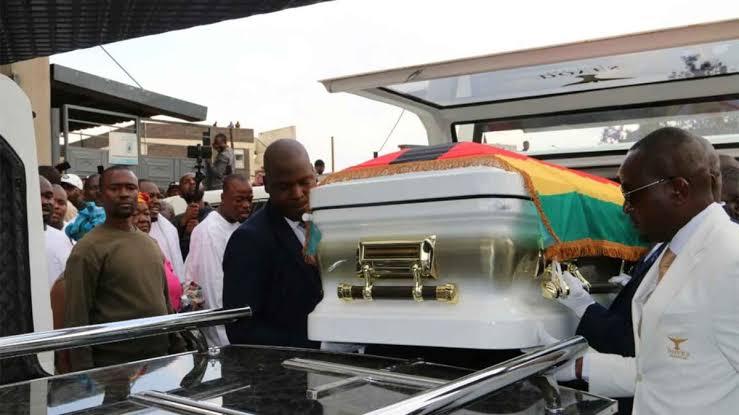
Open a mobile phone anywhere in Harare, Bulawayo, Mutare, or across the diaspora in Leicester, Luton, and Johannesburg, and you are immediately pulled into a densely crowded scene. On the screen, a sea of bright white garments, expensive designer suits, flashing camera lights, and idling luxury vehicles fills the display.
Microphones are thrust toward grieving family members, mourners shuffle under massive white marquees to find seating, and politicians, business owners, musicians, and socialites rub shoulders in a relentless cycle of live-streamed proceedings. At the very centre of this digital storm is DJ Ollah 7, holding his recording equipment, steering spontaneous interviews, and broadcasting every movement of the gathering to hundreds of thousands of eager viewers scattered across the globe.
This is not simply a funeral. This is a funeral being watched on a massive, unprecedented national scale, mediated entirely through the glowing screen of a smartphone.
The man at the heart of this extraordinary digital spectacle, Wicknell Chivayo, lived a life that was never private. His existence was a very public performance of extravagant wealth, ranging from fleets of luxury sports cars and high-profile celebrity gifting to visible political connections, heavy corporate sponsorships, and constant social-media visibility.
When a tragic helicopter crash abruptly ended his journey, it did not extinguish the massive noise surrounding him. Instead, it simply shifted that public theatre directly into the grounds of his final farewell. The crowds gathering at the venue, the endless online commentary across WhatsApp groups and Facebook pages, and the continuous streams are a direct continuation of the public fascination that defined every single chapter of his adult life.
Yet what makes this particular send-off remarkable is not just who has died, but how his final chapter is being broadcast to the public in real time. From the early morning hours until late at night, DJ Ollah 7 has maintained an extraordinary physical presence at the funeral. While the fatal helicopter crash itself remains a devastating historical event firmly locked in the past tense, his ongoing coverage has become the defining feature of the days following the tragedy.
Viewers sitting thousands of miles away in foreign lands, alongside ordinary citizens at home, watch his camera track every speech, every musical performance, and every emotional reaction from the mourners as if they were standing right there in the dust.
This level of sustained, daily access has transformed how a high-profile Zimbabwean funeral is consumed. But it has also sparked intense debate among media analysts, regular citizens, and industry observers. On one side, seasoned media professionals have looked at the sheer physical stamina, technical organisation, and logistical scale required to run such an operation with genuine professional appreciation.
Weighing in on the discourse, Hopewell Chin’ono observed with characteristic candour: “DJ Ollah has been outstanding. As a senior journalist, I have watched his coverage of Wicknell Chivayo’s funeral with genuine professional admiration.” This endorsement highlights the raw logistical effort needed to feed a nation’s restless appetite for immediacy, capturing candid moments that traditional evening news bulletins would completely miss.
At the same time, critics have questioned whether a continuous, unedited livestream of a wake crosses the line from reporting into a relentless commercial spectacle. The constant stream of comments, virtual gifts, likes, and viewer reactions running alongside footage of genuinely grieving family members has made many viewers deeply uneasy, raising serious questions about personal privacy, emotional boundaries, and the commodification of private sorrow.
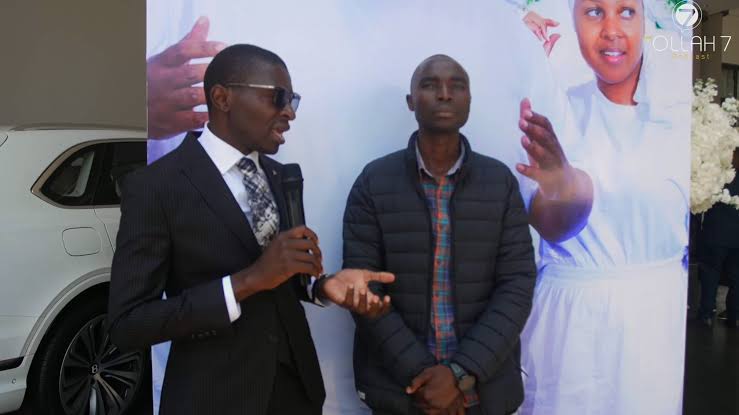
Faced with these competing views from the public, DJ Ollah 7 offered a pragmatic explanation that cuts straight to the reality of his operations, addressing the criticism head-on: “Just so you know, I go home everyday at 9pm and start working in the morning, I was asked by the Chivayo family to cover their funeral as the official media partner, that why you’re seeing me there everyday. Nditori pa basa.”
That simple phrase – Nditori pa basa – shifts the entire conversation. It is a sharp reminder that he is not simply a loitering bystander or an opportunistic content creator chasing random views; he is an employed professional executing a specific, agreed-upon brief. Being appointed the official media partner by the Chivayo family changes everything about how this story is told to the nation. It grants him privileged proximity, uninterrupted physical access to key family members, and a front-row seat to proceedings that other independent journalists are kept far away from by security personnel.
Yet this official relationship creates a fascinating tension between access and journalistic independence. When a family deeply connected to immense wealth and political influence selects its own media partner, the resulting broadcast naturally reflects a curated vantage point. Audiences gain an intimate, continuous window into the funeral that no outside camera could ever secure. Viewers can see exactly who attended, hear the eulogies word for word, and feel as though they are standing right under the main marquee alongside the high-ranking mourners.
At the same time, viewers must recognise the inherent limits of official access. When a broadcaster is officially retained by the family hosting the event, certain difficult questions are never asked, certain corners of the compound remain unfilmed, and the narrative is shaped entirely by the hosts’ immediate priorities and sensitivities. It is fundamentally different from independent journalism, which often stands outside the gates, questioning power rather than partnering with it.
Ollah’s coverage gives the public remarkable proximity, but it cannot offer detached, critical distance.
This dynamic reveals much about the state of media and public life in contemporary Zimbabwe. Traditional newsrooms, constrained by tight financial resources and logistical hurdles, often struggle to match the speed, mobility, and reach of independent digital operators who harness modern mobile streaming technology.
When a high-profile figure passes away, the family often realises that controlling the narrative requires bypassing traditional press entirely in favour of popular digital personalities who command massive, loyal online audiences across multiple platforms.
As the days pass, the tents at the funeral venue will eventually be folded, the chairs will be stacked away, and the mourners will return to their daily routines. DJ Ollah 7 will eventually pack up his equipment and stop broadcasting from the grounds. But the hundreds of hours of digital footage, interviews, and livestreams will remain archived online, forming a permanent digital record of how a prominent Zimbabwean was farewelled.
The funeral will eventually become history. But before it becomes history, someone has to decide which parts of that history Zimbabwe gets to see, whose voices are amplified under the marquee, and whose perspectives are left outside the frame.
That is the true power of access in our digital age.