
By Gabriel Manyati
In a country where spectacular gifts have increasingly become part of Zimbabwe’s public theatre, Advocate Dr Lewis Uriri has drawn a firm line.
The senior lawyer has rejected a US$250 000 Range Rover Sport and US$100 000 in cash offered by businessman Wicknell Chivayo, saying accepting the gifts could compromise, or at least create the appearance of compromising, his professional independence.
Uriri’s refusal is particularly striking because Chivayo presented the gifts as recognition for legal services the advocate had rendered in the past.

But Uriri made an important distinction. The work had already been completed. It had already been paid for. And there had been no recent professional engagement that could reasonably explain such a substantial personal benefit.
In a carefully worded statement, Uriri said he and his wife had considered the offer before deciding to reject the vehicle and both cash gifts.
“For clarity, we last spoke in June 2024, and I have undertaken no professional work for you since then.”
He added that the historical work Chivayo referred to had been performed in his professional capacity and that his remuneration for those services had been settled in full.
The timing and size of the proposed gifts, therefore, mattered.
Uriri said the announcement had come without prior notice or discussion and that, given the passage of time since the professional relationship ended and the explicit connection between the gifts and his previous legal work, the offer had to be approached with particular caution.
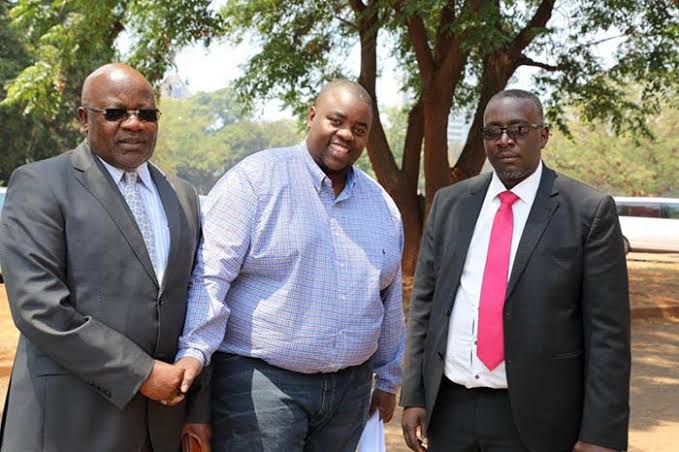
His reasoning went beyond personal preference.
Zimbabwe’s Legal Practitioners’ Code of Conduct requires lawyers to protect their integrity and professional independence while maintaining public confidence in the profession. Uriri also invoked international principles governing the legal profession, including those associated with the International Bar Association and the International Commission of Jurists.
The central concern was not necessarily that accepting the gifts would prove an actual conflict of interest.
It was that doing so could create a reasonable perception of personal indebtedness to a former client.
That distinction is important in professions where independence is not merely a private virtue but part of public trust.
Uriri put it plainly:
“Applying those standards to these circumstances, I consider it necessary to decline benefits that could reasonably create a perception of personal financial obligation extending beyond a concluded and fully remunerated professional engagement.”
He and his wife, he said, attached considerable importance to preserving their professional standing and public confidence in his independence.
Their decision was final.
“Our decision is nevertheless firm: we will not accept the vehicle or either of the cash gifts.”
The refusal places Uriri in a relatively small group of prominent Zimbabweans who have, at various points, rejected substantial gifts publicly offered by Chivayo.
Guti: “Not Even In Our Projects”
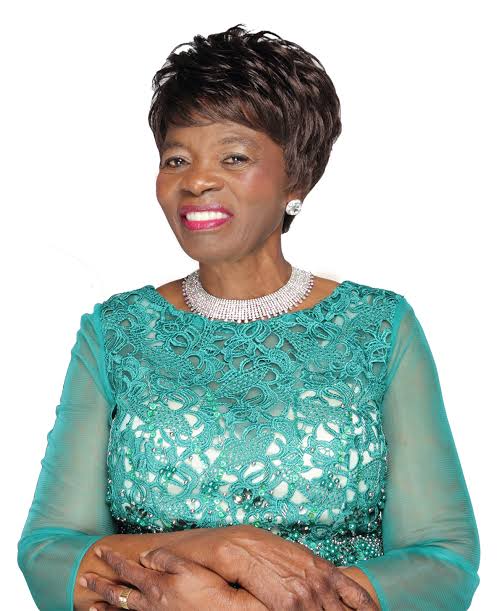
One of the most prominent examples is Apostle Eunor Guti (pictured), widow of the late Archbishop Ezekiel Guti and a senior figure in ZAOGA Forward in Faith Ministries.
Chivayo reportedly offered Guti US$2 million in cash together with a top-of-the-range Toyota Land Cruiser 300 Series as a birthday tribute to the late church founder.
Guti declined.
Her explanation was explicitly spiritual.
She said she discerned no divine approval for accepting the gift and invoked the example of her late husband.
“There was a need in our projects. But I said not even in our projects,” she said.
Her position was significant because the money could theoretically have been redirected towards church projects rather than personal use. Even that option, however, did not persuade her to accept the offer.
Guti’s refusal therefore rested not on the value of the gift alone, but on her conviction that accepting it would not accord with her understanding of God’s will.
Magwizi And The Football Governance Question

A similar line was drawn by ZIFA president Nqobile Magwizi (pictured).
Magwizi rejected a 2026 Range Rover Sport reportedly valued at about US$250 000 and a Toyota Land Cruiser.
His justification was institutional rather than theological.
He cited FIFA’s ethical framework governing gifts and benefits received by football officials, particularly where a gift could create an actual or perceived conflict of interest.
The issue was especially sensitive because Chivayo has commercial associations with football clubs operating within the broader ZIFA environment.
Magwizi said he consulted governance advisers before making his decision and maintained that he had never accepted a vehicle, cash gift or other personal benefit from Chivayo or associated parties.
The refusal consequently became a statement about the responsibilities attached to holding an office in sport.
Makandiwa And The Reversal
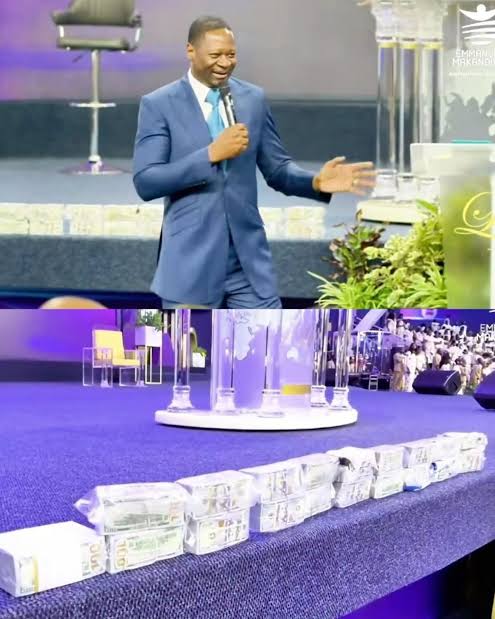
Reverend Emmanuel Makandiwa’s experience has been markedly different.
The United Family International Church leader initially declined an unspecified gift from Chivayo in mid-2026, offering instead to pray for the businessman.
Chivayo publicly acknowledged the refusal.
But Makandiwa subsequently changed his position.
During a church service in late July, he said the gifts remained available and indicated that he was prepared to receive them. He maintained that his original refusal had been a matter of personal principle rather than an indictment of Chivayo.
Chivayo then announced a US$1 million donation towards church construction, a new 2026 Rolls-Royce Cullinan facelift for Makandiwa and a Mercedes-Benz G-Class for his wife, Ruth.
The cash donation was subsequently displayed before the congregation and the vehicles were delivered.
The episode demonstrates that an initial refusal does not necessarily mark the end of the conversation.
When The Institution Says No
Resistance to Chivayo’s largesse has not been confined to individuals.
Zimpapers, Zimbabwe’s largest media group, enforced its internal gifts policy after Chivayo offered cash to Capitalk FM employees and vehicles to two members of staff, including presenter Phathisani Sibanda.
The company’s policy reportedly places a US$100 ceiling on gifts that employees may accept.
Staff were consequently instructed to return excess cash, while Sibanda was reportedly given a choice between rejecting the vehicle and leaving his employment.
Chivayo subsequently sought to structure the vehicle transaction differently through a dealer, including through a nominal sale price.
Zimpapers nevertheless maintained its position.
The episode illustrated the difficulty that extravagant personal gifts can create for institutions with their own governance rules.
Mapfumo And The Question Of Consistency
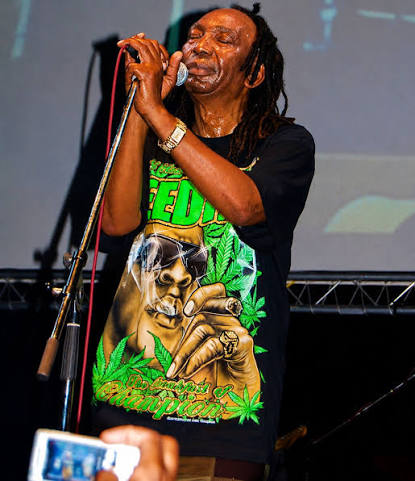
Veteran musician Thomas Mapfumo has also featured in the broader debate.
Mapfumo initially rejected substantial offers reportedly including a house and significant sums of money, expressing concern about accepting wealth while Zimbabwe’s public hospitals struggled to obtain basic medicines.
His position later changed.
He subsequently accepted an invitation from Chivayo to perform at Jah Prayzah’s wedding and at Chivayo’s birthday celebration, reportedly for US$1.5 million.
The contrast between the earlier refusal and subsequent commercial engagement has added another dimension to the public discussion surrounding Chivayo’s generosity.
Where Does Generosity End And Influence Begin?

Chivayo has consistently characterised his gifts as voluntary acts of generosity.
His position has been that recipients are free to accept or reject them and that refusing an offer does not result in hostility or punishment.
Indeed, the existence of several public refusals supports his argument that people can say no.
But the sheer scale and frequency of the gifts have nevertheless generated questions about the relationship between private generosity and public influence.
Vehicles worth hundreds of thousands of dollars, multimillion-dollar cash gifts and other high-value benefits inevitably attract scrutiny when the recipients include politicians, religious leaders, entertainers, sports officials and other people occupying positions of public visibility or institutional authority.
The crucial question is not necessarily whether a donor explicitly demands something in return. It is whether accepting such a gift can create an obligation, expectation or perception of influence that extends beyond the immediate transaction.
That is precisely where Uriri’s decision becomes significant. He did not accuse Chivayo of demanding anything from him, nor did he suggest that the businessman had explicitly sought to influence his professional judgment.
Instead, he concentrated on the appearance of financial obligation and the importance of maintaining independence.
That is a more exacting standard.
It says that a professional does not have to prove that influence has occurred before deciding that a particular benefit is inappropriate. Avoiding circumstances that could reasonably create doubts about independence can itself be part of professional responsibility.
A Small But Significant Pattern
Taken together, the experiences of Uriri, Guti, Magwizi, Makandiwa, Zimpapers and Mapfumo reveal different responses to the same phenomenon.
Guti’s objection was grounded in spiritual discernment. Magwizi’s was based on sports governance. Zimpapers relied on institutional policy. Uriri invoked professional independence and public confidence. Makandiwa initially declined but later accepted. Mapfumo moved from an earlier rejection to subsequent paid engagements.
The reasons are different, but the public significance is similar.
In a society where conspicuous displays of wealth can carry enormous social currency, saying no to an extraordinarily valuable gift can itself become a public statement.
Uriri’s refusal is particularly notable because it came with a detailed explanation rather than a simple rejection. He effectively argued that professional independence must be protected not only from actual interference but also from circumstances capable of creating a reasonable perception of indebtedness.
That principle reaches beyond one Range Rover and two cash envelopes. It touches the relationship between money, reputation and public trust.
Chivayo remains entitled to describe his gifts as acts of generosity, and individuals remain entitled to make their own decisions about accepting or declining them.
But Uriri’s decision demonstrates that, for some professionals, the question is not simply whether a gift is generous. It is whether accepting it is compatible with the independence they are expected to embody.
And sometimes, even a Range Rover worth a quarter of a million dollars can be a gift worth refusing.



