
By Gabriel Manyati
Zimbabweans have perfected a remarkable political survival skill: laughing at tomorrow’s crisis today. When somebody proposes something outrageous, we chuckle. When the proposal returns, we call it factional noise. When the Constitution is eventually changed to accommodate it, we suddenly claim that we “always knew” it was coming.
Perhaps this time we should listen before laughing.
The question is not whether President Emmerson Mnangagwa has formally announced a plan to rule for life. He has not. Nor is there established evidence that the government has drafted Constitutional Amendment Bill No. 4, or CAB4, to turn Zimbabwe into a monarchy with Mnangagwa as king. Such claims would go beyond the available evidence.
But something potentially consequential is happening. A political possibility that once sounded absurd is being discussed with increasing confidence from different corners of the political landscape.
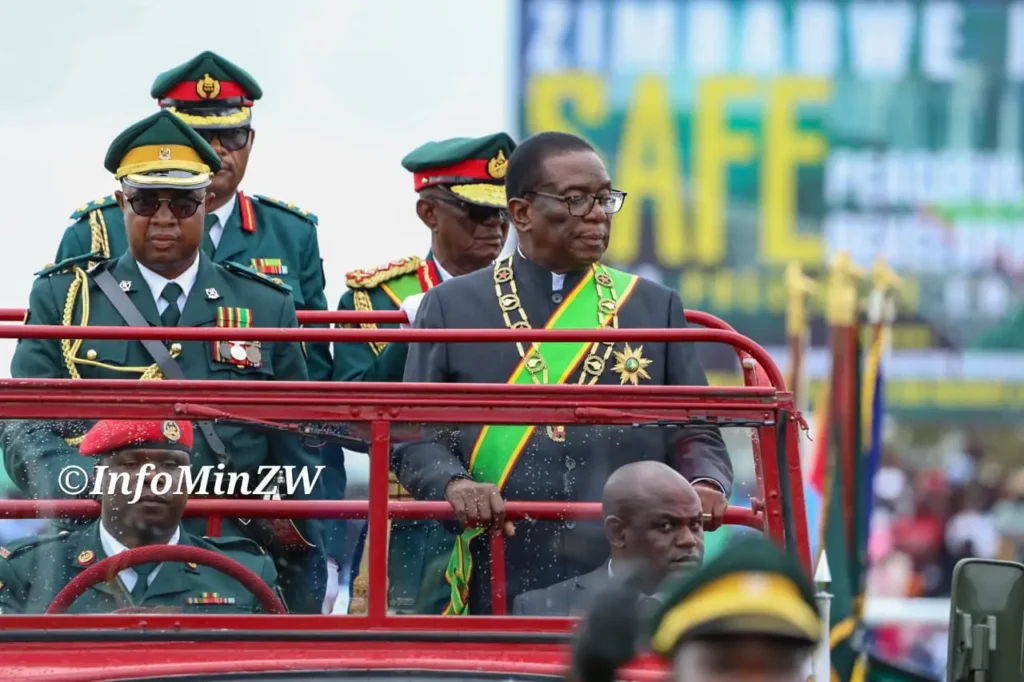
First came Joshua Maponga, who publicly called for CAB4 and proposed replacing Zimbabwe’s republican system with what he describes as an Indigenous Consultative Royal Democracy, with Mnangagwa envisaged as the first king. Then, weeks later, Mnangagwa himself declared that he would still be in power in 2035. After that came calls from some ZANU PF quarters for his tenure to stretch to 2037.
At what point does political fantasy become political preparation?
The Politics Of Imagination
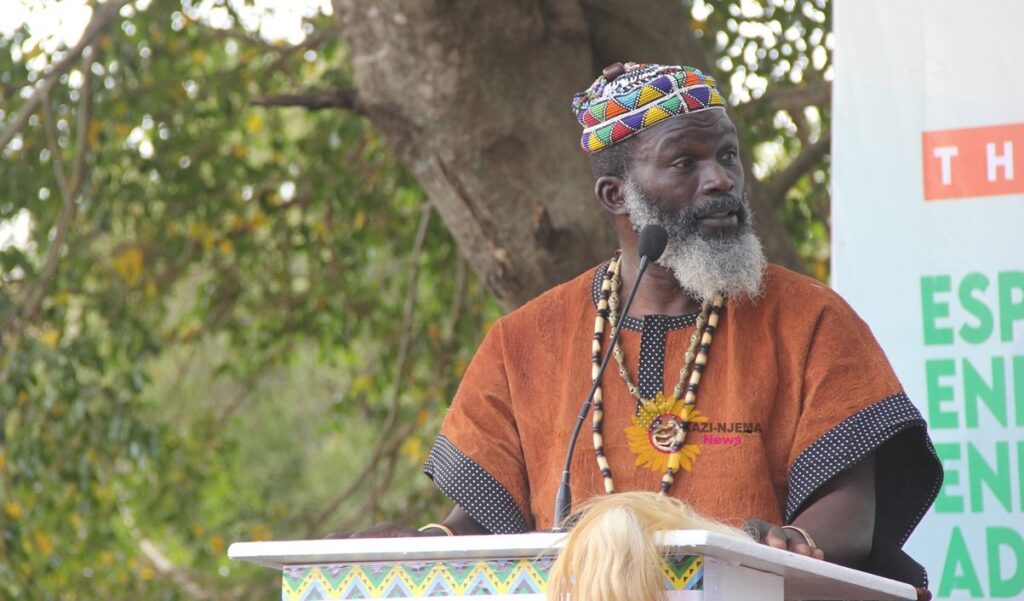
Maponga’s intervention should not be dismissed simply because it sounds radical. His questions about colonial inheritance, imported constitutional models, African political traditions and the failures of electoral democracy are legitimate. Why should African societies automatically copy political systems developed elsewhere? Why have elections so often failed to produce accountability? Why should indigenous political thought be treated as intellectually inferior?
Those questions deserve serious debate.
But the leap from criticising electoral democracy to proposing monarchy is enormous, especially when the proposed first king is the incumbent president. Who chooses the king? Who removes him? Who restrains the security forces? How is succession determined? What happens to citizens who reject the system?
These are not colonial questions. They are questions about power.
Political communication scholars have long explained how ideas become normalised through repetition and framing. George Lakoff’s observation that “frames are mental structures that shape the way we see the world” is useful here. Before political possibilities become constitutional facts, they first have to become politically imaginable.
A proposal initially sounds absurd. Somebody says it anyway. Others repeat it. Political actors test the language. Eventually, yesterday’s unthinkable becomes today’s “serious option”.
That is why Maponga’s proposal matters even if CAB4 remains entirely his personal project. He has made something discussable that previously sounded ridiculous. Once something becomes discussable, somebody will eventually explain why it is necessary.
CAB3 Changed The Ground
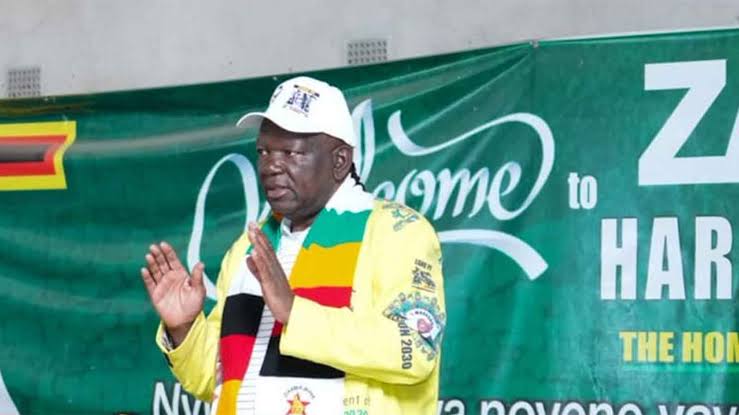
The reason Mnangagwa’s 2035 remark cannot simply be dismissed as presidential banter is Constitutional Amendment No. 3.
Signed into law on 7 July 2026, CAB3 extended presidential and parliamentary terms from five years to seven years, moved the next election to 2030 and changed the presidential selection mechanism by making Parliament central to the election of the president.
CAB3 does not automatically give Mnangagwa a legal right to remain in office until 2035 or 2037. Further constitutional or political changes would be required. That distinction matters.
However, CAB3 demonstrated that constitutional arrangements once presented as fixed can be reopened and substantially altered when the political numbers permit it. The constitutional ground has shifted.
The Institutional Trail
The normalisation of prolonged rule has not been confined to speeches. It has also appeared in the institutional architecture surrounding the presidency, the ruling party, the military and the judiciary.
The story begins in October 2024, at the ZANU PF National People’s Conference in Bulawayo. The party passed a resolution calling for Mnangagwa’s term to be extended from 2028 to 2030. But there was an important twist: Mnangagwa rejected the proposal at the time, with party legal secretary Patrick Chinamasa telling delegates that the president did not want to remain beyond 2028.
That distinction is crucial. The 2030 idea was not defeated in Bulawayo. It was adopted by the party but rejected by its intended beneficiary. The political argument for extending Mnangagwa’s tenure therefore existed inside ZANU PF long before CAB3 became law.
In November 2024, Harare Province chairperson Godwills Masimirembwa was suspended amid the “2030” sloganeering controversy. The irony would become difficult to miss when the same political terrain later produced calls for an even longer extension.
In January 2025, war veteran Blessed “Bombshell” Geza demanded Mnangagwa’s resignation over corruption, nepotism and tribalism, accusing “zvigananda” of capturing the state. Around the same period, Vice President Vice President Constantino Chiwenga used similar language against “corrupt tenderpreneurs”. Geza was later expelled from ZANU PF and died in February 2026. His intervention belongs to the history of that internal rupture, not to any current campaign.
By October 2025, the party had returned decisively to the 2030 question. At its Mutare conference, ZANU PF adopted a resolution calling for Mnangagwa’s term to be extended to 2030, directing the party and government to pursue the necessary constitutional amendments.
Mutare therefore did not reverse a failed Bulawayo resolution. It reaffirmed and advanced an objective the party had already adopted in 2024, after Mnangagwa had initially rejected it.
Late 2025 and early 2026 saw the retirement of senior generals widely regarded as Chiwenga allies. In April, Chiwenga warned about the “2030 plan” while addressing a church congregation in Murewa. On 29 April, Mnangagwa promoted his son Sean to Lieutenant Colonel and placed him in command of his father’s personal security detail. On 11 May, retired General Philip Valerio Sibanda, Chiwenga’s successor as army commander, entered the ZANU PF Politburo.
On 15 May, Elizabeth Gwaunza and Paddington Garwe became Chief Justice and Deputy Chief Justice. Both are Mnangagwa appointees. Gwaunza’s elevation followed Luke Malaba’s mandatory retirement at 75, a scheduled constitutional process. There is no basis for claiming that the judicial succession was engineered. Nevertheless, the bench that would hear any future constitutional challenge is now headed by Mnangagwa appointees.
Then came CAB3.
Days after its signing, Masimirembwa, the same official associated with the earlier “2030” controversy, called for Mnangagwa to remain in power until 2037 at an Epworth “Thank You” rally. He invoked Mnangagwa’s liberation-war credentials, SADC chairmanship, incoming COMESA chairmanship and Zimbabwe’s United Nations Security Council seat as evidence of his indispensability.
The irony was almost too generous. A political figure associated with the earlier controversy over 2030 was now publicly advocating 2037.
In August, further military retirements and diplomatic postings involving senior officers added to the impression of continuing institutional repositioning. Masvingo Province subsequently adopted resolutions to align the party constitution with CAB3 ahead of the national conference in Chinhoyi.
Around 6 September, Harare Province backed a proposal to postpone the party’s National People’s Congress from 2027 to 2030 and support Mnangagwa as its preferred candidate for First Secretary and President at that delayed congress. A provincial resolution cannot, by itself, rewrite the party constitution. But politically, the direction was unmistakable: the succession timetable was being pushed further into the future.
Then came 9 September.
Speaking at the Sanganai/Hlanganani Tourism Expo in Masvingo, Mnangagwa said that when the event returned to the province after rotating around Zimbabwe for nine years, “I will still be in power.” Nine years from 2026 is 2035. The remark was delivered in a light-hearted setting, but its political significance is difficult to ignore given the constitutional changes enacted only weeks earlier.
At the same time, his birthday was gazetted as “Munhumutapa Day”, a permanent annual public holiday.
None of this proves a single secret master plan. It does, however, show a convergence of signals.
We Have Heard This Before
Zimbabweans should also remember 2017. After being removed as vice-president, Mnangagwa indicated that he would return and lead. Within weeks, Robert Mugabe had resigned and Mnangagwa was president.
In 2018, Mnangagwa spoke about still being there in 2030. At the time, many treated the statement as political bravado. Now 2030 is the constitutional horizon.
This does not prove that every presidential prediction is a blueprint. It does mean that dismissing political statements because they sound improbable is not a particularly intelligent national strategy.
The president may not have announced a constitutional roadmap to 2035. But he has announced that he expects to be there.
The Real Question
The real danger may not be a literal crown. It may be the gradual construction of a political system in which one ruler becomes increasingly difficult to remove while the constitutional language surrounding him becomes increasingly sophisticated.
There is nothing inherently African about making a president impossible to remove. There is nothing indigenous about suppressing dissent. And there is nothing culturally authentic about making succession dependent upon the goodwill of the incumbent.
Zimbabwe can explore indigenous institutions while retaining judicial independence, accountable security services, transparent succession, term limits, competitive political participation and peaceful mechanisms for removing bad rulers.
The decisive test is simple: Can ordinary Zimbabweans peacefully remove their ruler when that ruler fails them?
If they cannot, the country has not solved the problem of accountability. It has merely changed the vocabulary used to describe its absence.
The claim here is not that CAB4 has arrived. It has not. The claim is that Zimbabweans should stop behaving as though the idea is so absurd that it deserves nothing more than laughter.
Maponga has said it. Mnangagwa has spoken of 2035. Some ZANU PF voices have spoken of 2037. CAB3 has already demonstrated that the constitutional framework can be reopened. The party’s succession timetable has shifted. The military establishment has changed. The judiciary has new leadership appointed under Mnangagwa. And the president has publicly placed himself beyond the current electoral horizon.
Perhaps all of this will ultimately amount to nothing. Perhaps Zimbabwe will hold a normal transition in 2030 and this entire discussion will be remembered as another episode of political overreaction. That would be an excellent outcome.
But there is no prize for being the person who correctly laughed at a warning after the warning had become reality. The most consequential constitutional changes rarely begin with the sound of a parliamentary vote. They begin when the impossible is spoken aloud, repeated often enough to become familiar, and eventually presented as inevitable.
Zimbabwe has heard CAB4 spoken aloud. It has heard 2035 spoken aloud. It is now hearing 2037 spoken aloud.
The sensible response is not to declare that the crown is already waiting at State House. It is to ask who is preparing the throne room.



