By Gabriel Manyati
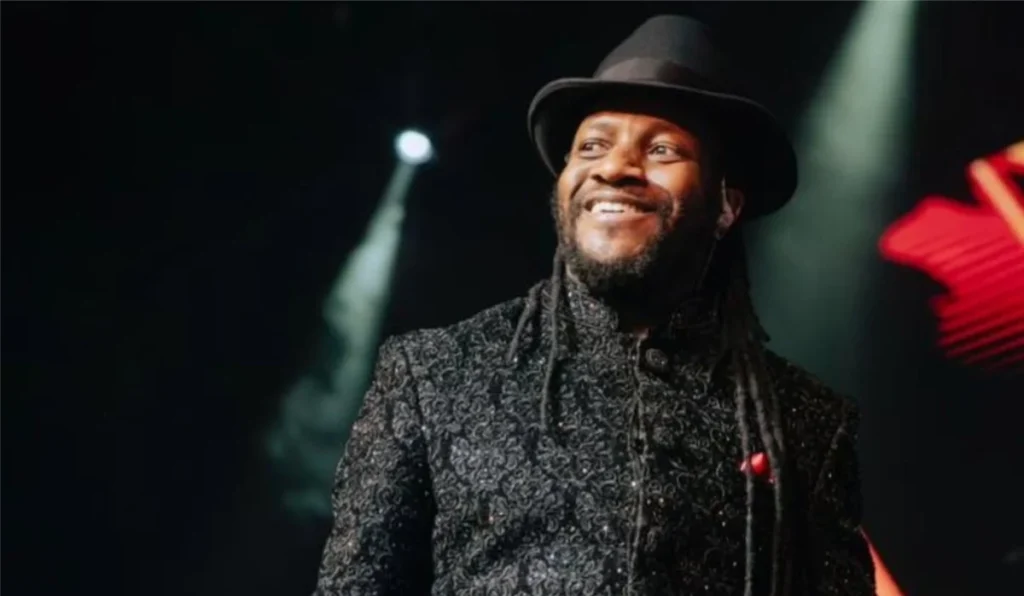
Wicknell Chivayo was not actually talking about Eunor Guti when her name resurfaced in his recent conversation on the Denny J Show. His subject was Winky D, Zimbabwe’s famously outspoken musician, and whether Chivayo would be prepared to buy him a brand new vehicle despite their sharply different political positions.
His answer was revealing. Chivayo said he had no hard feelings towards Winky D over the musician’s support for Nelson Chamisa and the opposition. Politics, he suggested, was not going to determine whether he was prepared to help him. If Winky D approached him and asked for a vehicle, Chivayo said he would be more than willing to provide one. There was, however, one important qualification: Chivayo did not want to approach Winky D first. The reason had less to do with politics than with embarrassment. He did not want to make a generous offer, have it rejected and find himself in another situation like the one involving ZAOGA’s Eunor Guti. That was how Guti suddenly found herself back in the conversation.
It is a fascinating detail because Chivayo’s comments suggest that the Guti episode, despite having happened some time ago, has not simply disappeared into Zimbabwe’s crowded news cycle. Instead, it appears to have become a reference point in how he now thinks about giving large gifts to public figures.
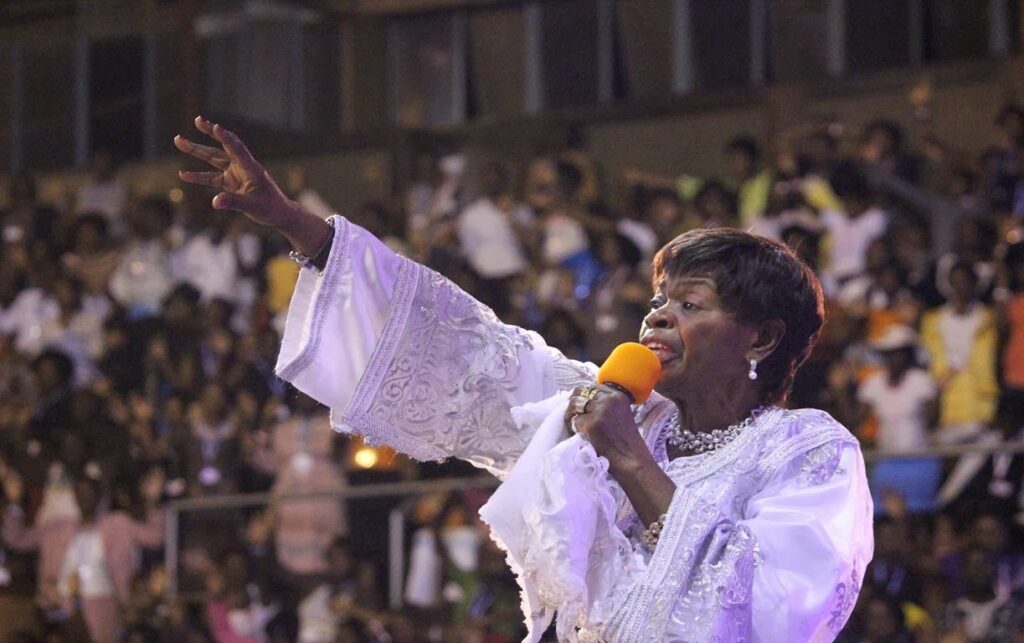
And that takes us back to the original controversy. Chivayo had offered Eunor Guti a brand new Toyota Land Cruiser 300 Series VXR and US$250 000 in cash. He presented the gesture as an expression of generosity and, importantly, as something connected to the late Archbishop Ezekiel Guti. According to Chivayo’s account, the late church leader had encouraged him years earlier to give to the church, and the offer was partly intended to honour that influence.
Guti nevertheless declined. She subsequently explained that she had prayed and considered the matter and did not believe there was the “mind and will of God” behind accepting the gift. She also indicated that the offer did not fit with principles she associated with her late husband. She already had a vehicle, and even the suggestion that the money and vehicle could instead benefit church projects did not persuade her to accept.
On one level, that should have been the end of the matter. Someone offered a gift. Someone else said no. But Zimbabwe being Zimbabwe, very little involving a high value gift, a prominent businessman, a major church and a well-known religious figure remains that simple.
The episode became public, Guti explained her position publicly, and Chivayo was left with what he now describes as an experience he would rather not repeat. Consequently, when Winky D entered the conversation, Chivayo’s position was effectively this: I am willing to give, but I would rather you ask me than have me offer and risk being rejected. That is where the question becomes uncomfortable but necessary: Could Eunor Guti have handled the rejection differently?
I believe she could have. That does not mean she should have accepted the gift, nor does it mean she was wrong to follow her conscience. Those are entirely separate questions. A person has every right to refuse money, a car or any other gift if accepting it would violate their religious convictions, personal principles or sense of integrity. The more interesting question is whether the refusal needed to become such a detailed public explanation. In my view, it did not.
Consider the circumstances in concrete Zimbabwean terms. Someone offers you a brand new luxury vehicle and hundreds of thousands of United States dollars. You believe you cannot accept it. You are entitled to say no. But suppose the person has already announced the offer publicly. Your private decision has now become a public event. That is precisely the difficulty Chivayo created by announcing the gift before establishing privately that Guti was willing to receive it.
Once the announcement had been made, there was no easy route for Guti. If she accepted, Zimbabweans would ask why. If she rejected it, Zimbabweans would ask why. If she remained silent, speculation would inevitably fill the gap. In such circumstances, explaining the rejection becomes understandable. Yet there is a difference between explaining that you have declined a gift and explaining why you believe accepting it was not spiritually appropriate.
A more diplomatic response could have been remarkably simple: “I sincerely appreciate the generosity and the spirit in which the offer was made. After prayer and careful consideration, I have decided that I cannot accept it. I hope my decision will be respected.” That would have communicated a firm and principled no without turning the rejection into an examination of the giver. Once the explanation moves into questions of whether there was the “mind and will of God” behind the gift, however, the public can interpret the statement as something more than a personal decision.
Whether that was Guti’s intention or not, it can sound like a judgement on the person making the offer. And that, I suspect, is where Chivayo’s embarrassment comes from.

There is a psychological difference between being told privately, “Thank you, but I cannot accept this,” and having your very public act of generosity followed by a public explanation of why the recipient believes accepting it would be spiritually wrong. The first is a refusal. The second can feel like a repudiation. Still, it would be unfair to place the entire responsibility for the awkwardness on Guti. Chivayo also created the conditions in which the rejection became embarrassing.
A gift of this magnitude should probably be offered privately before it is announced publicly. It is a simple principle, but one that becomes especially important when the gift is worth hundreds of thousands of dollars. If I want to buy someone a birthday present, I do not first tell the neighbourhood that I am going to give it to them and then wait to discover whether they want it. I offer them. If they accept, I can celebrate the gesture publicly. If they decline, nobody outside the two of us needs to know.
With a luxury vehicle and hundreds of thousands of dollars, the stakes are obviously much higher. This is particularly significant in Zimbabwe, where the gap between extraordinary wealth and everyday economic hardship is impossible to ignore. One Zimbabwean can be discussing whether to buy a brand new luxury vehicle for a musician, while another is calculating whether the money in their EcoCash wallet will carry them through the week.
A parent in Chitungwiza may be worrying about school fees. A commuter in Sakubva may be calculating the cost of transport to work. A family in Chegutu may be trying to stretch a modest income across food, electricity and rent. A young graduate in Gweru may be sending out job applications while living with relatives. Against that background, the spectacle of one individual giving away luxury vehicles and vast sums of money inevitably generates fascination.
For some Zimbabweans, Chivayo’s generosity represents something extraordinary: a wealthy individual willing to share his resources with musicians, religious figures, politicians and other public personalities. For others, however, it raises harder questions about wealth, influence and the extraordinary concentration of financial power in a country where ordinary citizens often struggle to accumulate even a fraction of such amounts.
Those questions deserve serious discussion, but they should not obscure another important point: Guti’s refusal was not necessarily an insult. She appears to have been protecting a principle. Whether one agrees with her theology is beside the point. She believed that accepting the gift would compromise something she regarded as important. She therefore said no. And, frankly, Zimbabwe needs people who can say no to money.
We have seen enough situations across the country in which people accept financial benefits first and ask questions about consequences later. Sometimes the price of accepting money is influence. Sometimes it is obligation. Sometimes it is silence. Sometimes it is simply the loss of the freedom to say no later. A person who can genuinely say, “Thank you, but I cannot accept this,” is exercising a form of independence that should not be dismissed.
At the same time, however, Zimbabwe also needs people who understand that saying no does not require humiliating the person making the offer. That is the point at which I think Guti could have been more tactful. Her principles did not require her to accept the gift. But neither did they necessarily require such a detailed public explanation of why she rejected it. There is a valuable distinction between standing firm and making a spectacle of standing firm.
Chivayo’s latest remarks suggest that he experienced the episode as more than a failed donation. It seems to have become a lesson about the risks of unsolicited generosity, and that lesson now appears to have shaped his approach to Winky D. There is an almost amusing irony in it. Chivayo says Winky D can have the car. The politics do not matter. Chamisa does not matter. The musician’s support for the opposition does not matter. Winky D’s public image does not matter. If he wants the vehicle, Chivayo says, he can ask. But Chivayo will not make the first move because he does not want another “Mai Guti situation”. That is quite a legacy for a rejected gift.
Yet perhaps there is something useful in the lesson. Zimbabweans have become accustomed to seeing generosity measured in conspicuous terms: the number of cars given away, the size of the cheque, the price of the house, the number of people receiving money and, ultimately, the number of zeros involved. But generosity is not always about the size of the gift. Sometimes it is about the manner in which the gift is offered.
A genuine gift should leave the recipient free to say no. That means the giver should be humble enough to ask privately before announcing publicly. Conversely, the recipient should be gracious enough to decline without unnecessarily humiliating the person who offered. Both sides have responsibilities. Chivayo should not have to feel that his generosity has become a public liability every time he makes an offer. But neither should a recipient feel morally obliged to accept a gift simply because the giver has made it publicly and generously.
That is particularly important when money and public influence intersect. The Zimbabwean public has a right to ask questions about conspicuous wealth. It has a right to question where money comes from and why certain people can distribute extraordinary sums. But it should also recognise that rejecting a gift does not automatically make someone virtuous, just as giving a large gift does not automatically make someone generous. Intent matters. Character matters. Context matters. And, perhaps most importantly, consent matters.
The entire Guti episode might have unfolded differently if Chivayo had first made the offer privately and waited for an answer. If Guti had accepted, the announcement could have followed. If she had declined, the matter could have ended quietly. No public embarrassment. No competing explanations. No lingering resentment. No later reference to the episode when discussing whether to offer Winky D a vehicle. Instead, an act that Chivayo apparently intended as an expression of gratitude became a public controversy, and a year later it is still being discussed.
That is why his recent comments are more revealing than they initially appear. He was not merely talking about Winky D. He was telling Zimbabwe that he remembers what happened when someone said no. Perhaps that is the central lesson from the entire saga. Generosity needs humility on both sides. The giver must understand that a gift is not truly a gift if the recipient cannot freely refuse it. The recipient must understand that declining a gift does not require condemning the person who offered it. And both parties should recognise that once a private act becomes public, dignity becomes much harder to preserve.
As for Winky D, Chivayo appears to have left the door open. There is no need for a public announcement of a car waiting for him. No dramatic presentation. No unsolicited offer that can become another national talking point. If Winky D wants it, he can ask. After the Eunor Guti experience, perhaps Chivayo has learnt a lesson that many Zimbabweans could learn from too: the safest gift is the one the recipient has already agreed to receive. And perhaps the safest refusal is one that protects not only your own principles, but also the dignity of the person who gave you the opportunity to say no.
Note*This is an opinion article and the views, opinions, interpretations and conclusions expressed herein are solely those of the author. They do not necessarily reflect, represent or constitute the views, opinions or official position of National Interest News.