By Mbali Tshabangu
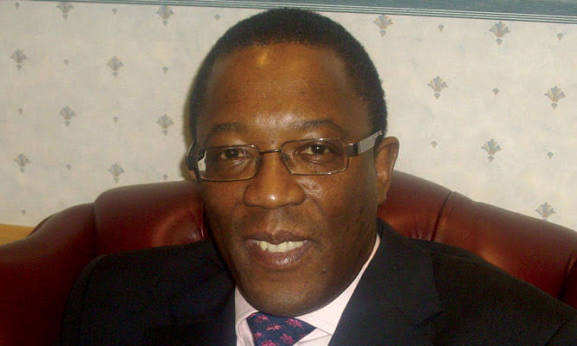
Former NMB Bank founder and investment banker James Mushore has revealed how he made a dramatic escape from Zimbabwe in 2004, crossing crocodile-infested Lake Kariba into Zambia after falling out with the government.
Mushore, who is now based in Germany, made the revelations during an interview with TikTok content creator Samai Connect, where he reflected on his entrepreneurial journey, the establishment of NMB Bank and the political challenges that forced him into exile.
Recalling his departure, Mushore described how he got off a boat and made his way through the waters of Lake Kariba, walking into Zambia before flying to Johannesburg and eventually Germany.
“I got out of the boat, walked up to my neck, walked into Zambia from Lake Kariba, flew to Joburg, flew here in February 2004 in shorts and a T-shirt and a knapsack with an apple and a pair of pliers,” he said.
Mushore said he initially thought his stay outside Zimbabwe would last only two weeks but ended up spending six years away from the country.
His departure followed tensions with Zimbabwean authorities after the success of NMB Bank, which he founded with a group of friends after qualifying as a chartered accountant.
The bank was licensed on June 1, 1993, and went on to become one of Zimbabwe’s leading investment banks, listing on both the Zimbabwe Stock Exchange and the London Stock Exchange.
Mushore said NMB was initially the fifth investment bank in the market but became the largest within 18 months of commencing operations.
He attributed the institution’s rapid growth to its decision to target black-owned businesses that were not adequately served by established financial institutions.
“The black businessman was not being looked after. We went for him,” he said.
The bank also built its reputation on efficiency and customer service, particularly in processing letters of credit.
“If we can’t do a letter of credit within one day, you get it for nothing,” Mushore said.
Despite his dramatic departure, Mushore eventually returned to Zimbabwe after discussions with friends who were concerned about remaining separated from their families, particularly during difficult moments such as the death of parents.
He said the group decided that one of them had to return home and drew straws to determine who would make the journey.
“We sat down with my friends and I said, one of us needs to go back. One of our parents is going to die, we won’t be able to go and bury them. So we drew straws, and I drew the short straw. So I went back,” he recounted.
Reflecting on his experience, Mushore said that, in hindsight, he might have chosen to remain in Zimbabwe despite the dangers he faced at the time.
“When the Zimbabwe government came after us, I don’t think I would have left the country. I think I would have stayed there, as dangerous as it was,” he said.
Mushore also identified NMB’s listing on the London Stock Exchange as one of the most significant decisions in the bank’s history, saying it gave the institution international credibility and opened opportunities for partnerships and lines of credit with foreign financial institutions.
However, the bank was eventually delisted from the London Stock Exchange amid Zimbabwe’s unprecedented hyperinflationary environment.
Mushore’s account provides a glimpse into the challenges faced by business leaders during Zimbabwe’s turbulent political and economic period, as well as the personal cost of the tensions between entrepreneurship and political power.