By Bongani Matshelela
From intimate-partner murders and the rape of children to AI-generated sexual abuse and coordinated online attacks, gender-based violence is becoming a national emergency with consequences for Zimbabwe’s economy, democracy and future generations.
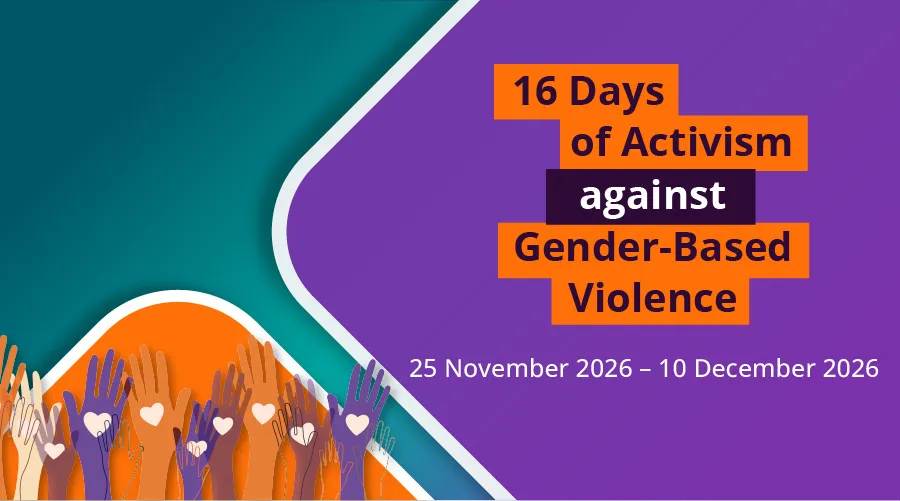
As Zimbabwe marks 16 Days of Activism, the question is whether government will finally move beyond condemnation to prevention and accountability.
There is something deeply unsettling about the growing catalogue of violence against women and girls in Zimbabwe or the diaspora. Women are being killed in their homes, children are being sexually abused by people they know and trust, and women who dare to occupy public spaces are increasingly finding themselves subjected to online intimidation, humiliation and threats.
As Zimbabwe joins the international community in commemorating the 16 Days of Activism Against Gender-Based Violence, from November 25 to December 10, the country faces a question that can no longer be postponed: how many more women and children must die before gender-based violence is treated as a national emergency?
This year’s campaign should be significant. It should recognise that the violence women and girls experience does not stop at the front door, the workplace or the street. It now follows them into their phones, social media accounts and digital identities. A message can become a threat. A private photograph can become a weapon of blackmail. A fabricated sexual image can destroy someone’s reputation within minutes.
There is no excuse for online abuse. But there is equally no justification for treating it as something less serious than physical violence.
The funerals that should have changed Zimbabwe
The killings that have dominated headlines this year expose the potentially lethal consequences of domestic violence.
In July, the deaths of Zimbabwean-born Zandile Tshuma, 42, and her daughters, Natalie, 15, and Nala, five, in Bedfordshire, England, shocked Zimbabwe and its diaspora. Their husband and father, Ndodana Tshuma, was arrested in South Africa in connection with the killings and faces murder proceedings in the United Kingdom.
Back home, Lucia Mpofu, 27, was murdered by her husband, Wiseman Sai, 55, in Gokwe in January. Their 10-year-old daughter and a 12-year-old niece were reportedly present. Sai was subsequently sentenced to 35 years in prison.
In September, the suspected murder-suicide involving Nyasha Mhungu and his wife, Olga Muzhingi, in Glen View, Harare, added to the country’s disturbing catalogue of domestic deaths. Another reported incident involved Midlands State University Lesidi Nkomo (25) became one of the most chilling reminders of how quickly intimate-partner disputes can turn deadly. Nkomo, a Psychology student, was allegedly shot in the forehead at her Senga boarding house in Gweru by her former husband,
The violence has followed women online
Zimbabwe’s digital transformation has created extraordinary opportunities for women and girls. Mobile connectivity can open access to education, financial services, entrepreneurship, and information.
But the same technology is increasingly being weaponised against them. Women in journalism, politics, activism and human rights advocacy are particularly exposed. Coordinated harassment, gendered disinformation, sexualised threats and the circulation of manipulated images are being used to discredit women and push them out of public debate.
Zimbabwe has evidence of this problem. The rise of artificial intelligence and digital platforms has opened another frontier of abuse against women journalists, through AI-generated deepfakes, doxxing, surveillance, gendered disinformation and coordinated online harassment. A 2025 Gender and Media Connect report found that 63 per cent of surveyed women journalists in Zimbabwe had experienced technology-facilitated gender-based violence (TFGBV).
The implications go beyond the individual journalist. When women are intimidated into silence, society loses perspectives, scrutiny and accountability.
A woman’s safety is an economic issue
There is another argument that policymakers should find difficult to ignore: gender-based violence is costing Zimbabwe economically. A study conducted with the World Bank, UNFPA and New York University, GBV cost Zimbabwe an estimated US$1.36 billion in 2023, equivalent to 3.87% of GDP.
The costs include healthcare, policing, prosecution, social services, lost productivity and the less visible consequences of trauma and intergenerational poverty. A woman who is assaulted may lose her job or business income. A survivor of sexual violence may require prolonged medical and psychological treatment. When a mother is murdered, children may lose their principal caregiver and breadwinner, while relatives inherit responsibilities, they may not be financially equipped to meet.
Employers lose productive workers. Families lose income. Government spends scarce resources responding to violence that could have been prevented. Zimbabwe cannot seriously pursue women’s economic empowerment while ignoring the violence that undermines women’s ability to work, trade, invest and participate in public life.
The state must move beyond commemorations
Zimbabwe has constitutional protections, the Domestic Violence Act, the Cyber and Data Protection Act and a National GBV Response and Prevention Strategy covering 2023–2030. The problem is increasingly the distance between policy commitments and what happens when a woman seeks protection.
Government should establish a national femicide observatory to record gender-related killings, previous complaints, protection orders and the outcomes of investigations. Police must introduce consistent risk assessments for domestic violence cases, particularly where threats to kill, stalking and repeated assaults are involved.
The justice system must accelerate the investigation and prosecution of rape cases involving minors while protecting children’s identities and ensuring access to medical and psychological support.
Technology companies must also accept responsibility. Harmful content, non-consensual intimate images, impersonation and AI-generated sexual deepfakes require accessible reporting systems and swift intervention. Platforms must not leave survivors navigating complicated complaints procedures while abusive material continues circulating.
Most importantly, government must ensure that women’s rights organisations and shelters receive predictable domestic funding rather than depending overwhelmingly on short-term donor support.
The danger with the 16 Days of Activism is that it can become an annual ritual of speeches and orange-coloured campaigns, followed by 349 days of institutional inertia. Zimbabwe must demand more. The country cannot build an inclusive economy while women are unsafe in their homes, children are vulnerable to sexual abuse and women in public life are intimidated into silence.
The question facing Zimbabwe is not whether it has enough laws, policies or commemorative themes. It is whether its institutions have the courage, resources and political will to act before another woman becomes a headline. There is no excuse for violence. There should be no excuse for institutional inaction either.