
By Bongani Matshelela
There is something deeply contradictory about a city installing sophisticated cameras to punish traffic offenders while motorists still struggle to navigate malfunctioning traffic lights, invisible road markings and poorly managed intersections.
Harare wants to become smarter at enforcing traffic laws, but has it become equally competent at providing the conditions necessary for motorists to obey them? The controversy surrounding Zimbabwe’s new Smart Traffic Management System exposes a fundamental question about governance: when technology gets ahead of infrastructure, who pays the price?
The debate has now reached Parliament. It is reported that Exevia Maoneke, chairperson of Parliament’s Portfolio Committee on Home Affairs, had called for technical problems affecting the Smart Traffic Management System (STMS) to be resolved before fines are imposed.
The intervention raises an important question about whether the infrastructure supporting automated enforcement is sufficiently reliable to justify penalising motorists.
Nobody seriously disputes that Zimbabwe’s roads need better enforcement. Harare’s traffic disorder has become an everyday threat to public safety. Commuter omnibuses stop wherever passengers demand, vehicles travel against the flow of traffic, intersections are blocked and pedestrians sometimes cross dangerously.
The Zimbabwe Republic Police and City of Harare deserve credit for exploring technology as a way of restoring discipline.
But introducing sophisticated technology is not the same as establishing the institutional capacity to operate it fairly.
A camera cannot repair a broken traffic light
The greatest danger of automated enforcement is that infrastructure failures can become motorists’ offences.
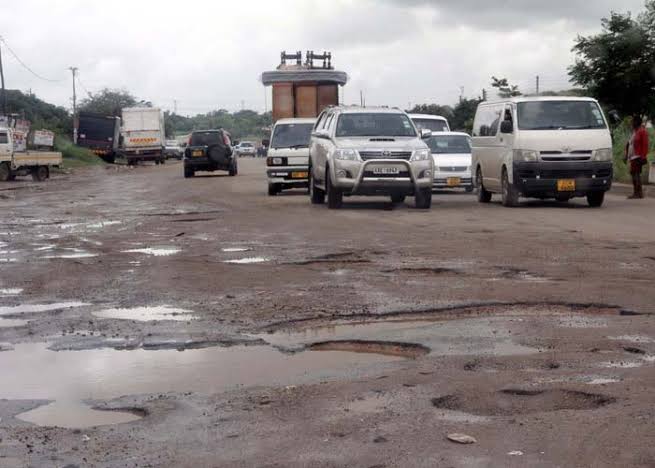
Harare’s roads are not uniformly equipped to support the precision that smart cameras demand. Traffic lights malfunction, road markings fade and roadworks alter driving conditions. The problem becomes particularly serious at night, when faded stop lines and lane markings are difficult to distinguish, especially along poorly lit roads. In fact, the CBD in poorly lit.
Consider the intersections of Samora Machel Avenue and Simon Muzenda Street, as well as Samora Machel Avenue and Rotten Row, among others, where amber lights have reportedly remained non-functional for extended periods.
The absence of a dedicated right-turn green arrow at the intersection of Sam Nujoma Street and Churchill Avenue creates unnecessary congestion. Motorists turning right from Churchill into Sam Nujoma often find that only one or two vehicles can pass before the lights change. This fuels frustration and impatience, sometimes encouraging motorists to disregard traffic rules. Rather than simply penalising such violations, authorities should review the signal sequence and introduce a dedicated right-turn arrow to improve traffic flow and compliance.
How can motorists be expected to comply with traffic signals when the signals themselves are unreliable?
Have the amber intervals at monitored intersections been independently assessed? Are camera systems synchronised with traffic-light controllers? Can they distinguish between a vehicle crossing during amber and one crossing after red appears?
A smart camera cannot fix a faulty traffic light, create pedestrian crossings, bus stops or lit a city. It cannot repaint faded or invisible stop lines, redesign dangerous intersections, investigate potential conflicts of interest or educate pedestrians.
These are fundamental responsibilities of the authorities, and they must be addressed before technology is used to enforce compliance.
The City of Harare should inspect and certify every monitored intersection, publishing the findings. Where infrastructure defects are confirmed, enforcement for affected offences should be suspended until corrective work is completed.
Millions of detections are not millions of proven offences
Earlier official statements indicated that the cameras had flagged approximately 4.8 million suspected traffic violations by October. Authorities have said officers review footage before enforcement action is taken. Human oversight is welcome, but transparency is essential.
How many suspected violations were confirmed? How many were rejected after review? How many involved defective signals, invisible markings or circumstances beyond motorists’ control? How many motorists have successfully challenged their fines?
A camera detects an event; it does not automatically establish every legal circumstance surrounding an offence. Government should publish regular reports showing detections, validated offences, rejected cases, successful appeals and technical failures.
The hidden cost of road accidents
There is another uncomfortable reality on Zimbabwe’s roads: the unequal financial consequences of accidents.
Consider a situation familiar to private motorists. A commuter omnibus collides with a privately owned vehicle. The driver produces a third-party insurance certificate. Some drivers reportedly respond with ululations or apparent amusement, seemingly confident that the financial consequences will be limited.
For the innocent motorist, however, the damage can be devastating.
Third-party insurance does not guarantee that the victim’s vehicle will be repaired or restored to its previous condition. Statutory insurance cover is subject to limits, and where repair costs exceed the available compensation often in local currency ZIG, the innocent owner may face a substantial shortfall.
A family that has invested years of savings in a vehicle can suddenly find itself negotiating with the very person responsible for the accident, hoping they will contribute towards the outstanding repair costs.
Third-party insurance must never become a perceived licence for reckless driving or a shield against responsibility. Government should strengthen enforcement of insurance obligations, improve public education and examine whether existing compensation limits offer meaningful protection to accident victims.
Not every mistake should attract the same punishment
Another weakness in the debate is the apparent assumption that every traffic violation deserves an equally punitive response.
There is a difference between deliberately driving through a red traffic light and inadvertently crossing a stop line by a small margin without endangering other road users. Both may constitute breaches of traffic rules, but they do not necessarily present the same level of danger.
A graduated enforcement system deserves consideration. For appropriate minor and first-time offences, motorists could receive an initial warning, a second caution and, where justified, a final warning before a financial penalty is imposed. Repeated violations and dangerous conduct should attract firm enforcement from the outset.
The objective should be to change behaviour, not simply collect fines. It seems, like the Chihuri era, motorists are now being subjected to untold suffering on the roads. Ther are now foreigners in their own city or land with special privileges applied to government officials, cars with blue lights, Kombi drivers and Harare City employees.
Motorists are human beings, not programmed machines incapable of error. Breaking a traffic rule does not automatically make someone a reckless driver. There must be room for proportionality, context and reasonable judgment.
Accountability must apply to everyone
Because the police are responsible for monitoring the cameras and enforcing penalties, public confidence depends on the impartiality of the process. Concerns have been raised about alleged financial or ownership interests by some serving police officers in commuter-omnibus operations.
These allegations should not be presented as established facts without evidence. However, they warrant credible and independent scrutiny to establish whether any potential conflicts of interest exist and to ensure that those entrusted with enforcing the law are not seen to have interests that could compromise its fair application.
An independent audit, disclosure requirements and clear procedures for investigating complaints of selective enforcement would protect the integrity of the Police Service.
Equally, automated enforcement must address all road users. Illegal kombi stopping, dangerous passenger loading, vendors, obstruction of intersections and unsafe pedestrian crossings contribute significantly to Harare’s traffic problems.
Private motorists should not become the easiest targets while comparable violations by public-transport operators, government vehicles such as the public service buses and other road users using blue lights go unchecked.
The authorities must also clarify how the system handles lawful police instructions, presidential motorcades and authorised security escorts. Citizens should not be penalised for obeying lawful directions.
A 90-day reset, not a retreat
Zimbabwe should not abandon smart traffic enforcement. Instead, government should institute a 90-day review involving the ministries responsible for Transport and Home Affairs, City of Harare, ZRP, journalists, Parliament, independent engineers, insurers and transport representatives.
The review should examine camera accuracy, traffic-signal reliability, road markings, night-time visibility, legal safeguards, data protection and the appeals process. It should also assess the feasibility of graduated warnings for appropriate minor offences.
Importantly, the millions of records generated by the system should become a resource for improving road safety. They can help identify dangerous intersections, recurring violations, pedestrian movement and public-transport bottlenecks. Such information should guide road engineering, public education and better traffic management.
The success of the programme must be measured by fewer accidents, safer roads and improved traffic flow, not the volume of fines collected.
The intervention by Parliament’s Home Affairs committee should be treated as an opportunity to strengthen the programme, not an obstacle to modernisation.
Zimbabwe needs modern traffic enforcement. But technology must operate alongside reliable infrastructure, fair laws and accountable institutions. Technology may make enforcement smarter. Only accountable institutions can make it just.



