By Kudzai Jakachira
Parliament has called for a national State of Emergency over Zimbabwe’s worsening water and sanitation crisis after a damning report revealed that about 80 megalitres of raw sewage are discharged into the Mukuvisi River every day.
The Mukuvisi River flows into Lake Chivero, Harare’s main source of raw water, raising serious concerns over the city’s water security and the growing public health threat posed by untreated sewage.
The alarming findings are contained in a report by the Parliamentary Portfolio Committee on Environment, Climate and Wildlife following investigations into water pollution hotspots in Harare and Chitungwiza.
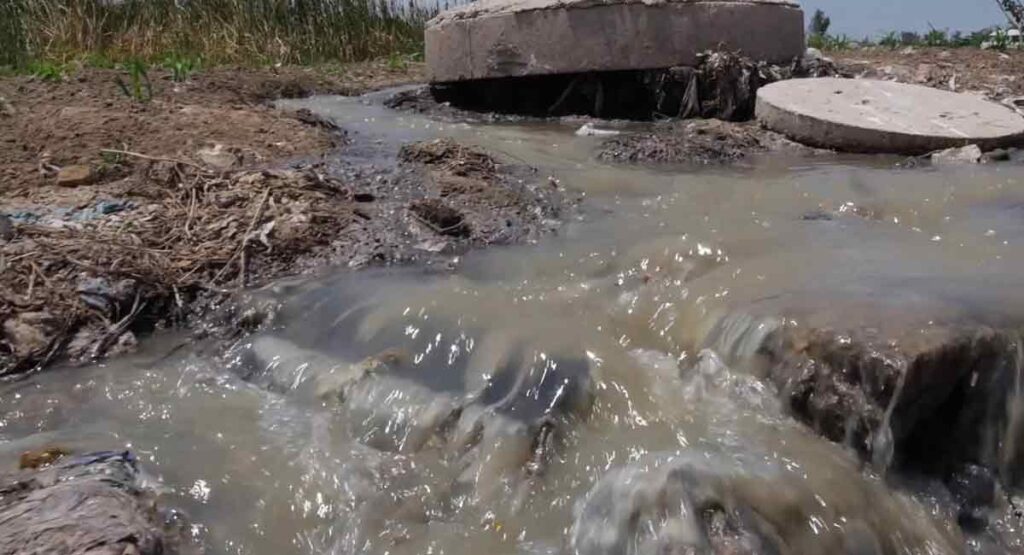
The committee found that Zimbabwe’s wastewater treatment infrastructure has deteriorated to critical levels, with only 20 of the country’s 63 sewage treatment plants currently operational.
Across the country, functional and semi-functional plants are estimated to be discharging about 570 megalitres of raw or partially treated sewage into the environment every day, according to the report.
In Harare, the situation is particularly dire.
The Firle Wastewater Treatment Plant, which was designed to process 144 megalitres of sewage per day, is currently handling only about 54 megalitres, while the Crowborough Wastewater Treatment Plant has completely failed.
The committee identified Amalinda Crossing as one of the city’s major pollution hotspots, where collapsed trunk sewer mains have remained unrepaired for more than 15 years.
The failure has resulted in untreated sewage flowing directly into the Mukuvisi River.
According to projections cited by the committee, comprehensive repairs to the collapsed infrastructure are not expected to be completed until June 2027.
The situation is similarly dire at the Budiriro Pump Station, which has been non-functional since 2014.
Sewage from the facility continues to overflow into the Marimba River and, in some instances, backflows into residential properties, exposing communities to serious health and environmental risks.
The committee also raised concerns over the deteriorating quality of the country’s rivers and water bodies.
Monitoring data cited in the report showed dissolved oxygen levels in affected rivers falling to 51.2 percent, below the 60 percent threshold considered necessary for a healthy aquatic environment.
At the same time, Biological Oxygen Demand (BOD) levels rose to 9.48 milligrams per litre, almost four times the recommended environmental limit.
The high levels of nutrients, including phosphates, have also contributed to fish deaths and the rapid spread of invasive water hyacinth in Lake Chivero.
Beyond the environmental damage, lawmakers warned that the sewage crisis poses a major public health threat.
The committee drew parallels with the 2008–2009 cholera epidemic, which killed more than 4,200 people and infected nearly 98,000 others, warning that continued deterioration of the sanitation system could expose communities to another major disease outbreak.
The report also said the continued pollution was inconsistent with Section 73 of the Constitution, which guarantees every person the right to an environment that is not harmful to their health or well-being.
Against this backdrop, the parliamentary committee recommended that the President declare a national State of Emergency over the water and sanitation crisis by December 31, 2026.
Such a declaration, the committee said, would enable the Government to mobilise emergency resources, accelerate funding and fast-track the rehabilitation of the country’s collapsing wastewater infrastructure.
The committee’s findings place renewed pressure on authorities to urgently address Harare’s ageing sewer network and failing treatment plants, particularly as the capital continues to depend heavily on Lake Chivero for its raw water supplies.
The scale of the sewage discharges also underscores the growing challenge facing Zimbabwe’s urban authorities as ageing infrastructure, inadequate investment and prolonged failures at treatment plants continue to threaten both the environment and public health.