By Gabriel Manyati
Legendary Malian musician Salif Keita has cancelled his scheduled commercial performances in South Africa, including a headline slot at the Mangaung African Cultural Festival (Macufe) in Bloemfontein in September, citing reports of xenophobic violence against African migrants. The 76-year-old, widely known as the Golden Voice of Africa, made the announcement in a deeply personal open letter that has reverberated across the continent’s cultural circles.
“For over 50 years, Africa has not just been a place I visit – it is who I am. South Africa, in particular, has always welcomed me as a brother, not just an artist. That is why my heart is so heavy today. I cannot ignore the reports of xenophobic violence against our African brothers and sisters,” Keita wrote. “When I see migrants attacked, I do not see ‘politics.’ I see people looking for work, safety, and dignity. This does not match the South Africa I know – the South Africa that stood with Mali, and the South Africa that Nelson Mandela built.”
He continued: “In 1988, I sang at Wembley for Mandela because apartheid was our shared struggle. Today, that same conscience forces me to make a painful decision: I am cancelling my scheduled commercial performances in South Africa. Please hear me clearly: This is not a rejection of you, the people. It is a rejection of hate… To be clear – I am not closing the door on South Africa. I am closing the door on violence.” Keita left the door ajar for non-commercial appearances in townships or community spaces aimed at dialogue and ubuntu, adding that he hoped to return “not for applause, but for healing, dignity, and ubuntu.”
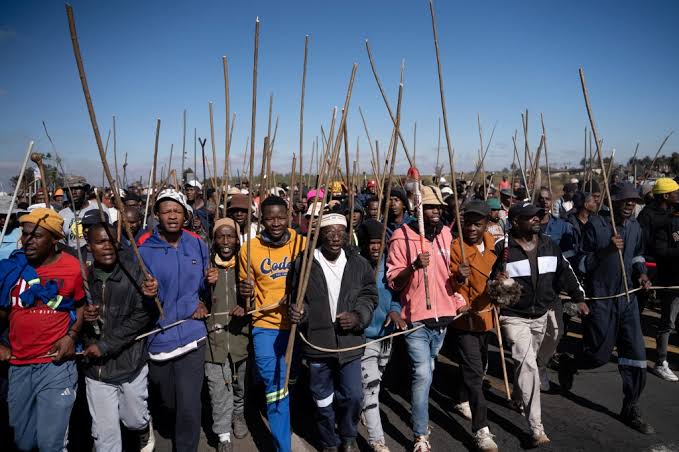
His decision lands amid a series of anti-illegal immigration protests earlier this year that at times turned deadly, prompting mass repatriations of foreign nationals. More than 160 000 people have left South Africa since late May, according to tallies based on figures from African governments. Keita’s manager, Carolina Vallejo of One World Records, confirmed the cancellations to AFP.
The Malian star’s stand is the latest high-profile symptom of a broader crisis that has gripped South Africa’s entertainment and cultural sector in recent months. Xenophobic tensions and the continental backlash they have triggered are reshaping line-ups, cancelling cross-border bookings, and damaging the country’s reputation as a regional hub for African music and performance.
South African artists themselves have borne significant costs. Justice and Constitutional Development Minister Mmamoloko Kubayi publicly acknowledged the fallout in June, revealing that many local performers were losing continental gigs. “Majority of South African artists who perform in other African countries are seeing their gigs getting cancelled. One artist reached out to me and said all her gigs were cancelled,” she said. “This is an income loss for a South African… The brand is hurting, we can’t lie about it.” Kubayi noted that government was engaging diplomatically and with the arts sector to assess the full impact and support affected creatives.
Concrete examples illustrate the scale. In early July, UK-based Southern African music promoter Y2K Entertainment Promotions announced it was completely disassociating from South African music and artists in solidarity with communities affected by the violence. “No to Xenophobia. As we are in the Entertainment Industry for now, we disassociate ourselves from SA Music and Artists until there is a change,” the company stated. “We stand firm with all our communities… Life is far more important.”
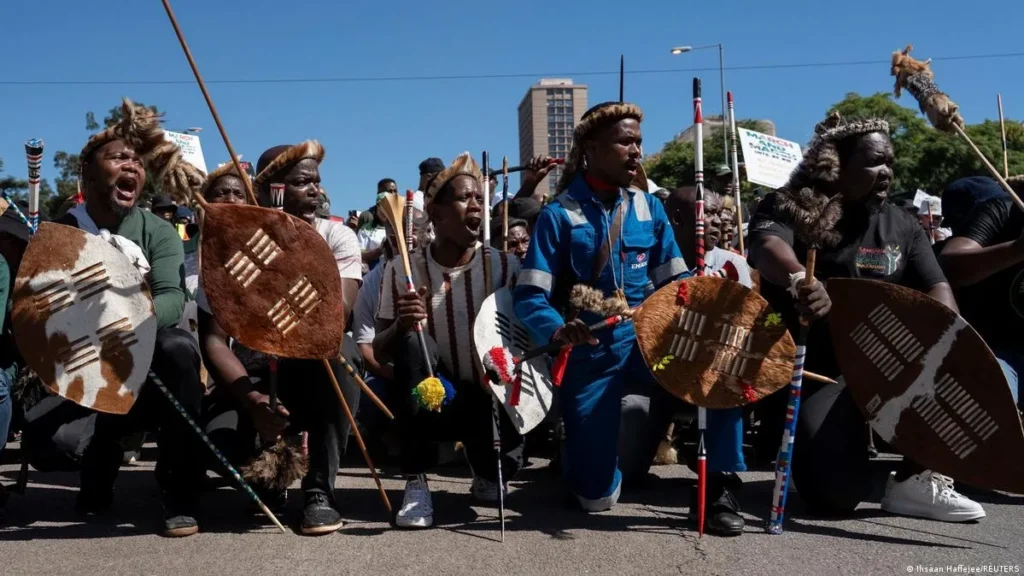
Across the Limpopo, the effects were equally stark. South African amapiano star Musa Keys was dropped from the Mighty Zambezi Lager Bonfire Festival in Harare after organisers revised the line-up to feature only local acts following social media pressure. Around the same time, Afro-pop duo Mafikizolo was removed from the Buddie Beatz Concert in Victoria Falls, part of the Econet Victoria Falls Marathon festivities. Updated promotional material omitted the group, with sources citing security concerns and public outrage linked to anti-immigrant protests in South Africa. Zimbabwean social media users had explicitly warned that South African artists were “not welcome,” threatening to disrupt shows.
The reciprocal nature of the damage became clear with Grammy-winning South African singer Tyla. After announcing a Lagos date for 22 December as part of her A*POP World Tour, she faced intense boycott calls from Nigerians angered by reports of attacks on their compatriots. Within days, the Lagos stop disappeared from her official itinerary, leaving only Cape Town and Johannesburg on the African leg. Neither Tyla nor her team publicly explained the change, though activists including Martins Otse (VeryDarkMan) had threatened to mobilise against the show.
Domestic events have not been immune. Afro-pop singer Sbahle cancelled the live launch of her debut album “Iscoco Sam” at Artistry JHB in Sandton in early July, citing safety concerns amid national anti-migration protests and uncertainty around public mobility. “Due to the current national situation, we have made the difficult decision to prioritise the safety of our fans, the artist, venue staff and organisers,” her team said.
Industry observers note that these cancellations ripple far beyond individual artists. Promoters face last-minute line-up changes, venues lose ticket revenue, technical crews and support staff lose work, and the broader creative economy – already reliant on continental touring and festivals – suffers. Festivals that once celebrated pan-African unity now navigate online pressure and security fears. Cross-border collaborations, once a source of creative energy and income, have become politically fraught.
For international and African performers, South Africa risks being seen as an increasingly risky booking. Keita’s high-profile withdrawal, rooted in the country’s own anti-apartheid history that he helped amplify, carries particular moral weight. His insistence that colonial borders must not divide African humanity underscores a tension that has long simmered: economic frustrations and competition for scarce resources in South Africa colliding with ideals of continental solidarity.
Whether this moment prompts meaningful reflection and de-escalation remains uncertain. What is clear is that the entertainment industry – long one of South Africa’s most visible soft-power assets – is paying a tangible price. Stages that once hosted shared celebrations of African excellence are quieter, bookings thinner, and the cultural conversation more strained. Keita’s heavy heart may yet prove a mirror for an industry and a region forced to confront how hate, once unleashed, closes more doors than it opens.