By Kelvin Wilson Kasiwulaya
Before the market stalls behind Mtapa Market are fully open, Chipo Taruvinga is already at work.
The 38-year-old moves slowly along the north-eastern side of Gweru’s busy trading area, bending to pick up plastic bottles, discarded sachets and food packaging from gutters, open spaces and small illegal dumping points. Beside her is Emmaculate Juma, 56, carrying a sack that grows heavier as the morning progresses.
Their work begins before most shoppers arrive. By then, the ground is often already littered with the remains of the previous day: empty drink bottles, plastic bags, takeaway containers and packaging swept into drains by wind or rain.
For Taruvinga and Juma, the rubbish is more than an eyesore. It is their source of income.
“We collect what other people throw away because it has value,” Taruvinga said, pausing beside a pile of crushed bottles. “A plastic bottle in a drain is a problem. But when we collect it, sort it and sell it, it becomes something that can help us at home.”
The two women are part of Gweru’s informal network of waste pickers, people who recover recyclable materials from streets, markets, bins and dumpsites. Their work is often overlooked, and sometimes mocked, but it helps keep plastics out of drainage systems and provides a modest income in a city where formal jobs are difficult to find.
A day’s work in the dirt
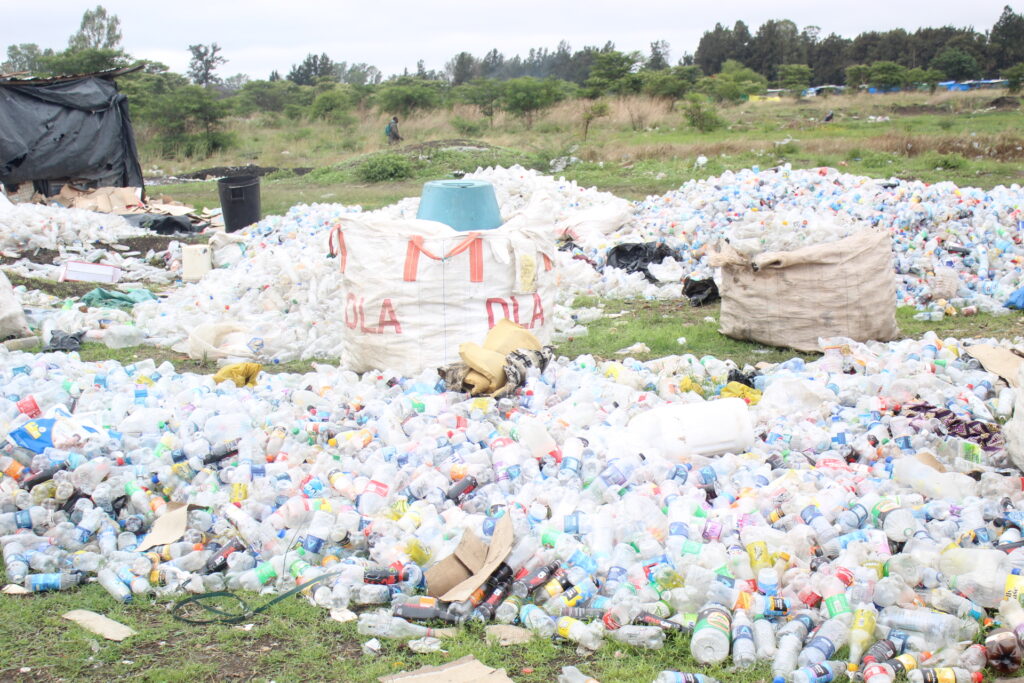
Taruvinga said she did not begin collecting plastics because she wanted to. Like many informal workers, she turned to waste picking after struggling to find a reliable way to earn money.
“There are days when you look for work and find nothing,” she said. “You cannot sit at home when children need food and school needs money. So I started collecting plastics because at least, if you work hard, you can get something.”
She sorts the plastics by type before selling them to buyers. Clear bottles are kept separate from coloured bottles, while harder plastics, containers and sachets are placed in different bags. The work requires patience, she said, because buyers pay different prices depending on the quality and type of plastic.
“The money is not always good,” Taruvinga said. “Sometimes you work the whole day and the bag is still small. Sometimes the buyer says the plastic is dirty or mixed, so they pay less. But even small money can buy mealie-meal, vegetables or help with transport.”
On a good day, she can collect enough plastic to make a few dollars. On a bad day, she returns home with little more than a sore back, dusty hands and bags that will have to wait for another day before they are full enough to sell.
“We do not earn a salary,” she said. “You only earn when you find enough plastic and when there is someone willing to buy it.”
Juma said the work is physically demanding, especially for older women.
“You walk for many hours, you bend down, you carry heavy sacks and sometimes you stand in dirty water,” she said. “When it is hot, it is difficult. When it rains, it is also difficult because the plastics are wet and they become heavy.”
Still, she returns to the streets almost every day.
“I have people who depend on me,” Juma said. “If I do not work, there is no money. This plastic helps us survive.”
Sorting for buyers
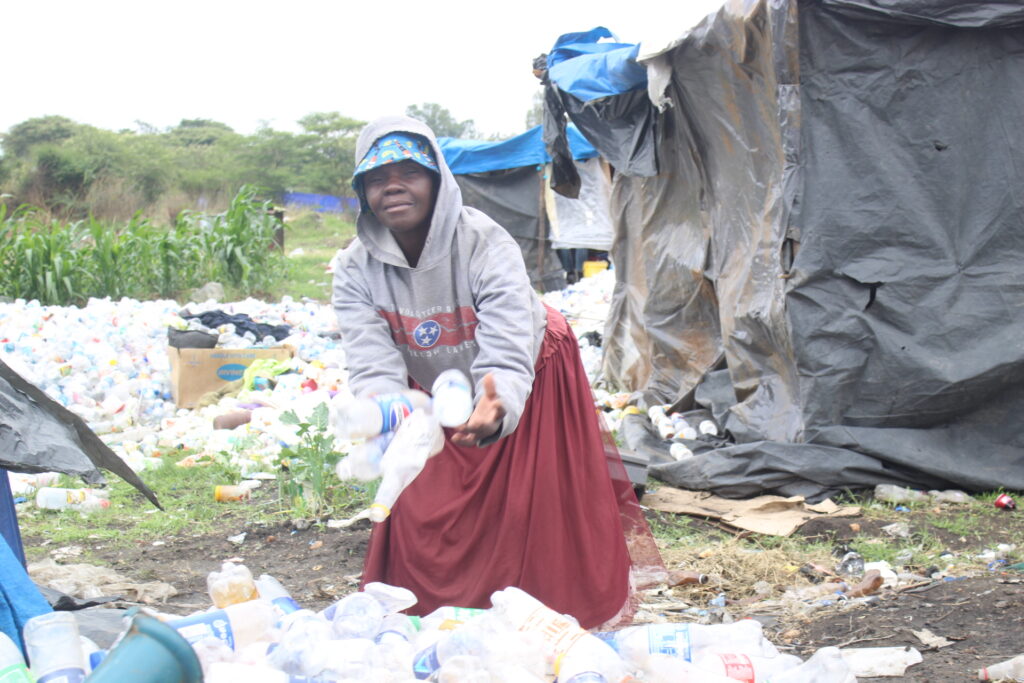
After collecting, the women take their materials to spaces where they can sort them. But the lack of proper sorting sites means the work is often done in open areas, near homes or beside markets.
Juma said separating the plastics properly is one of the most important parts of the job.
“If you mix everything, the buyer can reject it or give you less money,” she said. “We have to separate bottles, containers, hard plastics and the small plastics. Some plastics are wanted more than others.”
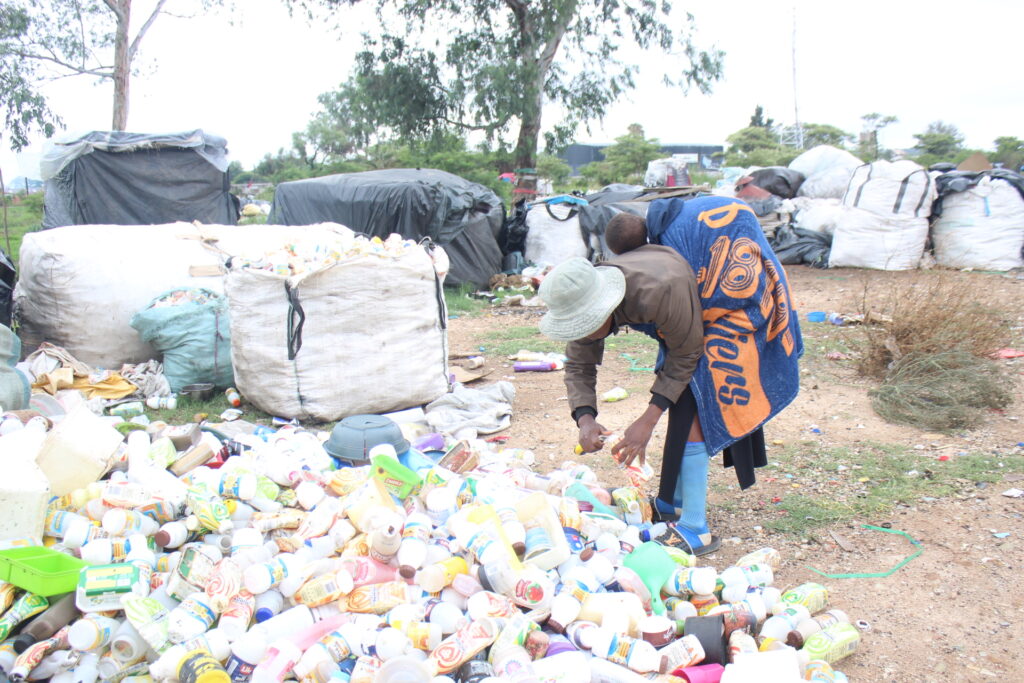
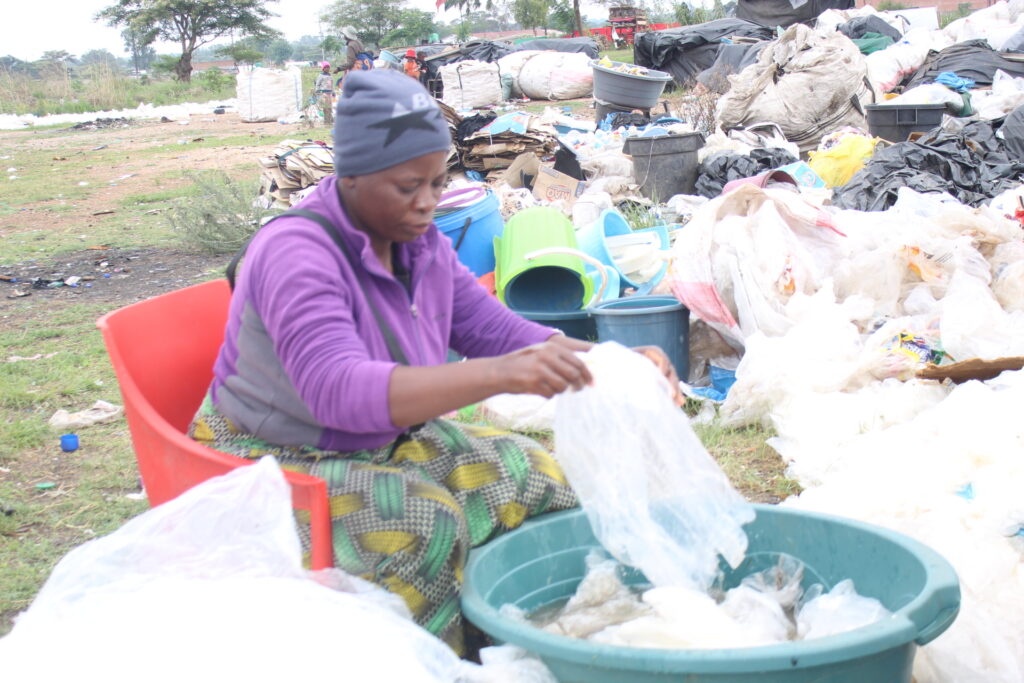
The process is slow. Bottles must be emptied, flattened and sometimes cleaned. Plastic bags and sachets are harder to collect because they are light, dirty and easily scattered by the wind.
“Bottles are easier because you can see them and put them in a sack,” Juma said. “But sachets and thin plastics are everywhere. They get into the drains and soil. They are difficult to collect because they are dirty and they do not always bring much money.”
Taruvinga said reliable buyers are essential. When buyers do not come, or when they lower their prices, the women are left with piles of plastic and no immediate income.
“We need people who buy regularly and who give us fair prices,” she said. “Sometimes you can collect for many days, but you cannot sell quickly. Then the plastic takes up space and you still need money for food.”
The women said they would benefit from a proper buy-back centre where collectors could sell sorted plastics at transparent prices.
“If there was a place where we could take our plastic and know the prices, it would help,” Juma said. “We would not be moving around looking for buyers. We would know that if we collect and sort well, we can sell.”
Work people do not see

Waste pickers are often treated as though they are part of the problem, Juma said, rather than people doing a service for the city.
“People see us picking plastic and think it is dirty work,” she said. “Some laugh at us. Some do not want us near their shops. But they do not see the difference we make.”
That difference is especially visible during the rainy season.
“When drains are blocked, the water cannot move,” Taruvinga said. “Then it floods in the streets and around the market. Bottles, plastics and bags are part of what blocks the drains. If we collect them before the rain comes, the water can pass.”
Plastic pollution contributes to blocked drainage channels, standing water and unsanitary conditions in urban areas. When waste is burnt in the open, it also releases smoke and pollutants that can affect people living and working nearby.
Gweru City Council spokesperson Vimbai Chingwaramusee said informal plastic collectors are playing an important role in reducing litter and pollution.
“We really appreciate the street plastic collectors,” Chingwaramusee said. “They are vital partners in our campaign against litter and we recognize their significant contribution.”
She said their work helps reduce the amount of recyclable waste left in public places and dumpsites.
“They are on the front line of our waste-management efforts,” she said. “By collecting recyclable plastics from dumpsites and public spaces, they directly reduce litter and pollution, which helps prevent blocked drainage and lowers the risk of diseases like cholera.”
The council is pursuing enforcement and public education alongside efforts to improve collection services, Chingwaramusee said. This includes a US$30 spot fine for littering and plans to increase waste-management equipment, including refuse compactors and skip bins.
Businesses are also expected to provide approved bins under city by-laws, while the council’s “Catch Them Young” campaign teaches children about responsible waste disposal.
“We view waste as a resource,” Chingwaramusee said. “Our Integrated Solid Waste Management Plan for 2026 to 2030 aims to transform Gweru into a circular economy. Street plastic collectors are essential to achieving this vision.”
Climate work without the language
Taruvinga and Juma do not describe themselves as climate workers. Their focus is making enough money to meet daily household needs.
But their work has climate benefits.
Plastic that is collected and recycled does not end up in drains, open fires or unmanaged dumpsites. Separating recyclable plastics also reduces the need for new raw materials to be used in manufacturing.
Waste management is also linked to methane emissions. At open dumpsites and poorly managed landfills, rotting food and garden waste release methane, a powerful greenhouse gas. Separating organic waste for composting, while recovering plastics and other recyclables, can reduce the amount of waste sent to disposal sites.
For Taruvinga, however, the issue is simpler.
“We are trying to keep the place clean while also finding money,” she said. “When we collect the plastic, the market looks better. The drains are not carrying as much rubbish. And we can sell it.”
Zimbabwe generates an estimated 1.65 million tonnes of waste annually, with plastics accounting for roughly 18 percent, according to figures cited by the Environmental Management Agency. Community recycling groups have become increasingly important as municipalities struggle to collect all waste generated in growing urban areas.
Across the country, recycling has become an income source for many unemployed people, particularly women and young people. Community recycling groups reportedly grew from 50 in 2019 to 200 by 2023, while the number of plastic recycling companies rose from 49 to 71 over the same period.
But Taruvinga said recycling can only work properly if waste pickers are supported.
“We need gloves, boots and proper places to work,” she said. “Sometimes we pick things with our hands because we do not have enough protection. There can be broken glass, dirty water and dangerous things in the rubbish.”
Juma agreed.
“We also need places to sort,” she said. “If we sort in the open, the wind blows the plastics away again. When it rains, everything gets wet. We need a covered place where we can work safely.”
More than a monthly clean-up
Zimbabwe’s National Clean-Up Programme, launched in 2018, encourages citizens, businesses, schools, churches and government institutions to clean their surroundings on the first Friday of every month.
But Taruvinga said the work of keeping public spaces clean cannot end after a two-hour clean-up campaign.
“People can clean today, but tomorrow they throw rubbish again,” she said. “The problem will not end if people do not change how they dispose of waste.”
The women said residents and businesses should separate recyclable materials instead of mixing them with food waste and other rubbish.
“If people put bottles on one side and food waste on another side, it would make our work easier,” Juma said. “Then more plastic can be collected and sold instead of being dumped or burnt.”
For Gweru, a stronger waste system could include covered sorting centres, buy-back facilities, protective equipment for collectors, predictable prices from recycling companies and separate bins for organic and recyclable waste.
Organic waste from markets could also be composted and used by urban farmers and gardeners instead of being taken to dumpsites, where it can release methane as it decomposes.
The UN Framework Convention on Climate Change says circular-economy approaches — including reducing waste, reusing products and recovering materials — are important for meeting climate targets because they reduce resource use and greenhouse-gas emissions across the economy.
Recognition, not pity
For now, Taruvinga and Juma will continue walking through Gweru’s streets with their sacks.
They know the work is hard. They know it is poorly paid and often unsafe. But they also know that every bottle they recover is one less bottle in a drain, one less piece of plastic burned in the open and one more item that can earn money.
“A clean city is not only the council’s job,” Juma said. “It is everyone’s job. But those of us collecting plastic should also be supported because we are helping Gweru every day.”
Taruvinga wants people to see waste differently.
“People should stop throwing rubbish anywhere,” she said. “If they separate it and put it in the right place, it can be collected and used again. What they call rubbish can help someone make a living.”