By Gabriel Manyati
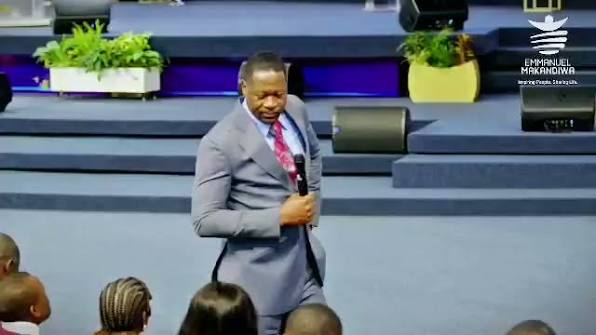
On Sunday, 9 August 2026, Prophet Emmanuel Makandiwa stood before his United Family International Church congregation and presented a US$1 million gift from businessman Wicknell Chivayo. The money was for church construction. The announcement produced cheers. A preacher was displaying a million dollars, publicly received from one of the most flamboyant and contested private citizens in the country.
This was the same Makandiwa who, only weeks earlier, had refused.
In June, Chivayo disclosed that the prophet and his wife had declined an undisclosed gift and instead offered to invite him home for prayer so that he might receive more blessings to bless others. Chivayo’s reply was blunt: he did not need the prayers. The refusal stood. Then, in late July, Makandiwa reversed course.
Speaking to his congregation, he said the gifts were still available and that he expected delivery. “I’m the one who had not collected. We will receive them, pray for you and bless you.” He insisted the original refusal had been a matter of principle, not a reaction to the criticism that trails Chivayo. He told the businessman at the time that he had seen how many people Chivayo had been giving to.
Principle, not public pressure.
What happened to that principle between June and August?
Makandiwa’s explanation should be taken at face value. He did not call the money dirty. He did not accuse the giver of impropriety. He framed the first decision as principled distance and the second as a legitimate acceptance once that distance had been noted. Yet the sequence is damning in its clarity. A principle strong enough to produce a public refusal proved elastic enough to collapse once the spectacle of refusal had been performed. The original no gave Makandiwa something vanishingly rare in Zimbabwe’s current culture of conspicuous gifting: moral distance. The yes sold it.
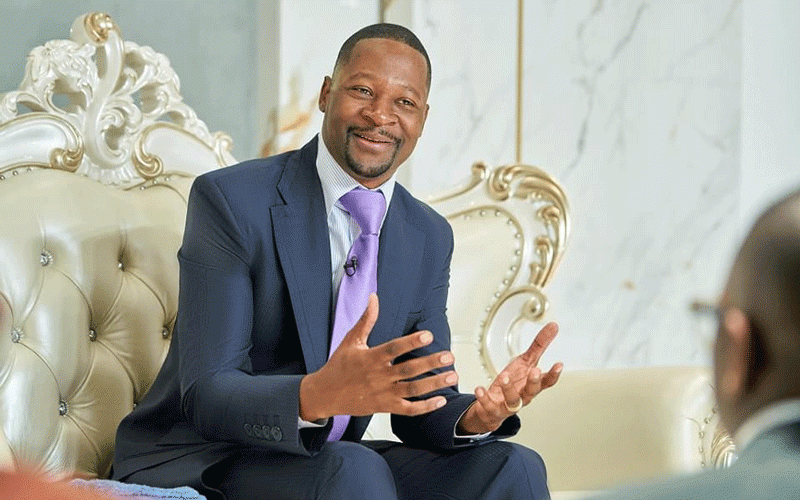
Chivayo’s million does not exist in isolation. For more than two years he has turned public extravagance into a national theatre. Land Cruisers for party structures. Fortuners for legislators and musicians. A Maybach here, a Rolls-Royce Cullinan there. Cash in six- and seven-figure amounts. Buses for football clubs and apostolic groups. Jah Prayzah and his circle have been serial recipients. Broadcasters, sports figures and religious personalities have been drawn into a visible network of beneficiaries.
The gifts arrive with photographs, valuations and declarations of joy. The performance is the point. A man who can publicly hand out vehicles worth hundreds of thousands of dollars and cheques measured in millions is not simply generous. He is accumulating a form of social power that Zimbabwe has not yet found a clean name for.
Apostle Eunor Guti refused the same kind of offer. Chivayo placed a luxury vehicle and a substantial cash package in front of her. She declined. She told her congregation there was no mind or will of God in it. She would not take the money even for church projects. She was following the example of her late husband, Archbishop Ezekiel Guti, who had never walked that path. The refusal was quiet, institutional and final. It cost her nothing in public prestige because prestige was not the currency she was trading in.
Nqobile Magwizi, president of the Zimbabwe Football Association, faced a different pressure. Chivayo offered a 2026 Range Rover Sport valued at roughly US$250 000. Magwizi declined on the grounds of the FIFA Code of Ethics and the obvious conflict of interest. Chivayo sponsors clubs that fall under ZIFA’s regulatory authority. Accepting the vehicle would have compromised, or appeared to compromise, the independence the office requires. Rules existed. He chose to observe them.
A church leader, a football administrator and a prophet occupy different worlds. The question that confronts them is identical. What does an extraordinary gift do to the relationship between the man who gives and the man who receives? Legality is not propriety. The absence of a criminal charge is not the presence of public trust. A gift can be clean on paper and still rearrange the balance of obligation. Gratitude is not a contract, yet it is rarely neutral. Once a man has given you a million dollars, the conversation changes even if no favour is ever requested.
In a country where most citizens confront wages that do not stretch, electricity that fails, hospitals that struggle and schools that lack the basics, a million dollars is not an abstract number. It is the kind of sum that rearranges lives overnight. When such amounts move publicly from a single private source into the hands of those who already command attention, the spectacle becomes part of the country’s visual language of power. Private wealth begins to function as a parallel patronage system. Political patronage is familiar. This newer version operates through churches, football, music and celebrity. It is softer, more photogenic, and harder to name.
Chivayo is entitled to dispose of money that is lawfully his. Some recipients may regard the gestures as sincere. He has repeatedly described his giving as support for institutions, artists and the work of God. That framing deserves to be heard. Yet the scale, the publicity and the concentration of recipients who matter raise a sharper question than the crude allegation of dirty money. What kind of power does a man accumulate when he can publicly distribute cars and millions to people whose voices carry weight?
Makandiwa’s position is particularly exposed. A pastor claims moral and spiritual authority. That claim makes the acceptance of spectacular wealth from a contested benefactor unusually sensitive. There is an unresolved tension between preaching stewardship and integrity while standing before a congregation to display a million-dollar gift whose source remains the subject of intense public argument. The money may build a church. The acceptance builds a visible connection that cannot be wished away.
Makandiwa registered the problem first. That is what makes the reversal so revealing. Had he accepted from the beginning, the argument would be different. He first said no. He demonstrated that he understood why distance mattered. Then he changed his mind. The most interesting part of the story is not the million dollars now earmarked for construction. It is the principle he once believed was worth refusing it for.
In the church on Sunday the money was presented and the congregation cheered. The question left hanging is not only what the million will build in brick. It is what accepting it has already built between the giver (and possibly his handlers) and the receiver.