By a Correspondent
The European Union (EU) has stepped up humanitarian assistance to Zimbabwe in response to a growing influx of people returning from South Africa, warning that the increasing number of returnees is placing additional pressure on already vulnerable communities.
The EU has allocated US$345,000 in humanitarian funding to support the growing number of Zimbabwean returnees fleeing violence in South Africa while strengthening Zimbabwe’s response to a worsening cholera outbreak. The funding will provide life-saving assistance to thousands of people in urgent need.
The new support comes as Zimbabwe records a sharp rise in citizens returning from its southern neighbour following anti-immigration campaigns by militant vigilante groups and changes in South Africa’s immigration enforcement.
The funding is intended to meet the immediate humanitarian needs of returnees while strengthening protection services and support for host communities.
The EU is supporting the Zimbabwe Red Cross Society in assisting more than 5,000 vulnerable returnees from South Africa following violence and intimidation targeting foreign nationals. Between April and 28 July, almost 110,000 people crossed back into Zimbabwe, placing significant pressure on reception facilities at Beitbridge Border Post. Many returnees are spending nights at the reception centre while waiting for transport home, facing cold winter temperatures and limited shelter.
The EU support is intended to complement ongoing government-led efforts and those of humanitarian partners assisting returnees at Beitbridge, including the provision of transport services.
Announcing the intervention, the EU said the assistance would focus on protecting vulnerable migrants, improving access to essential services and helping communities absorb the growing number of returnees.
“The European Union is scaling up its humanitarian support to Zimbabwe to respond to the increased returns from South Africa,” the EU said.
It added that the funding would enable humanitarian partners to provide “life-saving assistance and protection services” to people arriving in Zimbabwe, many of whom return with limited resources and face uncertain livelihoods.
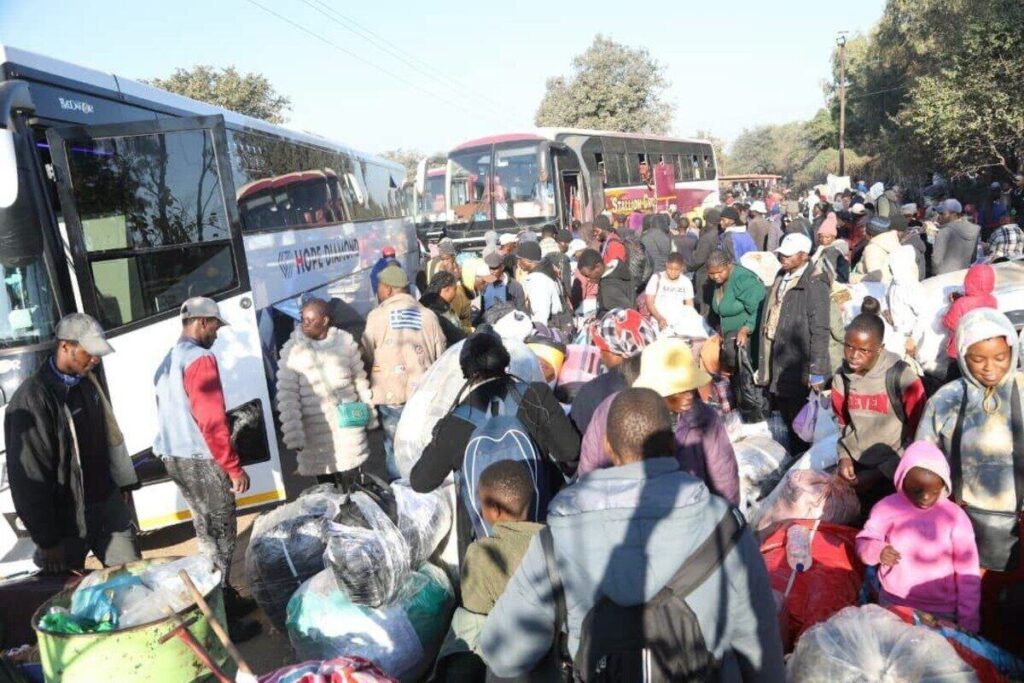
The EU said the programme would prioritise vulnerable groups, including women, children, older persons and people with disabilities, ensuring they receive emergency assistance, psychosocial support, protection services and help accessing basic services.
According to the bloc, the intervention will also strengthen coordination among humanitarian organisations and government agencies managing the return process while supporting communities receiving large numbers of returnees.
The latest assistance forms part of the EU’s broader humanitarian engagement in Zimbabwe, where it has supported responses to drought, food insecurity, disease outbreaks and other emergencies over several years. The bloc has repeatedly identified Zimbabwe as one of Southern Africa’s priority countries for humanitarian assistance because of recurring climate shocks and economic vulnerabilities.
The announcement comes amid growing concern over the humanitarian impact of increased deportations and voluntary returns from South Africa, which hosts the region’s largest Zimbabwean migrant population. Aid agencies have warned that many returnees struggle to reintegrate because of limited employment opportunities and strained public services.
The EU said its latest support is aimed at ensuring that returning Zimbabweans are received “in safety and dignity” while easing pressure on host communities.
As part of the cholera response, the funding will also support 88,200 people through preparedness and response measures, including training and deploying volunteers to strengthen community surveillance, early case detection and referral, hygiene promotion, household water treatment, rapid response interventions and community engagement in affected districts.
The cholera outbreak, first detected in Rushinga District, Mashonaland Central Province, in January 2026, has since spread to several districts in Manicaland and Midlands provinces. Cases have been reported in Nyanga, Mutasa, Mutare City, Chipinge, Chimanimani and Zvishavane, with mining communities and border areas emerging as major hotspots. Limited access to clean water, sanitation and hygiene services continues to increase the risk of further transmission.
The two operations will run for six months and will be implemented in coordination with the Government of Zimbabwe, the International Federation of Red Cross and Red Crescent Societies (IFRC), United Nations agencies, non-governmental organisations and other humanitarian partners.