By a Correspondent
The global diamond industry’s failure to anticipate the rise of laboratory-grown stones is emerging as a major economic warning for Zimbabwe, Botswana, South Africa and Angola, four countries whose mining economies have long depended on the value and demand for natural diamonds.
Anglo American chief executive Duncan Wanblad has acknowledged that the industry underestimated the threat posed by laboratory-grown diamonds, which have rapidly disrupted the traditional market for natural stones.
“Hindsight would probably show that we might have wanted to have been a little bit more aggressive on the signals we were getting” from competition posed by lab-grown diamonds, Wanblad is quoted by the Financial Times.
His admission is significant because it comes as Anglo American attempts to sell De Beers, the world’s best-known diamond company, after writing down its value three times in three years.
Wanblad said the industry had also been too optimistic about the speed of market recovery.
“Mostly diamond markets, when they go through dips, recover very rapidly … And I think that there was a full expectation that might be the case here,” he said.
The consequences of that miscalculation are now being felt across the diamond industry. Rough diamond prices fell 32% to $105 per carat in the first half of 2026, while De Beers recorded a $113 million cash loss. The company has also announced a two-year pause in production at its Venetia mine in South Africa.
Wanblad acknowledged that the natural diamond industry had underestimated the impact of lab-grown stones, adding that around a fifth of current natural diamond supply was “on its way out over the next 12 months or so” and that “not many” operations would return to production.
For Southern Africa, those comments should be treated as a serious economic warning.
Botswana: the biggest potential casualty
Botswana faces perhaps the greatest exposure to the structural changes taking place in the diamond industry.
Diamonds have been the backbone of the country’s economy for decades, helping transform Botswana from one of the world’s poorest countries at independence in September 1966 into one of Africa’s most stable and prosperous economies.
Botswana remains heavily dependent on diamond revenues, with the government maintaining a direct interest in the sector through its partnership with De Beers. The vulnerability of natural diamonds threatens not only mining companies but also government revenues, exports, foreign-exchange earnings and public spending.
Wanblad’s warning that a significant portion of global natural-diamond supply could disappear within the next year points to a potentially painful adjustment for Botswana.
The industry’s traditional response to weak prices has been to wait for demand to recover. But the emergence of lab-grown diamonds raises a more difficult question: what if the current downturn is not simply cyclical?
“Looking in the rear-view mirror is a much more perfect science than trying to do it in real life,” Wanblad said, acknowledging the difficulty of predicting how quickly the market would change.
The country urgently needs to accelerate diversification into tourism, financial services, agriculture, renewable energy and other industries capable of generating foreign exchange.
The threat is not that diamonds will suddenly become worthless. It is that they may no longer generate enough wealth to support the economic model Botswana has built around them.
Angola: expansion could become a liability
Angola is pursuing an ambitious strategy to increase diamond production and attract investment into the sector as part of its efforts to diversify away from oil.
But the global diamond disruption creates a potential contradiction.
The country could be investing heavily in expanding production at precisely the moment when the market is becoming less favourable to natural diamonds.
If demand remains weak and prices continue to fall, increasing output will not necessarily translate into greater economic benefits. In fact, greater supply entering a weak market could exacerbate price pressures.
Analysts in Luanda say rather than relying primarily on exporting rough diamonds, Angola needs to expand cutting and polishing, jewellery manufacturing and related services. The objective should be to create jobs and retain a greater share of diamond wealth inside the country.
Otherwise, Angola risks replacing one form of commodity dependence with another.
Zimbabwe: a warning from Marange
Zimbabwe’s diamond industry provides perhaps the clearest example of the danger of relying on mineral wealth without building strong institutions around it.
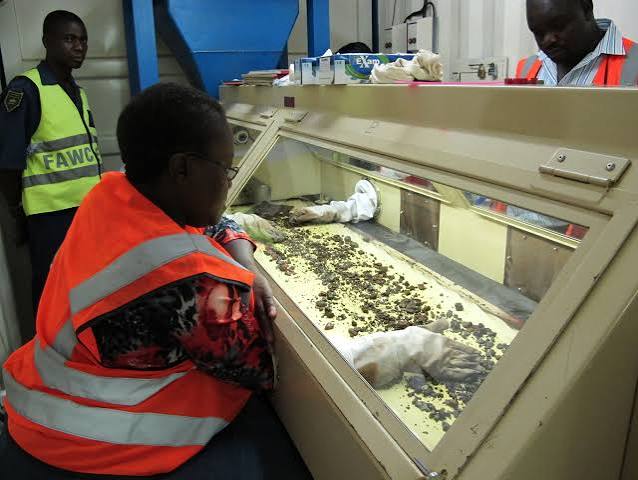
The Marange diamond fields generated enormous expectations that the country could use its mineral wealth to transform the economy. Instead, the sector became embroiled in controversies over governance, transparency, revenue management and allegations of corruption.
The rise of lab-grown diamonds now adds another layer of uncertainty.
If natural diamond prices remain under pressure, Zimbabwe could find that its diamond resources generate far less economic value than previously anticipated.
The country also faces the risk of becoming less attractive to international investors if mining companies increasingly focus their capital on the world’s most competitive and lowest-cost deposits.
The country needs to ensure that diamond revenues are transparently managed and channelled into productive investment, while developing the infrastructure and skills required to capture more value from the diamond supply chain.
The alternative is a familiar African resource curse — valuable minerals being extracted while the wider economy remains weak and vulnerable.
South Africa: the warning is already visible
South Africa is less dependent on diamonds than Botswana or Angola, but the crisis is already having tangible consequences.
De Beers’ decision to pause production at the Venetia mine for two years demonstrates how quickly a weaker diamond market can affect investment and employment.
The consequences will extend beyond the mine itself.
Mining operations support contractors, transport companies, engineering firms, retailers and communities. A prolonged production halt can therefore create a multiplier effect across local economies.
South Africa also faces the possibility of losing investment in a sector that has played a historic role in the country’s mining economy.
Yet the country has an advantage its neighbours do not necessarily share: a more diversified economy and a deeper industrial base.
The challenge for Pretoria is to ensure that communities affected by the decline of diamond mining are not left behind.