By Mbekezeli Ncube
The 2027 National Budget has come under criticism from the Progressive Teachers Union of Zimbabwe (PTUZ), which says its spending priorities, taxation measures and limited relief for workers, risk worsening the economic hardships facing ordinary Zimbabweans.
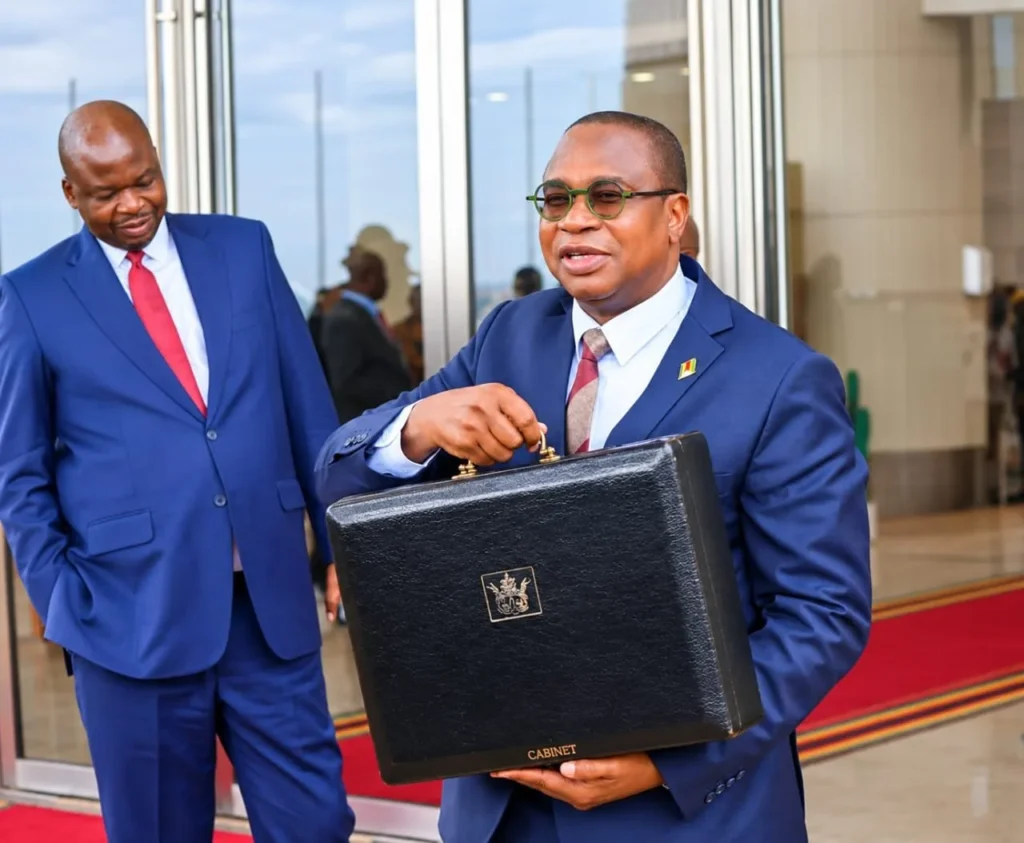
PTUZ president Dr Takavafira Zhou described the budget presented by Finance Minister Professor Mthuli Ncube last Thursday as “an austerity prescription that treats the disease by killing the patient”, arguing that allocations to essential public services remain inadequate despite the country’s pressing social and economic challenges.
Presented under the theme “Accelerating Economic Transformation and Building Resilience to Climate and Global Shocks”, the ZiG358.3 billion (US$12.8 billion) budget is anchored in the National Development Strategy 2 (NDS2), covering the 2026–2030 period, with Government targeting economic transformation, infrastructure development, agricultural productivity and private sector-led growth.
Treasury projects economic growth of 3.5 percent in 2027, down from the earlier five percent forecast, amid anticipated drought risks associated with El Niño conditions and pressure from global commodity prices.
The budget provides for ZiG284.7 billion in recurrent expenditure and ZiG73.6 billion in capital spending, against projected revenues of ZiG349.5 billion, leaving a targeted fiscal deficit of ZiG8.8 billion, equivalent to 0.5 percent of GDP.
However, Zhou questioned whether the spending priorities adequately address the country’s social sector needs.
The Ministry of Primary and Secondary Education received ZiG47.7 billion, representing 13.3 percent of total expenditure, while Health received ZiG35.5 billion, accounting for 9.9 percent. Agriculture was allocated ZiG27.6 billion, representing 7.7 percent.
He said the allocations fell short of the 20 percent education funding benchmark under the Dakar Framework, the 15 percent health target under the Abuja Declaration and the 10 percent agricultural funding commitment under the Maputo Declaration.
“Global best practice allocates Primary and Secondary Education at six percent of GDP, yet our allocation for 2027 is as little as three percent,” Zhou said.
He was equally concerned about the implementation of approved budgets, saying actual disbursements to the education sector had historically hovered just above 50 percent.
Zhou said inadequate funding would further compromise service delivery while leaving teachers struggling with poor remuneration and rising living costs.
On workers’ welfare, he said civil servants had not received a salary increase beyond a US$20 adjustment in 2024, arguing that the latest budget offered little prospect of meaningful improvement in their earnings.
He said teachers were demanding a basic salary of US$540, supported by rural and hardship allowances, housing, transport and education benefits, among other employment-related allowances.
“The US$150 tax-free threshold is an insult to teachers who anticipated a tax-free threshold of up to US$400,” he said.
Zhou also questioned what he described as an unequal tax burden between employees and major economic players, particularly in the mining sector.
“While important players such as miners who reap much from our natural resources pay as little as five percent, workers are saddled with high taxes of up to 45 percent,” Zhou said.
He argued that the combination of income tax and other levies was eroding workers’ disposable incomes at a time when households were already struggling to meet basic needs.
The PTUZ president also warned that the budget’s tougher tax compliance measures could place additional pressure on small and medium enterprises (SMEs), potentially discouraging formal business operations.
He said measures such as Value Added Tax (VAT) surcharges, property caveats and stricter border valuations risked increasing the cost of doing business for already struggling enterprises.
Zhou further questioned the potential implications of planned investments in power generation, renewable energy and transmission infrastructure, warning that the costs could eventually be passed on to consumers through higher electricity tariffs.
He said the cumulative effect of inadequate public funding, heavy taxation and limited improvements in workers’ earnings could have wider consequences for industrial relations and economic productivity.
“Cumulatively, it is callous and will promote industrial disharmony and limited productivity,” Zhou said.