By Tichaona Katsvamutima
Former Norton legislator and businessman Temba Mliswa has come under criticism from political commentator Rutendo Matinyarare over his involvement in a Zimbabwean business mission to Iran, with Matinyarare warning that Mliswa’s perceived political connections could expose President Emmerson Mnangagwa’s administration to diplomatic and national security complications.
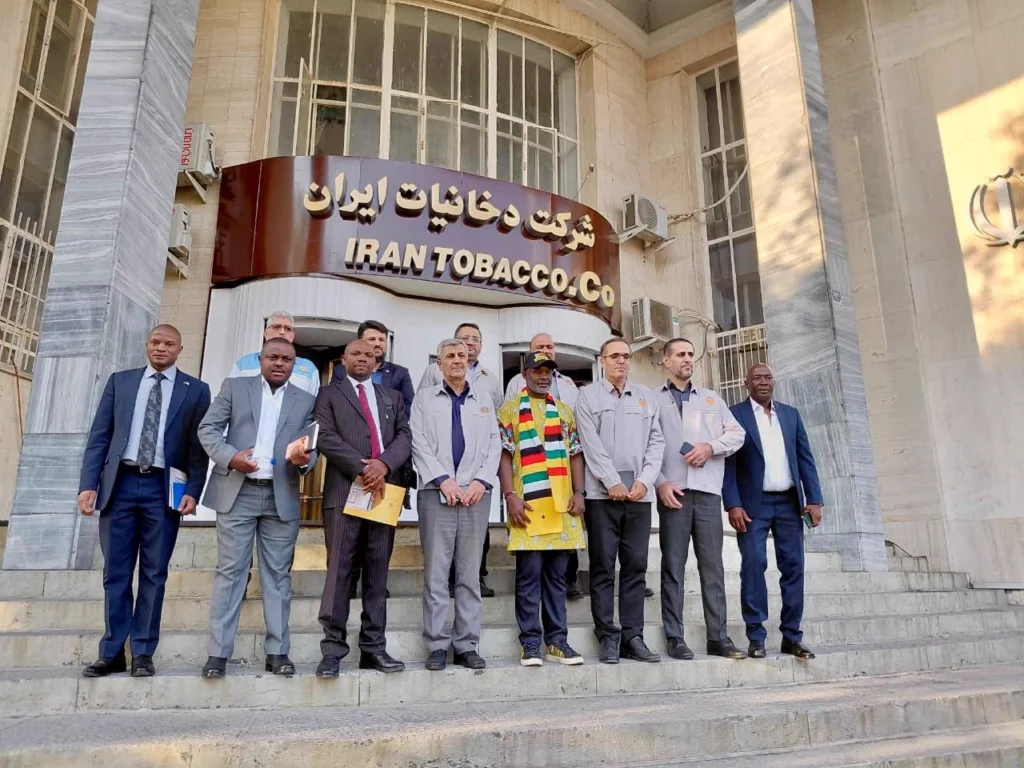
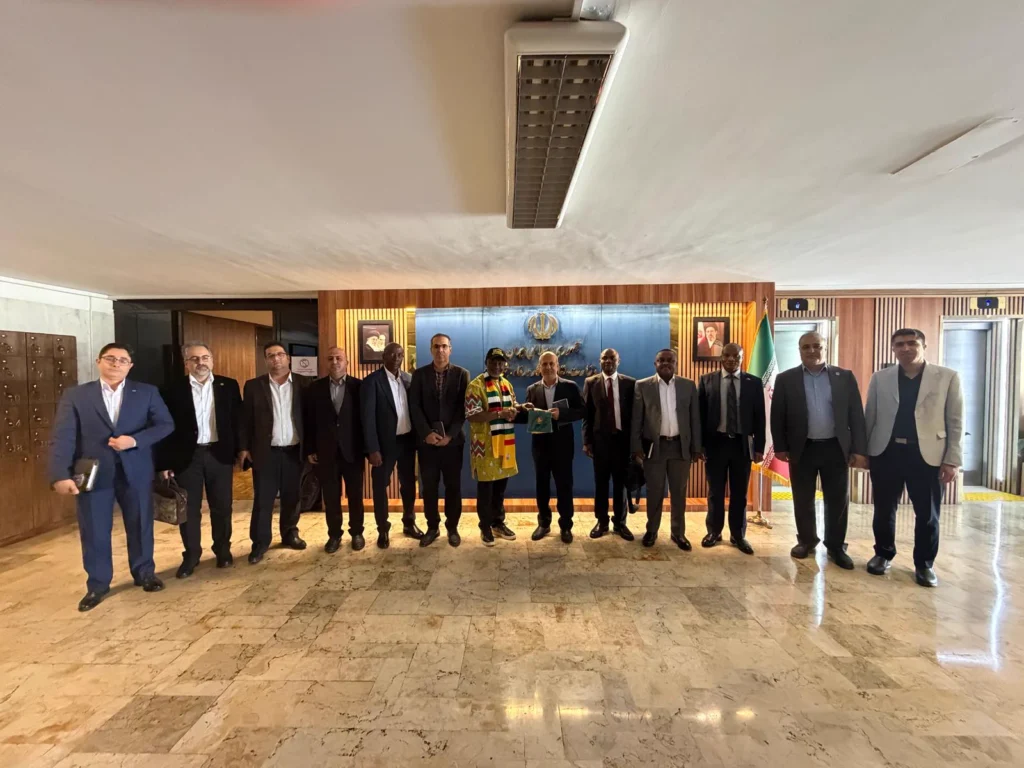
Mliswa, who is leading a business delegation attending the Zimbabwe-Iran Business Forum, has defended his participation as part of ongoing efforts to strengthen economic cooperation between Harare and Tehran, particularly in agriculture and technology.
Matinyarare, however, has questioned the political implications of Mliswa’s involvement, citing his alleged proximity to Mnangagwa and Economic Development and Investment Promotion Minister Kudakwashe Tagwirei. He argues that Washington and Tel Aviv could interpret Mliswa’s participation as politically significant, potentially complicating Zimbabwe’s diplomatic relations with the two powers.
This has brought into focus the intersection of business diplomacy, political associations and Zimbabwe’s foreign policy interests at a time of heightened geopolitical tensions.
In a statement posted on X, Mliswa confirmed that he was leading the delegation to the business forum.
“We continue working for the country building on the bilateral agreements with Iran focusing on technology and agriculture despite the war,” he said.
Mliswa argued that Zimbabwe and Iran should use their shared experiences of Western economic restrictions to establish mutually beneficial trading relationships.
“Zimbabwe and Iran are two of the most sanctioned traders on earth but that should not be a weakness but a shared business model,” he wrote.
“Both countries have survived years of Western financial isolation and Iran has come up with a blueprint to survive.”
He identified agricultural machinery, irrigation equipment, mining technology, fertilisers, pharmaceuticals and medical equipment among products Zimbabwe could source from Iran.
In return, he suggested that Zimbabwe could export tobacco, chrome, lithium concentrate and gold.
“What Zimbabwe needs, Iran makes. Cheap tractors, irrigation pumps, small-scale mining equipment, fertilizer, chemicals, pesticides, generic pharmaceuticals and medical equipment,” Mliswa said.
The business mission builds on longstanding bilateral cooperation that expanded following the late Iranian President Ebrahim Raisi’s state visit to Zimbabwe in July 2023.
During the visit, Zimbabwe and Iran signed cooperation agreements covering agriculture, energy, pharmaceuticals, science and technology, among other sectors.
According to Mliswa, the two countries concluded between 12 and 17 memoranda of understanding during 2023 and 2024 under their Joint Permanent Commission on Cooperation, with ambitions to increase annual bilateral trade from approximately US$30 million to US$500 million.
Among the initiatives outlined is a proposed partnership between an Iranian tractor manufacturer and Zimbabwean company MAKA Holdings to establish a tractor manufacturing facility in Zimbabwe.
Cooperation in healthcare has also included arrangements involving the National Pharmaceutical Company, NatPharm, and Iranian pharmaceutical firms, with plans for local medicine production. Zimbabwe received its first consignment of Iranian medicines in 2024.
Other initiatives include fertiliser production, energy development, space technology and tobacco processing for the Iranian market.
The two countries have also pursued trade promotion arrangements involving ZimTrade and Iran’s Trade Promotion Organisation, alongside plans announced in December 2025 to establish a Zimbabwe-Iran Business Council.
Implementation of the bilateral agreements was reviewed during the ninth mid-term review of the Joint Permanent Commission on Cooperation in Tehran on December 10, 2025, following a trade and investment conference held in Harare earlier that year.
However, the extent to which these agreements have translated into operational investments and increased trade remains unclear.
Matinyarare’s criticism centres on the possible diplomatic consequences of Mliswa’s participation rather than the existence of Zimbabwe’s longstanding bilateral relationship with Iran.
In a strongly worded X statement titled “Temba Mliswa’s Iran Trip Puts Second Republic and 2030 at Risk,” Matinyarare argued that Mliswa’s perceived association with influential figures in Zimbabwe’s political establishment could lead Washington and Tel Aviv to interpret the visit as having broader political significance.
“The reason why this trip is ill-conceived and could destroy relations between Zimbabwe, the U.S., and Israel is that Temba Mliswa is seen as a relative of the President Mnangagwa and an ally of Kuda Tagwirei,” Matinyarare wrote.
He suggested that the United States could view the mission through the lens of its strategic interests in Zimbabwe, particularly access to critical minerals.
Matinyarare alleged that Washington has sought access to uranium deposits in Kanyemba and other strategic resources but has not secured favourable terms from the Mnangagwa administration.
He further warned that Mliswa’s involvement could raise suspicions about possible commercial arrangements involving strategic minerals, including uranium.
Matinyarare also linked his concerns to Zimbabwe’s domestic political developments, particularly the campaign to extend Mnangagwa’s presidency to 2030.
He portrayed Mliswa as politically associated with Tagwirei, whose growing influence within ZANU-PF has attracted attention following his appointment to the economic development portfolio.
Matinyarare alleged that Tagwirei maintains informal decision-making structures outside established government channels and suggested that the mission could be interpreted internationally as an initiative associated with political interests supporting the 2030 agenda.
Those claims remain allegations, and no evidence has been presented establishing that Tagwirei organised, financed or authorised Mliswa’s participation.
“This trip is ill-conceived, badly timed and looks like a direct poke in the eye of U.S. and Israel, putting to nought the Second Republic’s mantra ‘an enemy to none and a friend to all’,” Matinyarare wrote.
He went further, warning that the perceived political implications could affect how Washington and Tel Aviv view Zimbabwe’s leadership.
“This move by the pro-2030 faction was suicidal and could just be the fatal blow to 2030,” he declared.
His remarks highlight how commercial engagements involving politically connected individuals can become entangled in Zimbabwe’s domestic political debates, although there is no established evidence that the business delegation represents any particular ZANU-PF faction.
The controversy also comes amid uncertainty surrounding American trade restrictions targeting countries maintaining commercial relations with Iran.
Matinyarare, meanwhile, cited the United States’ International Emergency Economic Powers Act, arguing that Washington could take action against countries or entities accused of assisting Iran in activities considered threatening to American national security.
However, the legislation does not automatically prohibit all commercial transactions between Iran and third countries. The legal consequences depend on the nature of the transactions, the parties involved and applicable sanctions regulations.
The precise scope and implementation of the reported 25% tariff measure also require verification before its potential implications for Zimbabwe can be established.
For Zimbabwe, the economic stakes are considerable.
Iran offers potential opportunities in agricultural mechanisation, pharmaceuticals, manufacturing and industrial technology, while Zimbabwe possesses agricultural products and mineral resources that could support expanded bilateral trade.
Mliswa argues that cooperation with countries outside traditional Western financial structures could provide practical alternatives for Zimbabwean businesses.
“For a 76% informal economy like Zimbabwe, Eastern and South-South trade – Iran, China, UAE – is structurally easier,” he wrote.
However, the economic benefits of such partnerships would depend on the successful implementation of existing agreements, access to reliable payment systems and compliance with international trade regulations.
The controversy also raises questions about the distinction between private-sector business engagement and official government diplomacy.
Although Mliswa has confirmed that he is leading the delegation, the identities of participating businesses, the mission’s financing arrangements and the extent of any formal government involvement have not been established in the statements.
Clarification on these matters would help determine whether the visit is primarily a private-sector initiative operating within existing bilateral agreements or forms part of a wider government-coordinated trade programme.
For Matinyarare, the central concern remains Mliswa’s perceived political associations and how foreign governments might interpret his presence in Iran.
For Mliswa, the mission represents an opportunity to advance economic cooperation and implement agreements already negotiated between Harare and Tehran.
The controversy therefore reflects two competing interpretations of the same engagement: one focused on expanding Zimbabwe’s commercial opportunities and the other on the possible diplomatic consequences of politically connected individuals participating in trade initiatives involving sanctioned countries.