By Gabriel Manyati
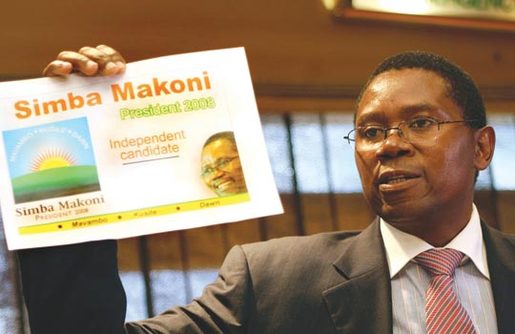
The Man Who Looked Like A President
On 5 February 2008, Simba Makoni walked into the centre of Zimbabwe’s political storm with a proposition that seemed, on paper, almost irresistible. Robert Mugabe’s government had presided over an economic catastrophe. Millions of Zimbabweans had left the country in search of livelihoods. Shops struggled to keep basic commodities on their shelves, the national currency was disintegrating, and the political establishment was confronting the consequences of a succession question it could no longer indefinitely postpone.
Makoni was no ordinary challenger emerging from the opposition ranks. He had served in Mugabe’s cabinet, represented Zimbabwe in regional affairs, managed a major media organisation and occupied one of the most important economic portfolios in government. He possessed the academic credentials, international experience and familiarity with the machinery of the state that many people associated with presidential leadership.
More intriguingly, he was connected by marriage to one of the most influential political families in Zimbabwe. His father-in-law, retired army commander Solomon Mujuru, was a liberation-war hero and a formidable ZANU PF kingmaker whose influence extended well beyond his formal position in the party.
The ingredients appeared to be in place for something potentially consequential: a disgruntled former minister with an alternative economic vision, a ruling party facing internal tensions, powerful political connections and a population desperate for change.
Yet Makoni’s presidential project would fail to become the force its supporters anticipated.
He would win 207 470 votes, approximately 8.3 percent of the presidential ballot, while Morgan Tsvangirai and Mugabe emerged as the principal contenders in an election that plunged Zimbabwe into an even more dangerous political confrontation.
The question is not simply why Makoni lost. It is why a man who seemed to possess so many of the prerequisites for national leadership proved unable to translate his reputation and connections into a formidable political movement.
The answer lies partly in Makoni’s own strategic miscalculations, partly in the nature of ZANU PF’s political machinery, and partly in the difference between being regarded as presidential material by influential people and commanding enough political power to become president.
The Liberation Technocrat
Born in Rusape in 1950, Makoni developed a professional profile that distinguished him from many of his contemporaries in the liberation-era political establishment. He pursued advanced studies in chemistry in Britain, obtaining a doctorate, and entered government following independence in 1980.
At just 30, he became Deputy Minister of Agriculture. He subsequently held senior ministerial responsibilities, including the energy and industrial development portfolios, before becoming executive secretary of the Southern African Development Coordination Conference, the predecessor of the Southern African Development Community.
His tenure in regional leadership, from 1984 to 1993, gave him considerable diplomatic exposure. He also occupied senior positions in business, including a stint at Zimbabwe Newspapers. These experiences reinforced his reputation as an administrator who understood international institutions, economic management and the demands of modern government.
Makoni was not a political novice who had suddenly discovered an appetite for the presidency. He had spent years inside the system, learning its personalities, procedures and internal hierarchies.
That distinction would become central to his later predicament.
When Mugabe appointed him Minister of Finance and Economic Development in July 2000, Zimbabwe was already experiencing severe economic dislocation. The consequences of the Democratic Republic of Congo military intervention, mounting fiscal pressures, deteriorating investor confidence and the government’s increasingly interventionist economic policies were becoming impossible to conceal.
Makoni’s understanding of economic management brought him into conflict with Mugabe’s political instincts. His objections to policies that ignored economic fundamentals, including exchange-rate distortions and price controls, placed him on a collision course with a president who regarded political authority as sufficient justification for economic direction.
In August 2002, Makoni was dismissed.
The episode was important for two reasons. First, it reinforced his reputation as a minister prepared to challenge policies he considered economically unsustainable. Second, it removed him from the executive at a time when Zimbabwe’s crisis was deepening, allowing him to develop a public identity distinct from the government’s daily failures.
But there was a contradiction at the heart of his emerging image as an alternative president. Makoni could criticise Mugabe’s economic decisions, yet he could not easily separate himself from the political system in which he had built his career.
He had not spent decades organising an opposition movement against ZANU PF. He had risen through ZANU PF itself.
His credentials were therefore both his greatest asset and his most difficult political liability.
Solomon Mujuru And The Promise Of An Inside Challenge
To understand the expectations surrounding Makoni’s 2008 candidacy, one must understand the political significance of Solomon Mujuru.
A commander during the liberation war, Mujuru emerged after independence as one of the figures whose influence within ZANU PF could not be measured simply by official titles. His military pedigree, personal networks and relationships across the party gave him a standing that made him central to discussions about the succession to Mugabe.
By the 2000s, the question of who would eventually succeed the ageing president had become an increasingly consequential source of tension. Emmerson Mnangagwa was among the prominent figures associated with succession ambitions, while Joice Mujuru’s elevation to the vice-presidency in 2004 strengthened the political position of the Mujuru family and its allies.
Makoni’s marriage to Chipo Makoni placed him within that family network. It was inevitable that his presidential ambitions would be interpreted through the politics of succession.
Could he become the acceptable alternative around whom disaffected ZANU PF figures might unite? Could influential insiders help engineer a transition without surrendering the advantages of their existing political networks? Might Mugabe’s opponents within the ruling party finally find a candidate with sufficient stature to challenge him?
These questions fuelled the intrigue surrounding Makoni’s announcement.
However, the distinction between political speculation and an operational coalition matters. Solomon Mujuru’s influence was real, but influence did not automatically mean that he had committed his political resources to Makoni’s presidential campaign or could deliver a decisive bloc of supporters.
The family connection made the candidacy more intriguing. It did not, by itself, establish the existence of a fully formed palace coup.
That uncertainty was precisely the problem.
Makoni entered the presidential contest carrying the expectations of an establishment split that never materialised on the scale his candidacy needed. His political prospects appeared to depend partly on powerful people who might have been dissatisfied with Mugabe but were not necessarily prepared to risk their positions, networks and security by openly breaking with him.
In a party where loyalty could determine access to office, wealth and political protection, dissatisfaction was not the same as defection.
Mujuru’s predicament illustrated the difficulty. He was a kingmaker operating inside a political system whose leadership he might wish to influence, but from which he and his allies also derived considerable power. An open break with Mugabe would have required more than private disagreements or succession calculations. It would have demanded a willingness to accept the consequences of losing.
Makoni needed the establishment to move. He could not make it move simply by announcing his candidacy.
The Presidential Candidate Without A Political Machine
Makoni launched Mavambo/Kusile/Dawn with the promise of getting Zimbabwe working again. The message was direct, practical and suited to a country exhausted by economic collapse.
He offered a different political temperament from Mugabe’s. His background suggested competence rather than revolutionary rhetoric, economic reconstruction rather than ideological confrontation, and international engagement rather than prolonged estrangement.
For professionals, businesspeople and voters searching for an alternative to the two dominant political camps, this was an attractive proposition.
But a presidential campaign is not merely an argument about who would make the better head of state. It is an organisation competing to acquire and exercise power.
Makoni’s greatest weakness was that the political capital surrounding his name did not become a sufficiently broad electoral structure.
Mavambo lacked the nationwide presence of ZANU PF and the established opposition. Its inability to field a full slate of parliamentary and local government candidates meant that the presidential campaign was not supported by a comprehensive network of candidates who could mobilise communities, develop local loyalties and build a durable political identity.
This was more than an administrative shortcoming. Parliamentary candidates give a presidential movement people who can speak to local concerns, recruit supporters, organise meetings and remain active between elections. They also help establish whether a movement exists beyond its leader’s public profile.
Without that infrastructure, Makoni’s project depended heavily on his personal standing and the expectation that disaffected political figures would bring their supporters with them.
That was a risky calculation.
Zimbabwean politics in 2008 was not an open contest in which an impressive résumé could substitute for years of constituency organisation. ZANU PF possessed the advantages of incumbency, established rural networks and access to the state. The MDC, despite the pressures it faced, had spent years building an opposition constituency and mobilising voters around a clear demand for political change.
Makoni had a recognisable name and an appealing message. He did not have an equivalent nationwide machine.
His candidacy exposed a familiar weakness in political class projects: the assumption that people who know influential figures will necessarily follow those figures into a new political movement.
Voters do not always behave according to the calculations of political insiders. Nor do political networks automatically survive when their members are asked to choose between a new venture and the established structures on which their livelihoods and influence depend.
Makoni needed to turn private encouragement into public commitment, and public commitment into votes. He struggled to complete that journey.
The Opposition Problem
Makoni faced another obstacle that no amount of establishment intrigue could resolve: Morgan Tsvangirai was already occupying the political space in which a successful anti-Mugabe challenger would have to operate.
By 2008, Tsvangirai had built a formidable opposition constituency through the MDC, which had emerged in 1999 from trade union activism, civic opposition and growing public frustration with ZANU PF. His movement had contested elections, organised rallies and endured a sustained campaign of political intimidation. Its supporters had invested years in a struggle that was about more than the competence of an individual president.
Makoni arrived with a different proposition. He suggested that Zimbabwe could be rescued by a change of leadership that did not necessarily require the electorate to embrace the established opposition movement. His background offered reassurance to people who feared that a complete political rupture might bring further instability.
But the very qualities that made Makoni attractive to some establishment figures made him suspect to many opposition supporters. He had been part of the government they wanted to replace. Why should they abandon a movement they had helped build for a former minister whose political break with Mugabe had occurred years earlier?
Tsvangirai’s rejection of an alliance with Makoni reflected this distrust. He regarded the new presidential project as an inadequate alternative to the established opposition, famously characterising it as old wine in a new bottle.
From Tsvangirai’s perspective, Makoni risked dividing voters opposed to Mugabe while offering no convincing guarantee that he could deliver the ruling-party defections on which his political significance appeared to depend.
Makoni, meanwhile, faced a difficult strategic choice. To unite with Tsvangirai would have meant accepting a subordinate position within an opposition movement whose leader already commanded a substantial following. To compete independently meant entering an election without the organisational depth required to challenge the two established political forces.
He chose the independent route.
That decision preserved his political autonomy but exposed the limitations of his support. He could not easily displace Tsvangirai as the principal alternative to Mugabe, and he could not persuade enough ZANU PF supporters to abandon their party for Mavambo.
The result was an awkward political position. To some ruling-party loyalists, Makoni was a traitor. To sections of the opposition, he was an establishment insider attempting to occupy political territory that did not belong to him. To voters exhausted by the crisis, he was a plausible candidate whose movement lacked the strength to turn his promises into a credible prospect of victory.
A successful third force would have needed to overcome all three problems simultaneously. Makoni never did.
The Fire In The Belly
Makoni’s failure invites a deeper examination of political temperament.
There is a difference between understanding how a government should function and understanding how power is acquired, defended and transferred. The former rewards technical competence, sound judgement and institutional discipline. The latter also demands coalition-building, strategic timing, negotiation, mobilisation and a willingness to confront opponents who have strong incentives to prevent change.
Makoni’s public persona was that of a measured technocrat. He had an intellectual’s command of policy and a diplomat’s familiarity with negotiation. Yet his presidential project appeared to rest on the assumption that the political class would eventually recognise the logic of his candidacy and rally around it.
That was a serious misreading of the situation.
Mugabe had survived internal challenges not because every member of ZANU PF agreed with him, but because he remained at the centre of a political system that distributed authority, patronage and protection. His opponents had to calculate not only whether they disliked his leadership, but also whether they could survive the consequences of challenging it.
Mnangagwa, too, had spent decades operating within the ruling party’s intricate networks of loyalty and competition. Whatever the differences in their personalities, these were political operators accustomed to a system in which a succession contest involved far more than presenting a superior policy programme.
Makoni needed to persuade powerful people that backing him was safer and more advantageous than remaining within ZANU PF. He also needed to persuade ordinary voters that he was capable of governing and of overcoming the forces arrayed against him.
He did not establish either proposition convincingly enough.
It would be simplistic to conclude that he failed merely because he was too refined for Zimbabwean politics. Political sophistication is not synonymous with brutality, and there was nothing inherently incompatible between intellectual ability and effective political leadership.
The problem was strategic. Makoni’s strengths were not matched by an organisation capable of converting them into power. His reputation could open doors, but it could not guarantee that people behind those doors would follow him into an electoral confrontation.
He seemed to possess the qualifications for the presidency without demonstrating the political force required to win it.
The distinction recalls the familiar image of a leader who possesses considerable ability but lacks the fire in the belly to direct events rather than drift with them. In Makoni’s case, the more useful question is whether he lacked the appetite for political confrontation or whether he simply misjudged how much confrontation his ambitions would require.
Either way, the consequences were the same. He entered the contest with expectations that exceeded the strength of his organisation.
March 2008: When The Numbers Arrived
The harmonised elections of 29 March 2008 delivered the verdict that the intrigues of Harare’s political corridors could not.
According to the disputed official presidential results, Tsvangirai received approximately 47.9 percent of the vote, Mugabe 43.2 percent and Makoni approximately 8.3 percent, with smaller candidates accounting for the remainder. Neither principal contender secured the absolute majority required to avoid a run-off.
Makoni received 207 470 votes. For a candidate who had been discussed as a possible vehicle for a major ruling-party realignment, the result was sobering.
His tally demonstrated that there was a constituency for an alternative beyond the two leading camps. But it also showed that the existence of such a constituency did not make him a credible contender for the presidency.
The campaign had generated political attention disproportionate to its electoral strength. Makoni’s connections, background and announcement had encouraged speculation about what might happen inside ZANU PF. The ballot revealed what had actually happened among voters.
The anticipated realignment had not occurred at the scale required to transform the contest. Nor had Makoni assembled a national constituency capable of displacing either Mugabe or Tsvangirai.
His performance also raised an uncomfortable question about the opposition vote. Tsvangirai fell short of an outright first-round majority, and Makoni had attracted voters who might otherwise have supported the MDC. It is therefore understandable that critics argued his candidacy divided the anti-Mugabe electorate.
But the precise counterfactual cannot be established simply by adding Makoni’s votes to Tsvangirai’s total. Voters are not interchangeable units. Some Makoni supporters might have abstained, supported another candidate or rejected Tsvangirai regardless of whether Mavambo had existed.
What can be said with confidence is that Makoni failed to become the unifying alternative his candidacy might have required. The result left Tsvangirai and Mugabe to fight the decisive battle.
The subsequent presidential run-off, held on 27 June 2008 after Tsvangirai withdrew amid escalating violence, exposed the brutality of the struggle for power. Mugabe proceeded as the sole candidate and was declared the winner in an election widely condemned internationally.
Zimbabwe’s crisis had moved far beyond the question of which candidate possessed the better qualifications. The central issue was whether the ruling establishment would permit a transfer of power and whether the opposition could force one.
Makoni had entered the contest hoping to exploit divisions within the establishment. By the time the election’s consequences became clear, he had not become the force capable of determining the outcome.
The Other Men Who Could Not Convert Promise Into Power
Makoni’s experience was not unique. Zimbabwean politics has repeatedly produced accomplished individuals whose personal qualifications and professional reputations failed to translate into enduring electoral influence.
Arthur Mutambara, a robotics professor and former Rhodes Scholar, brought formidable intellectual credentials to the leadership of a breakaway MDC faction in 2006. He subsequently became Deputy Prime Minister in the inclusive government established under the 2008 Global Political Agreement. Yet his academic distinction and negotiating ability did not give him lasting control over the opposition constituency he hoped to represent. When his faction’s political fortunes deteriorated, his personal profile could not compensate for the weakening of his organisational base.
Welshman Ncube presented a different version of the same dilemma. A distinguished constitutional lawyer and experienced negotiator, he possessed considerable intellectual authority and political experience. Nevertheless, his leadership struggled to translate into a sufficiently broad national electoral following. His difficulties illustrated how a politician could command respect in negotiations and among supporters without acquiring the numbers necessary to compete effectively for national power.
Joice Mujuru’s experience was particularly revealing because it brought the story back to the political world from which Makoni had emerged. After decades inside ZANU PF, she was expelled from the party in 2014 and subsequently established the National People’s Party. Her liberation credentials and former vice-presidential standing could not, on their own, reproduce the networks and organisational advantages she had enjoyed within the ruling party.
These cases were not identical. Each involved different political circumstances, constituencies and strategic decisions. Yet they exposed a recurring weakness: political stature accumulated inside an established institution does not automatically survive separation from that institution.
Makoni’s candidacy was an especially clear illustration because it began with such high expectations. He was not attempting to build a reputation from nothing. He already possessed one. What he lacked was a political organisation capable of turning that reputation into a durable national constituency.
The Presidency That Never Materialised
Makoni’s 2008 campaign remains an important episode in Zimbabwe’s political history because it exposed the distance between succession intrigue and a viable transfer of power.
Solomon Mujuru’s significance lay in the influence he exercised within the ruling establishment. His family connection to Makoni made the presidential challenge more politically intriguing, but it could not substitute for an openly committed coalition, a nationwide organisation or an agreement with the established opposition.
Makoni’s own strengths were genuine. His economic expertise, diplomatic experience and familiarity with government gave him qualifications that many presidential candidates could only aspire to possess. His disagreements with Mugabe also demonstrated that he was capable of challenging the direction of government from within.
But a presidential election was not an examination in which the candidate with the most impressive credentials received the highest mark. It was a struggle between political organisations, competing loyalties and established centres of power.
Makoni appears to have underestimated the extent to which his ambitions depended on converting ruling party insider dissatisfaction into mass mobilisation. He had reason to believe that influential people were unhappy with Mugabe. He had less reason to assume that their unhappiness would make them risk everything to support him.
His candidacy exposed the limitations of a strategy built around the expectation that a divided establishment would eventually produce a winning coalition almost by itself.
The lesson extends beyond Makoni, Mujuru and the politics of 2008. In Zimbabwe, as elsewhere, the people who privately discuss succession are not necessarily the people prepared to make it happen. A kingmaker can influence a contest without controlling its outcome. A distinguished technocrat can understand the requirements of good government without possessing the machinery to win office.
Makoni looked like a president to people searching for competence, moderation and an escape from Mugabe’s increasingly destructive rule. But looking like a president and commanding the forces necessary to become one are two different political achievements.
In 2008, Simba Makoni had the credentials, the connections and the moment. What he never acquired was the power to make those three things work together.