By Hopewell Chin’ono
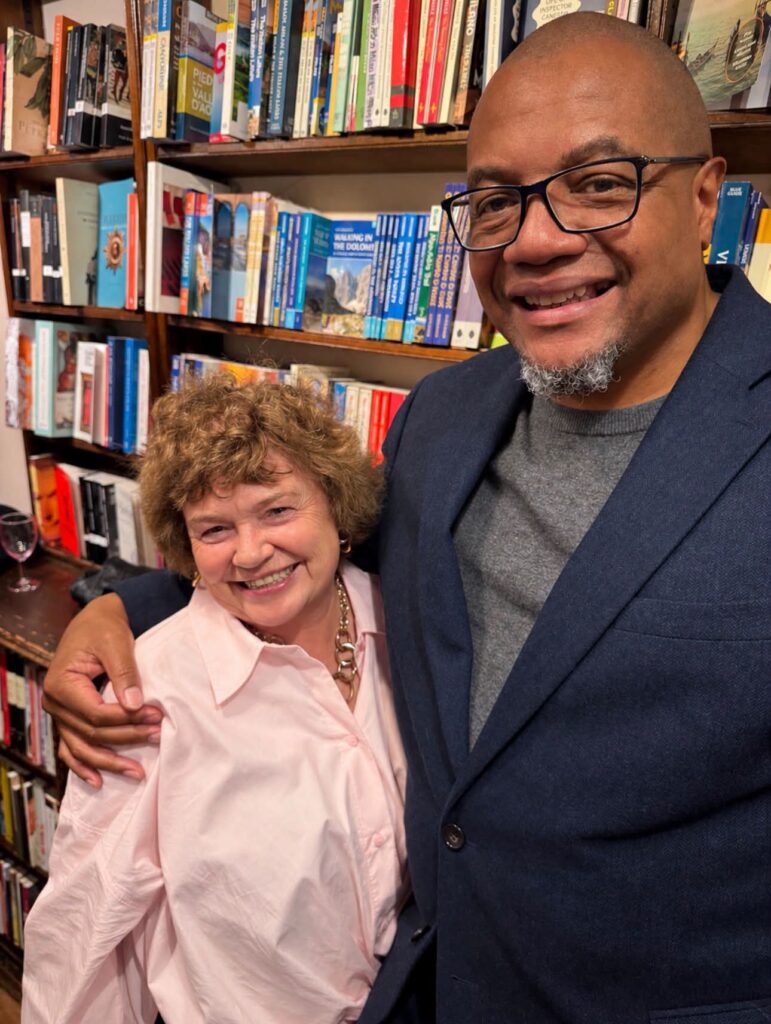
Earlier this week, I met the former British ambassador to Zimbabwe, Catriona Laing, in London. It was wonderful to see her again after so many years.
We reflected on Zimbabwe during her tenure, including an initiative to reform the Zimbabwe Broadcasting Corporation (ZBC) after the 2018 elections, an initiative that, had it succeeded, could have transformed public broadcasting in our country.
In September 2018, the then Minister of Information, Monica Mutsvangwa, met me at a restaurant in Harare, accompanied by her husband, Chris Mutsvangwa who had arranged the meeting. He was eager to show the world that things had changed under Mnangagwa’s government.
His wife told me that she wanted to reform the media. I explained that my experience in print media was limited, but that I knew broadcasting well. She asked me to write a paper setting out what needed to be done.
I prepared a two-page proposal recommending that ZBC journalists be retrained and that the broadcaster be equipped with modern technology. ZBC was still relying on outdated, sometimes analogue, equipment, and many of its journalists did not even have cameras.
Minister Mutsvangwa said the greatest obstacle would be financing, as the government was broke, and she asked me to help find the money.
One of the people I approached was Catriona Laing. I visited her one evening at the British ambassador’s residence, and we discussed what the reforms would require. She offered £3 million through the BBC Trust to support them.
I also travelled to London to see my former employers at ITV News, who offered to send staff from their Johannesburg bureau to train ZBC journalists free of charge.
At Channel 4 News, I spoke to its then presenter, Jon Snow, who agreed to come to Zimbabwe to help with the training. He joked that, because his wife was Zimbabwean, the trip would feel like a holiday. CNN also made several offers, including bringing Christiane Amanpour to Zimbabwe to support the programme.
Further pledges followed.
The United States and Australian embassies were involved, as was the World Bank and the UNDP. I proposed that all pledged funds be held by the World Bank, rather than handed to the government, and that the Bank pay for each stage of the reforms as it was delivered.
The World Bank’s former country manager, Dr Mungai Lenneiye, agreed to serve as a consultant on the project.
That proposal proved fatal. Once I suggested that the World Bank, and not the government, should control the money, the project stalled and never got off the ground.
Hardliners in government then spread ideological falsehoods, claiming it was a Western plot to stop ZANUPF winning the 2023 elections by placing the media in the hands of Western stooges. It was the usual propaganda nonsense.
Catriona Laing is often attacked on social media for supporting the political change that came through the military coup of 2017. What her critics rarely acknowledge is how much she did, often behind closed doors, to try to make Zimbabwe a better place.
I attended a meeting arranged by a Congolese businessman who owned mines in Zimbabwe with Catriona Laing, the then European Union ambassador, Philippe Van Damme, and Vice President General Constantino Chiwenga, with George Charamba also present.
The businessman was eager to shore up Zimbabwe and brought me as an international journalist who had covered Zimbabwe and had been attacked during the Mugabe days. Afterwards, the state newspapers misrepresented the purpose of that meeting and published falsehoods about it.
It was then that I realised the system had not changed. Only the figurehead had. Robert Mugabe had been replaced by Emmerson Mnangagwa, but the machinery of power remained intact.
When I look at the factional battles raging in ZANUPF today, I see no genuine struggle for change. These are contests between rival figures seeking control of the same system. Zimbabwe’s problem is not simply who sits at the top, it is the system itself, a system that resists change and rejects reform.
I remain deeply grateful to Catriona Laing for putting that £3 million on the table that evening at her residence. As a media professional, I believed I could help bring about change in my own field through media reform, and I hoped others would do the same in theirs.
But, as many professionals who offered their help at the time will tell you, there was no genuine appetite for reform. What the system wanted was choreographed pseudo reform, the appearance of change without its substance.
For 46 years, one of Zimbabwe’s enduring tragedies has been the way those within the system respond to dissent. Anyone who challenges them is branded a Western spy or an agent of foreign interests, an accusation designed to discredit the messenger and kill the message.
I have witnessed this firsthand in meetings with many political actors. Some politicians of the older generation do not always realise when their fears are being deliberately exploited by manipulative bureaucrats. Information is manipulated, those fears are inflamed, and anyone proposing reform is accused of working for the British or the Americans.
This culture did not begin in 1980. The late Dr Edson Zvobgo, the veteran politician and lawyer, once told me about what he called the “Mozambican syndrome”. During the liberation struggle in Mozambique, he said, anyone whose ideas were disliked could simply be labelled a CIA plant. It was a convenient way to destroy reputations and shut down debate, and it has outlived the war that produced it.
I believe Catriona Laing, too, has been a victim of a society that often misunderstands the role of an ambassador. Ambassadors represent their countries and pursue their national interests. Britain’s interest was a stable and prosperous Zimbabwe, a country in which it could invest and do meaningful business.
She acknowledges that she overestimated the post-coup government’s appetite for change. But she does not regret trying to help.
As the then United States ambassador, Harry Thomas, once told me, Western countries often take their lead from Britain on Zimbabwean matters, because of its history as the former colonial power and its enduring relationship with Zimbabwe.
Zimbabwe was the only country of significance in Africa with ONLY one terrestrial television station, and that remains the case to this day. The new government’s stated desire in 2018 to reform the broadcasting sector was therefore refreshing. But, as it turned out, that commitment has remained on paper, with no meaningful change to the television landscape.
It was a joy to see Catriona this week and to revisit those events. I remain grateful for the love she showed Zimbabwe then and continues to show today, despite the attacks she endured while serving as ambassador.
The irony is that what Catriona Laing was trying to do is exactly what Peter Vowles, the former British Ambassador to Zimbabwe who recently left Harare to become British High Commissioner to Nigeria, was also doing.
Yet Peter Vowles became a hero to many Zimbabweans on social media, largely because he spoke a little Shona and a little Ndebele. The substance of British policy did not change, only the packaging did.
This tells us something uncomfortable about ourselves. The things that make us love or loathe a foreign diplomat are often trivial when measured against what is actually required to move Zimbabwe forward.
A few words in our languages can win applause, while the real questions about policy, engagement and national interest go unasked.
When we engage with foreign diplomats, we must judge them by what they do, not by how charming they sound.