By Gabriel Manyati
Growing up in Sakubva, Mutare, I heard the phrase often enough. A neighbour’s tuckshop began drawing longer queues than the rest of the street. A trader returned from a trip with two new bakkies parked outside a modest house. A small businessman who once sold second-hand clothes suddenly acquired a second shop, then a third, then a house in a better suburb. The comment would come quietly, sometimes with a shrug, sometimes with a lowered voice over a shared cigarette or while sorting vegetables at the market: “Wakaromba.”
It was never shouted in the street. It passed between market women, between men drinking outside a bottle store, between relatives discussing a cousin whose fortunes had moved far faster than those of his neighbours. The speaker did not always claim to know the details of any ritual. The observation itself was enough. Someone had prospered beyond the ordinary pace of the neighbourhood, and the neighbourhood reached for an explanation that sat outside invoices, long hours or simple luck.
That childhood phrase returns with force after the sudden deaths of Genius “Ginimbi” Kadungure in a fiery Rolls-Royce crash on Borrowdale Road in November 2020 and Wicknell “Sir Wicknell” Chivayo in a helicopter crash near Marondera on 30 September 2026. Both men lived public lives of conspicuous wealth. Both died young and violently. In the days that followed each death, social media timelines and private conversations filled with the same familiar suspicion. The grave, it seems, reopens questions that living success can sometimes keep at bay.
Kuromba occupies a complicated place in Shona cultural discourse. It is not a single, fixed practice with one agreed definition. Scholar Kudzai Biri has described it as the act of visiting a traditional healer to obtain medicine or muti in order to be feared, to become wealthy, or to become noteworthy in society. In some accounts the practice involves protective charms used to safeguard families, property or livestock.
Other popular interpretations take a darker turn, linking kuromba to occult wealth, goblins known as zvikwambo, blood sacrifices and spiritual contracts that demand a human price. Some speakers distinguish kuromba from hurombwa, the latter referring more directly to harmful witchcraft intended to cause illness, misfortune or destruction. The term is therefore not simply a synonym for witchcraft in every context. It sits inside a wider African spiritual landscape that many Zimbabweans continue to navigate even while attending church every Sunday.
However, these beliefs are not uniquely Zimbabwean, neither are they confined to southern Africa. In South Africa, stories of “ukuthwala” circulate around the acquisition of wealth-giving spirits such as the mamlambo, often described as a river snake or shape-shifting familiar that multiplies money and cattle at a terrible cost to the owner’s closest relatives.
Anthropologists Jean and John Comaroff examined what they called “occult economies” in post-apartheid South Africa, noting how magical explanations attach themselves to material accumulation in times of rapid economic change and deepening inequality. In southeastern Nigeria, Daniel Jordan Smith documented popular stories of ritual killing and “fast wealth” that express both discontent with inequality and ambivalence about the systems of patronage that produce spectacular riches.
In Ghana, narratives of sika duro, or ritual money, describe spiritually manipulated currency that can contaminate ordinary cash and cause it to disappear. In Tanzania, the belief in “chuma ulete” concerns the magical extraction or leakage of money from small businesses, often explained as a form of witchcraft used by the poor rather than the already rich.
The names change. The rituals differ. The cultural histories differ. Yet the recurring question remains strikingly similar across these societies: how should ordinary people explain wealth that appears to arrive too quickly, too mysteriously or too disproportionately?
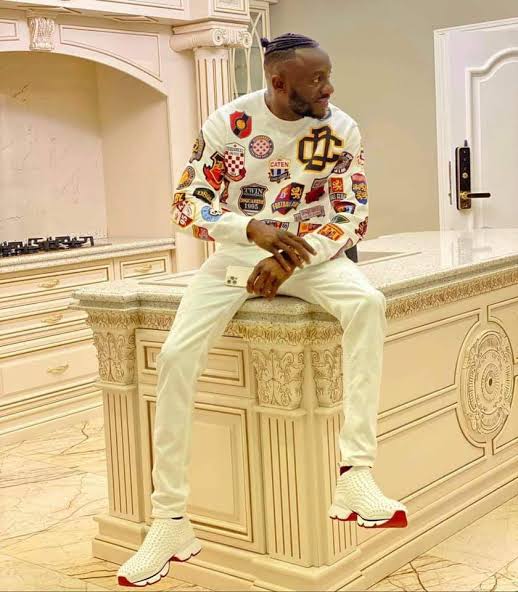
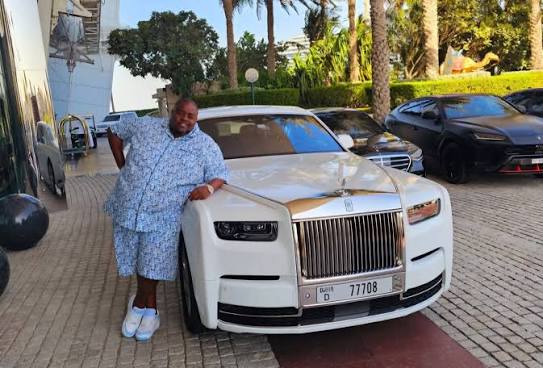
Ginimbi’s public image was built on luxury cars, all-white parties, designer clothing, international travel, celebrity friendships and nightlife. Chivayo’s was built on luxury vehicles, cash gifts handed out in public, political proximity, celebrity relationships, lavish generosity and extraordinary displays of wealth.
Neither man’s death is evidence of occult practice. Documented facts about their businesses, government contracts, past controversies and political associations remain separate from social-media speculation. What the deaths did was intensify retrospective examination. While a man is alive, extraordinary wealth can be attributed to entrepreneurship, political connections, contracts, inheritance, investment or luck. Once he can no longer answer accusations or explain transactions, the obituary becomes a battlefield between competing versions of his life.
Similar rumours have long circulated far beyond these two names. In Zimbabwe’s artisanal gold-mining communities, research has recorded accounts in which people associated kuromba with luck, sudden strikes and mining success, sometimes involving stories of sacrifice. Around Mazowe and other gold fields, stories of charms, goblins and spiritual bargains have accompanied the pursuit of sudden wealth.
A previously modest trader expands into several shops while neighbours struggle to restock a single stall. A miner returns with gold while others go home empty-handed after weeks of hard labour. A businessman whose money seemed to multiply unusually quickly acquires several vehicles in a short space of time. In each case the visible economic explanation can seem insufficient, and the supernatural explanation steps into the gap.
This is the Zimbabwean wealth paradox made concrete. A young graduate cannot find formal employment while a businessman suddenly appears to have millions. A market trader watches a competitor open a second, then a third, shop. A family struggling to pay rent sees another luxury vehicle parked outside a house that was once ordinary. A politically connected figure appears to secure opportunities that remain closed to others. Where the ordinary explanation feels incomplete, the cultural language of kuromba becomes available.
The leap from “I cannot understand how this wealth was acquired” to “therefore the wealth was acquired through occult means” remains one of the most revealing features of the phenomenon. Confirmation bias does much of the remaining work. Once a kuromba theory exists, ordinary family tragedies, illnesses, accidents or unexpected deaths can be fitted retrospectively into the narrative of a spiritual bargain that demanded a human price.
The sacrifice myth is particularly powerful in this regard. Stories circulate of relatives, children or workers whose lives are said to have been given in exchange for spectacular riches. A sudden death in the family of a wealthy person can later be interpreted as evidence of an alleged spiritual contract. Yet a wealthy person’s child becoming ill, a relative dying, or an accident occurring does not prove any supernatural transaction. It only shows how readily ordinary misfortune can be absorbed into an existing theory.
Kuromba rumours also function as moral storytelling. When someone becomes extraordinarily wealthy, people sometimes ask whether a person can grow this rich without paying some moral or spiritual price. The rumour becomes a tale about greed, ambition, envy, inequality and conspicuous consumption. Ginimbi’s nightlife and designer excess, and Chivayo’s public cash gifts and luxury displays, fed this moral reading even as both men also presented themselves as successful entrepreneurs and philanthropists.
Chivayo’s case carried an additional political dimension that Ginimbi’s did not possess to the same degree. His wealth became intertwined in public discourse with government contracts, political access, presidential relationships and the ruling establishment.
When citizens cannot fully understand the networks through which wealth and influence circulate, the supernatural can become a language for explaining political economy. This does not mean that occult practice has been established. It means that documented business activities, allegations of controversy, political relationships and supernatural rumours must be kept carefully separate rather than collapsed into one another.
Christianity adds another layer of tension. Zimbabwe is deeply Christian while retaining powerful cultural memories associated with traditional spirituality. Many Pentecostal and charismatic Christians reject traditional practices as demonic. At the same time, churches themselves frequently speak about spiritual warfare, ancestral forces, curses, deliverance, occult wealth and demonic covenants. Some Christians who reject the word kuromba nevertheless use a closely related explanatory framework when discussing satanic wealth or spiritual bargains. The tension is lived rather than resolved.
The rumours persist for concrete reasons. Extreme and visible inequality makes ordinary economic explanations feel incomplete. Secrecy surrounding the true sources of many fortunes fuels speculation. Distrust of institutions and the opacity of political patronage networks leave gaps that folklore fills. Oral tradition continues to supply ready narratives. Religious teaching about spiritual warfare keeps the language of the occult alive. Social media accelerates and amplifies every rumour. Envy, resentment, fascination with celebrity and the human need to make meaning from sudden death all play their part.
Peter Geschiere’s work on the modernity of witchcraft shows that such beliefs are not simply remnants of a pre-modern past. They coexist with banks, mobile money, cryptocurrencies, luxury cars, mining, elections, government contracts, social media, international travel, Pentecostal churches and global capitalism. The juxtaposition is not theoretical. It is visible in the same streets where a tuckshop owner is said to have “romba” and a luxury vehicle is parked outside a house that once belonged to an ordinary family.
What the “wakaromba ” or “akaromba” phrase, the Ginimbi speculation and the Chivayo conversations ultimately reveal is not proof of any particular spiritual contract. They reveal a society that repeatedly reaches for supernatural language when confronted with wealth that seems to have arrived too quickly, grown too large, or disappeared too suddenly into the grave.
When Zimbabweans ask whether extraordinary wealth was obtained through kuromba, the question is not only about spirits. It is also about where money comes from, who gets rich, who remains poor, who has access to power, how transparent wealth is, and why spectacular accumulation can sometimes appear more believable as a supernatural story than as an ordinary economic one.
The most revealing part of the kuromba rumour may not be whether it is true, but why a society continues to reach for it whenever extraordinary fortune meets an ordinary death.