
By Gabriel Manyati
Imagine being a Zimbabwean football commentator and finding yourself in trouble because you admired the footballing brilliance of an opponent.
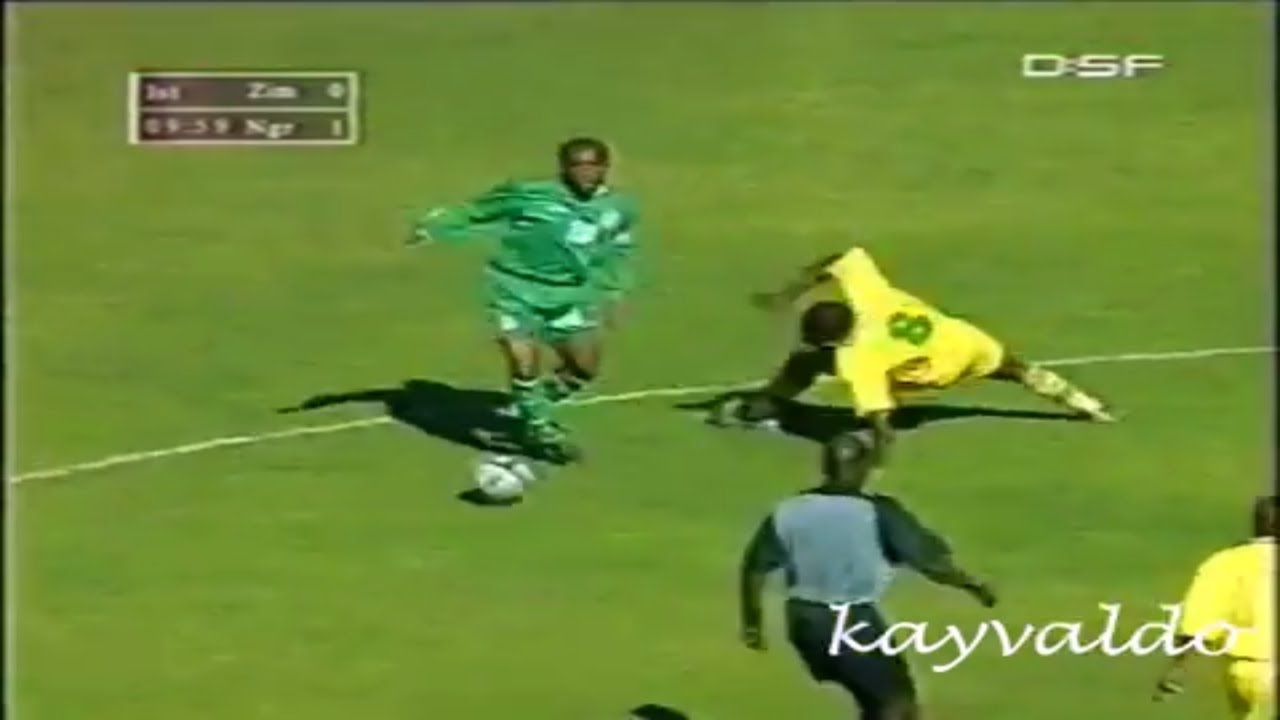
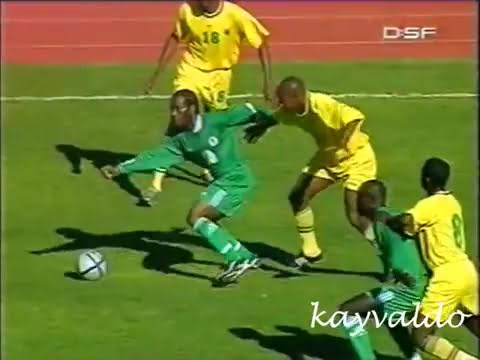
That is the strange story that has followed Charles “CNN” Mabika for more than two decades. On 5 September 2004, Zimbabwe faced Nigeria at the National Sports Stadium in Harare in a 2006 World Cup and Africa Cup of Nations qualifying match. The Warriors were overwhelmed 3-0, but the result was not the only thing that lingered. Mabika’s enthusiastic praise of Nigerian captain Jay-Jay Okocha became the real controversy.
Contemporary reporting said Mabika was sacked by Zimbabwe Television two days after the match. ZTV executives reportedly considered his commentary biased and unpatriotic, accusing him of paying too much attention to the skills of the Super Eagles, particularly Okocha. His excited descriptions of Julius Aghahowa’s acrobatics were also said to have attracted criticism.
And yet, this is where the story becomes more complicated.
For years, the incident has been linked directly to Jonathan Moyo, then Zimbabwe’s Minister of Information and Publicity. That association has become part of the folklore surrounding the episode. But Moyo himself later denied firing Mabika, arguing that he was not Mabika’s employer. At the same time, he acknowledged that he strongly disapproved of what the commentator had done, describing the praise of players from a foreign team on a national channel as unacceptable.
That distinction matters.
What is firmly documented is that Mabika lost his ZTV job in the aftermath of the Nigeria match. What remains less firmly established is precisely how much influence Moyo personally exerted over that decision. Popular memory has compressed those two facts into one neat story: Mabika praised Okocha, Moyo was furious, and Mabika was fired. The available evidence suggests a more complicated institutional episode.
But why did Mabika’s commentary matter so much?
Because Charles Mabika was never merely a man describing football.
For generations of Zimbabweans, his voice was part of the match itself. He had begun radio commentary in the mid-1980s and developed a distinctive style built around speed, excitement, humour and an almost theatrical ability to transform events on the pitch into drama. His fans knew him as “The Voice of Football” and “CNN”.
At a time when football was consumed through radio and television, a commentator could become the bridge between the pitch and the living room. Mabika made listeners feel as though they were sitting inside the stadium, experiencing every tackle, dribble, miss and goal collectively.
So when Okocha arrived in Harare, Mabika was confronted with something every genuine football lover understands: brilliance.
The Nigerian maestro was at the height of his powers. His dribbling, balance, imagination and ability to embarrass defenders had already made him one of Africa’s most recognisable footballers. That afternoon, Nigeria’s superiority was painfully obvious. Okocha was orchestrating the contest, and Mabika apparently found it impossible to ignore what he was seeing.
For Zimbabwean supporters, however, admiration had its limits. They had come to the National Sports Stadium to watch the Warriors win. Instead, they watched Okocha and Nigeria dismantle them.
In such an atmosphere, praising the man responsible for their humiliation could easily sound like betrayal.
That is where sport collided with nationalism.
Zimbabwean broadcasting in that period existed within a heavily state-controlled media environment. Jonathan Moyo was a powerful figure in the information ministry, and the government placed considerable emphasis on how Zimbabwe and Zimbabweans were represented through public broadcasting.
Contemporary reporting from the same period described restrictive media laws and growing government control over the information environment.
Against that backdrop, a commentator celebrating the genius of an opposition player was never going to be interpreted simply as neutral football analysis.
Yet perhaps that is precisely why the Mabika episode remains so fascinating.
Was he being disloyal, or was he doing what great commentators are supposed to do?
Football commentary is not mathematics. It is emotion, observation and interpretation. A commentator can support the home team without pretending that an extraordinary opponent is ordinary. Indeed, recognising brilliance can make commentary more credible, not less.
Mabika’s supposed “crime” was therefore also evidence of his greatest strength: he could become completely absorbed by football.
Twenty-two years later, the controversy has become part of the mythology surrounding Charles Mabika. The exact institutional mechanics of his dismissal may remain contested, but the image survives: a beloved Zimbabwean voice so captivated by Jay-Jay Okocha’s genius that even the national defeat could not silence his admiration.
Perhaps that is why Zimbabwe still remembers the episode.
Mabika did not merely describe football. He made it larger than 90 minutes. And on one unforgettable afternoon in Harare, his admiration for Okocha became a reminder that sometimes the most powerful voices in sport are those willing to recognise greatness, even when it belongs to the other side.



