By Gabriel Manyati
In a dimly lit reception room in central Harare, a young man sits with his hands tightly clasped over a folder of official documents. Across the desk, a healthcare practitioner prepares two sterile cotton swabs. The process takes less than two minutes: a firm scrape against the inside of the cheek, a sealed envelope, and a barcoded vial. Yet, in those quiet seconds, an unsaid tension hangs in the air. The man is not ill, nor is he seeking medical treatment. He is seeking a biological verdict, a definitive laboratory answer to a quiet, corrosive suspicion that has lingered in his mind for months.
For years, questions of paternity across Southern Africa were settled in living rooms, village courts, and extended family gatherings through visual comparisons, lineage tales, and customary arbitration. Today, those delicate social negotiations are increasingly yielding to the absolute binaries of genetic science.
This shift reached a public flashpoint when Zimbabwean investigative journalist and social commentator Hopewell Chin’ono brought the sensitive issue of paternity uncertainty to his vast online audience. In response to the public engagement ignited by Chin’ono’s commentary, medical diagnostics firm Global DNA publicly credited him with breaking a long-standing cultural taboo. The company subsequently launched a Heroes’ Day promotion offering up to 20 percent off DNA testing for eligible clients accessing services through Chin’ono’s referral initiative, while appealing to the journalist for an indication of audience demand to help scale operations across its network in Zimbabwe, South Africa, Botswana, Zambia, and the United Kingdom.
The corporate promotion is merely the visible edge of a much deeper social transformation underway across the region. What happens to an African family when suspicion moves from a whisper in the homestead to a cold laboratory report?
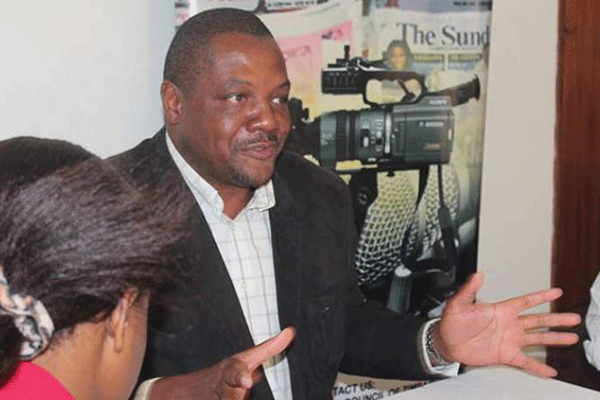
Paternity uncertainty is not new in Southern Africa, but its elevated visibility in contemporary public discourse is unprecedented. Socio-economic shifts across the region have reshaped traditional family structures. Rapid urbanisation, increased economic migration, particularly between Zimbabwe, South Africa, and the diaspora in Europe, and the proliferation of digital communication have created longer periods of physical separation for couples.
At the same time, the financial stakes of parenthood have risen sharply. In an era marked by economic instability, formal maintenance orders, legal battles over inheritance, and high costs of education, men are increasingly unwilling to shoulder long-term financial commitments without absolute genetic confirmation. Chin’ono’s commentary tapped directly into this environment of anxiety. By raising the issue on platforms where hundreds of thousands of Zimbabweans at home and in the diaspora congregate, he transformed what was historically considered a shameful family secret into a subject of urgent public debate.
For many men, ordering a test represents an attempt to reclaim agency in a situation where they feel vulnerable. However, the decision to seek biological certainty carries profound risks. Requesting a DNA test inside a marriage or stable partnership is rarely viewed as a neutral medical inquiry. To a partner, the demand is frequently experienced as a direct accusation of infidelity and a fundamental breach of trust.
Harare-based family counsellor Tendai Mukaro notes the intricate emotional friction that follows such demands. When a man asks for a test, he is often asking for truth, but what he delivers to the relationship is a declaration of distrust. If the result comes back and confirms he is indeed the father, the biological question is settled, but the marriage is often mortally wounded. The trust that held the relationship together has been shattered by the very act of asking.
The discourse surrounding paternity testing is frequently framed through a polarising lens, portraying men either as victims of systemic deceit or as hostile actors attempting to evade financial responsibility. The reality on the ground across Southern Africa is far more nuanced.
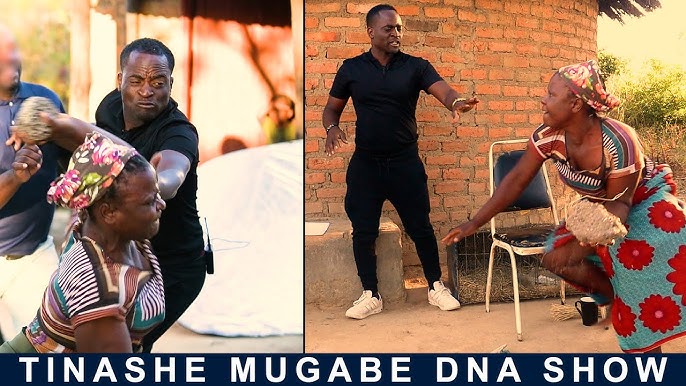
Mothers forced to navigate unsolicited paternity demands often experience intense emotional distress, public humiliation, and financial precarity. In communities where a woman’s social standing remains closely tied to her marital integrity, the mere rumour of a paternity test can trigger ostracisation from extended families and in-laws. Moreover, where cultural customs such as roora or lobola have been exchanged, a contested paternity claim can destabilise financial agreements between entire clans, prompting demands for refunds or formal customary damages.
Conversely, for men who discover after years of bonding that they are not the biological fathers of the children they have raised, the psychological fallout can be catastrophic. The sudden collapse of paternal identity leaves men grieving a relationship that exists socially and emotionally, but is suddenly disavowed biologically.
The trajectory of this disruption moves swiftly through distinct stages. Paternity suspicion first emerges in private, leading to a laboratory DNA test. From that pivotal moment, the path splits based on genetic science. A biological exclusion triggers immediate social and cultural disconnection alongside legal and financial realignments. On the other hand, a biological confirmation provides individual relief and established factual truth, yet it frequently leaves a persistent rupture of trust within the marriage.
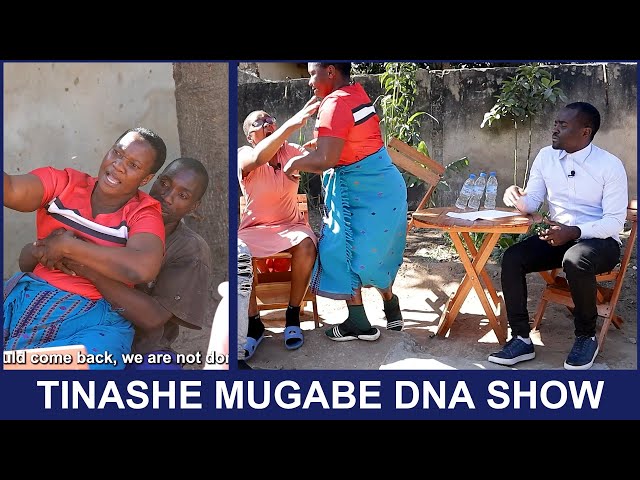
The most profound impact, however, falls upon the child. While adults debate financial liability and moral vindication, the child remains the most vulnerable participant in paternity disputes. In Southern African culture, identity is deeply rooted in lineage, ancestral roots, and totem systems. A child’s sense of belonging, tribal affiliation, and legal standing are intimately bound to their father’s family line.
When a DNA result excludes a presumed father, the child faces an immediate existential crisis. Beyond the immediate loss of emotional stability and financial support, the child may be stripped of their legal surname, access to birth documentation, and rights to inheritance.
Child rights advocate Rutendo Chigumira emphasises the weight of these outcomes, noting that society must critically evaluate what the child stands to gain or lose from such revelations. A laboratory printout can erase a child’s entire sense of origin overnight, and even if a man decides he no longer wants to be a father legally, the child still carries the psychological memory of him as a parent. Science can isolate DNA, but it cannot isolate human attachment.
Conversely, when a test confirms biological fatherhood, it does not automatically repair a fractured bond. A father who proved his paternity through a contentious legal process may find that the hostility generated during the dispute permanently soured his relationship with the child and mother.
The growing reliance on DNA testing forces a critical question upon Southern African society: Does biological fatherhood equal true fatherhood?

Customary African jurisprudence has historically recognised a distinction between biological contribution and social fatherhood. Proverbs across Shona, Ndebele, Zulu, and Chewa cultures affirm that raising a child carries a weight distinct from merely siring one. Yet, modern statutory frameworks, legal maintenance enforcement, and viral social media trends have increasingly compressed fatherhood down to genetic markers alone.
When social media allegations precede scientific evidence, public trials often unfold in online comment sections long before samples reach a laboratory. Suspicion easily turns into a weapon in high-conflict divorces or custody battles, with DNA tests demanded not out of a genuine search for truth, but as a strategic tool to inflict pain or delay maintenance payments.
Yet, science cannot replace the moral and emotional bonds forged through years of caretaking. A man who has held a sick child through the night, paid school fees, and guided them through life remains embedded in that child’s consciousness as a parent, regardless of what a lab technician reads in a genetic sequence.
Conversely, a biological father revealed purely by a swab remains a stranger until he assumes the daily duties of nurture and presence.
As Global DNA expands its collection points from Harare and Bulawayo to Johannesburg, Gaborone, Lusaka, and London, the region faces an unfolding reality. Genetic science offers undeniable clarity on biological origin, but it possesses no formula for stitching back together the human lives, marriages, and childhoods that may be fractured in pursuit of that truth.